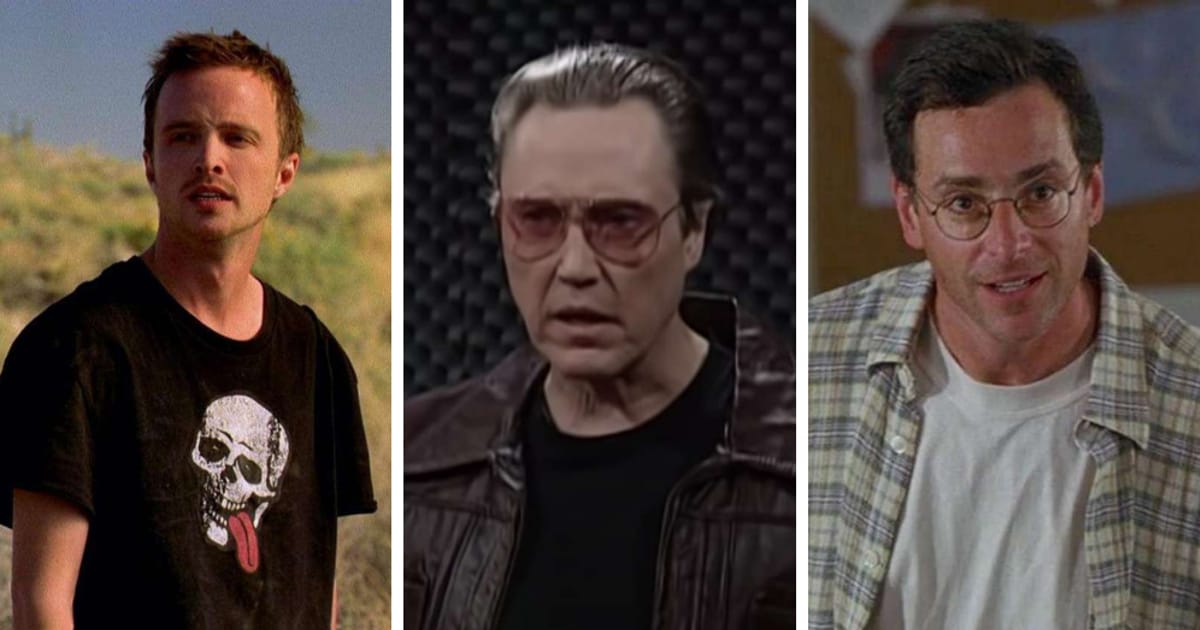
Fame is strange. One day you are an actor, host, or TV oddball doing your job. The next day you are trying to buy toothpaste while a stranger across the parking lot shouts your most famous line like they are auditioning for a reboot nobody asked for. Hollywood calls this “a successful career.” The rest of us call it “being trapped in your own highlight reel.”
Still, there is something genuinely fascinating about the way celebrity catchphrases escape the screen and take on a second life in public. They become greetings, jokes, nostalgia triggers, and social shortcuts. Fans may think they are offering affection. Celebrities may hear love, irritation, or mild emotional whiplash, depending on the day and whether they have had coffee yet. Either way, the pattern is real: some stars simply cannot walk through an airport, convention hall, sidewalk, or grocery store without hearing a line that followed them out of a movie or TV scene and attached itself to their real-life identity.
That is what makes the topic so fun. These are not just famous quotes. They are portable pieces of pop culture. They are the verbal version of a selfie. And for the celebrities on the receiving end, they can be flattering, absurd, repetitive, and weirdly immortal all at once.
Why Catchphrases Stick Harder Than Common Sense
A catchphrase survives because it does three things at once. First, it is short enough to remember. Second, it sounds good when repeated. Third, it lets ordinary people feel instantly in on the joke. You do not need a long conversation with David Schwimmer to communicate that you watched Friends. You only need one shouted “Pivot!” and suddenly both of you are standing in the ghostly remains of Ross Geller’s couch disaster.
That is the sneaky power of a great line. It compresses an entire performance into one tiny sound bite. Arnold Schwarzenegger has built a small mountain range out of this phenomenon. The American Film Institute even ranked “I’ll be back” among the greatest movie quotes in American film history, which tells you everything you need to know about how a line can outgrow its scene and become cultural furniture. Once a quote reaches that altitude, it is no longer just dialogue. It is branding with a pulse.
And unlike prestige, awards, or critical praise, catchphrases are democratic. Regular people decide which lines live forever. Sometimes they choose the line writers expected. Sometimes they grab a random joke, repeat it for 20 years, and refuse to let the poor actor retire in peace. That is why public catchphrase encounters are such a revealing little corner of celebrity culture: they show us what the audience actually kept.
The Celebrities Who Really Hear It
David Schwimmer and the Eternal Public Couch Emergency
David Schwimmer has one of the cleanest examples of this whole phenomenon. Decades after Friends first aired, he has said that random people still shout “Pivot!” at him in public. The line is funny because the scene is funny, but its staying power comes from something deeper: it is physical comedy turned into one word. You do not even need the couch. Your brain supplies the rest.
Schwimmer’s reaction has been pretty measured. He has described the shout-outs as startling, but also as reminders that the show is still alive for viewers. That is the strange double edge of a catchphrase. It can interrupt your day, yet it also proves your work is still circulating in the culture. Ross may have lost the couch battle, but he won the long war of public memory.
Matt LeBlanc and the Global Reach of “How You Doin’?”
If “Pivot!” is the panic button of sitcom history, “How you doin’?” is the smooth-talking passport stamp. Matt LeBlanc once shared a story about being in the Atlas Mountains of Morocco, far from the obvious zones of American TV nostalgia, when people recognized him as Joey and hit him with the famous line anyway. That is when you know a catchphrase is no longer local. It has gone fully international.
The genius of Joey Tribbiani’s signature line is that it is both specific and flexible. It belongs to the character, but it also works in regular conversation. That means fans do not have to quote it in a museum voice. They can just throw it into real life. For LeBlanc, the result is a forever-loop in which charming sitcom flirtation became a public greeting system with worldwide distribution.
Guy Fieri and the Kingdom of Flavortown
Guy Fieri is what happens when a catchphrase stops being a quote and starts becoming a zip code. According to Fieri, people began walking up to him in airports yelling “Flavortown,” and the phrase kept mutating until someone crowned him “the Mayor of Flavortown.” At that point, the man was no longer just hosting food television. He was apparently running a fictional municipality built out of burgers, frosted tips, and civic enthusiasm.
What makes Fieri especially interesting is that he did not set out to manufacture a slogan. “Flavortown” emerged organically from his on-camera style, then got adopted by fans, then grew into branding, merch, and a full identity. It is one of the clearest examples of the public taking a spontaneous phrase and building an empire around it. Also, it may be the only catchphrase on this list that sounds like it should have its own tourism board.
Jaleel White and the Long Life of “Did I Do That?”
Jaleel White knows exactly what it means to be fused to a line. Steve Urkel’s “Did I do that?” did not just become popular; it practically became a national reflex in the 1990s. White has spoken about how fans still ask him to do it, and even years ago he described the phrase as something that continued to follow him everywhere. That is not just a catchphrase. That is pop-culture Velcro.
Part of the reason it lasted is that the line captured the entire Urkel character in one gulp: the voice, the innocence, the chaos, the accidental mayhem. White has also explained that the show tested different catchphrases before this one clicked with the studio audience. In other words, the public picked the winner early, and it has been cashing dividends ever since. Some actors get remembered for dramatic range. White got remembered for one sentence and a pair of suspenders, which honestly may be a rarer achievement.
Rita Moreno and the School Hallway Echo of “Hey, You Guys!”
Rita Moreno’s experience is one of the funniest because it reveals what catchphrases do once they enter kid culture: they get repeated at full volume and with absolutely no concern for adult blood pressure. Moreno has recalled that children yelled her Electric Company catchphrase “Hey, you guys!” constantly, to the point that principals wanted to kill her. That is both a compliment and a public-service warning.
There is something wonderfully democratic about this example. Moreno is an EGOT-level icon with a towering career, yet one of the loudest pieces of public recognition attached to her legacy comes from a children’s TV line blasted in school corridors. That is how catchphrases work. They ignore hierarchy. They do not care about trophies. They go where the lungs are.
Rainn Wilson and the Quote That Is Not Even Technically His
Rainn Wilson gets one of the most ironic versions of public catchphrase fame. Fans regularly come up to him and quote “Bears, beets, Battlestar Galactica,” even though Dwight Schrute never actually says it. Jim says it while impersonating Dwight. That detail has not slowed anyone down for even one second, because fans do not care about courtroom-level quote attribution. They care that it feels Dwight-ish, and that is enough.
This is a great reminder that once a line enters public culture, ownership gets fuzzy. The audience simplifies. It blends scenes together. It rounds off the edges. Wilson has talked about how people still bring him that line anyway, which means he now carries a catchphrase that belongs to his character’s impersonator. Honestly, that is the most The Office outcome imaginable.
Aaron Paul and the Jesse Pinkman Quote He Cannot Outrun
Aaron Paul has also spoken openly about the fact that fans still yell Jesse Pinkman’s favorite insult at him in public, years after Breaking Bad ended. It is one of the clearest examples of a line jumping off the screen and attaching itself to the actor in everyday life. The awkward part, of course, is that it is not exactly a Sunday-brunch phrase.
That makes Paul’s example especially revealing. A catchphrase does not need to be polite to become durable. It only needs to be memorable, rhythmically satisfying, and linked to a character people loved. Jesse’s speech pattern became so recognizable that one word now functions like a whole costume. People hear it, and their brains reconstruct the hoodie, the panic, the wisecracks, and the chaos all at once.
Why Fans Keep Doing This
From the fan side, yelling a catchphrase is usually meant as affection. It is a shorthand way of saying, “I know your work, I liked your work, and I want you to know that this one performance lodged permanently in my brain like a song lyric I never asked to memorize.” It is rarely subtle, but it is often sincere.
From the celebrity side, the experience is more complicated. A catchphrase can be a blessing because it proves cultural impact. Most actors would rather be remembered for something than forgotten for everything. But it can also flatten a person into a souvenir. If the same five words are the first thing strangers say to you for 25 years, your career starts to look less like a filmography and more like a ringtone.
That tension is what makes these public encounters so interesting. They are miniature collisions between art and repetition, between performance and branding, between a person and the one line the public decided to keep forever. Catchphrases are applause that never fully ends, but they are also a little like being haunted by your own greatest hit.
The Real Experiences Behind the Joke
To understand why this topic keeps resonating, it helps to look beyond the funny headline and think about the actual experience of living inside one of these moments. Imagine being a celebrity with a famous line. You are not on a set. You are not in costume. You are not lit by professionals or backed by a laugh track. You are dragging a suitcase through an airport, trying to remember where you parked, and suddenly someone across the terminal shouts your signature phrase like they are firing a flare gun. Half the room turns to look. You smile, because what else are you going to do? Congratulations: your commute has become fan theater.
Now flip the angle. Imagine you are the fan. You grew up watching Family Matters, Friends, The Electric Company, The Office, or Diners, Drive-Ins and Dives. You spot the person attached to that memory, and your brain skips every polite social script in the English language. You do not say, “Hello, I admire your body of work.” You do not say, “Your performance had cultural impact.” No. You blurt the line. You become one more citizen of the republic of spontaneous nonsense. It is undignified, but it is deeply human.
That is why these encounters feel bigger than simple celebrity gossip. They reveal how pop culture lives inside ordinary memory. Most people do not carry around full monologues or carefully preserved reviews. They carry punch lines, fragments, tonal quirks, and one-liners. A catchphrase is memory in its most portable form. It can survive decades because it is easy to shout, easy to mimic, and easy to attach to a feeling. “Pivot!” is not just a quote. It is the feeling of laughing at a couch jam. “How you doin’?” is not just dialogue. It is the feeling of sitcom flirtation at its most ridiculous. “Flavortown” is not just a word. It is a whole edible state of mind.
There is also something oddly generous in the way many celebrities respond. Even when they sound surprised, tired, or mildly ambushed by public quoting, a lot of them understand what is happening. The line is not chasing them because the audience wants to annoy them. It is chasing them because the audience kept the work. In an industry where most performances vanish fast, that kind of staying power is not nothing. It may be inconvenient at the baggage carousel, but it is still evidence of connection.
Of course, the funniest part is that the public is not always accurate. Rainn Wilson gets hit with a line Dwight never said. Some quotes get misremembered, remixed, or reassigned. That happens because fandom is less like archiving and more like folklore. Once a line leaves the screen, it starts living among people. People shorten it, exaggerate it, and repeat it wrong with tremendous confidence. In a weird way, that only proves the point: the quote is alive enough to mutate.
So yes, it is amusing that some celebrities cannot buy groceries without being verbally tackled by their own greatest hits. But it is also revealing. These public moments show which performances moved from entertainment into everyday language. They show which stars became so embedded in popular culture that a stranger can summon a whole career with one shouted sentence. That is rare. That is weird. And, for better or worse, that is one of the clearest signs a catchphrase truly made it.
Conclusion
The celebrity catchphrase is one of pop culture’s strangest trophies. It does not sit on a shelf. It does not come with a speech. It just follows you into public like a very enthusiastic ghost. For David Schwimmer, Matt LeBlanc, Guy Fieri, Jaleel White, Rita Moreno, Rainn Wilson, and Aaron Paul, that means their most famous lines are no longer confined to scripts. They are now public greetings, nostalgia alarms, and occasionally a mild jump scare in broad daylight.
And that is the real punchline: the public does not just remember stars. It remembers them in quotable fragments. A great catchphrase turns celebrity into folklore. It is annoying, flattering, ridiculous, and kind of immortal. In Hollywood, plenty of people become famous. Far fewer become something you can yell across a parking lot.