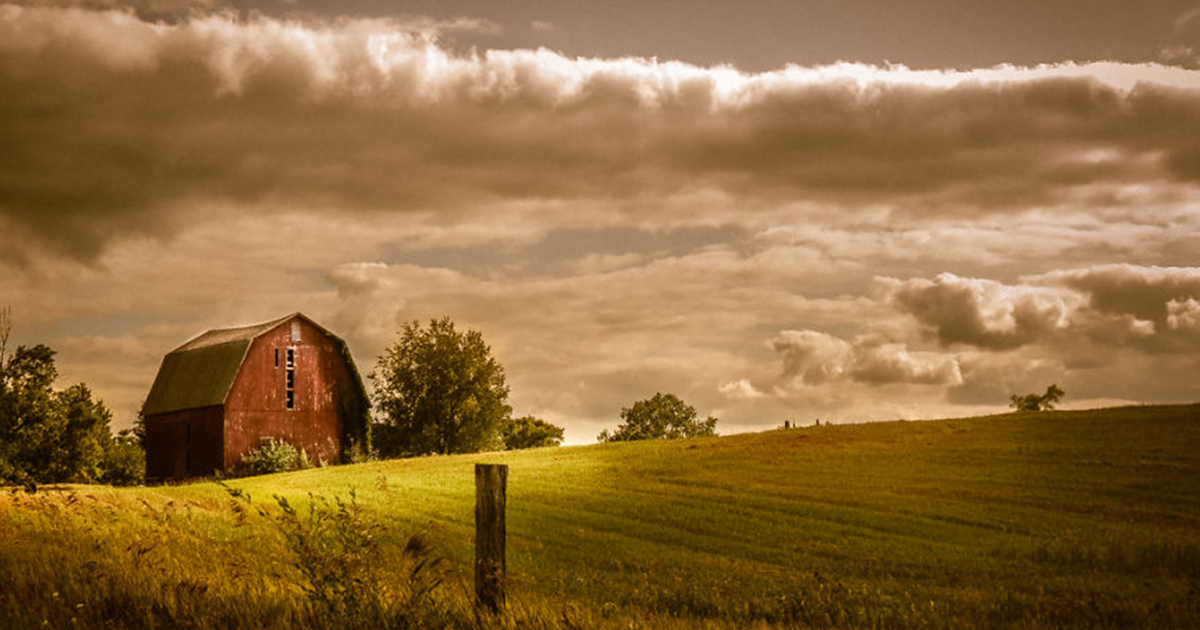
In a world where photographers can spend the price of a used car on a camera body, Meagan V. Blazier’s story feels wonderfully rebellious. No giant backpack full of lenses. No studio lights that look like they belong on a spaceship. No camera so expensive you instinctively whisper around it. Just an old Canon PowerShot SX40HS, a sharp creative eye, and enough imagination to turn forgotten barns, lonely roads, and weather-beaten landscapes into haunting works of art.
Her photos prove something many beginners need to hear: amazing photography does not begin with amazing gear. It begins with noticing. It begins with patience. It begins with walking past the obvious and stopping for the strange, the quiet, and the slightly spooky building that everyone else ignores while wondering what they’re having for dinner.
Blazier, a single mother and real estate photographer from the metro Detroit area, first picked up a camera after the birth of her son. Like many parents, she wanted to document the little moments: childhood, growth, family life, and the small memories that become huge later. But the camera gradually became more than a memory machine. It became a creative outlet, a stress reliever, and eventually the tool behind her moody, dreamlike “imaginescapes.”
How an Old Canon PowerShot Became a Fine Art Tool
The Canon PowerShot SX40HS was not designed to be a luxury fine art camera. It is a bridge-style point-and-shoot camera released in the early 2010s, built around a 12.1-megapixel sensor and a powerful 35x optical zoom lens. In normal human language, that means it can shoot wide scenes and faraway details without requiring a suitcase full of lenses.
On paper, it is modest by today’s standards. Modern cameras boast huge sensors, lightning-fast autofocus, 8K video, animal eye detection, and menus so deep you may need snacks before entering them. The SX40HS, by comparison, is charmingly simple. Yet that simplicity is part of the magic. It forces the photographer to focus on light, subject, framing, timing, and moodthe old-school ingredients that still matter after every new gadget announcement has finished waving its tiny marketing flag.
Blazier uses the camera to capture desolate landscapes, abandoned structures, dark skies, fields, trails, and old barns. These scenes may look ordinary to a hurried driver, but through her lens and editing style, they become cinematic. A collapsing barn is no longer just a building past its prime. It becomes a character. A lonely tree becomes a question mark. A cloudy sky becomes drama with better lighting than most streaming series.
What Makes Her Photos So Striking?
The most interesting thing about Blazier’s work is not that it was made with a cheap camera. It is that the camera almost disappears. Viewers are drawn first to atmosphere: misty horizons, deep shadows, glowing skies, rural decay, and the feeling that something meaningful happened just before the frameor might happen right after it.
1. She Finds Beauty in Overlooked Places
Many photographers search for postcard locations: famous cliffs, polished city skylines, mountains wearing sunset like a designer coat. Blazier often looks in the opposite direction. She finds old barns, empty roads, abandoned houses, and lonely landscapes. These are places with wrinkles. They have history. They look like they have secrets, and possibly a raccoon landlord.
This subject choice gives her photos emotional weight. Abandoned buildings suggest memory, loss, endurance, and mystery. A broken fence or weathered wall can say more than a shiny landmark because it invites the viewer to imagine what came before. Who lived there? Why did they leave? What did the place sound like when it was full of life?
2. Her Style Is Moody, Dark, and Atmospheric
Blazier’s images are often described as dark, moody, atmospheric, and mysterious. That combination is powerful because it creates a consistent visual identity. Her work does not scream for attention; it pulls viewers in quietly. The shadows do not feel like mistakes. They feel intentional. The skies are not just backgrounds. They are emotional weather.
This is an important lesson for anyone using an affordable camera. A strong style can matter more than technical perfection. A technically flawless photo with no mood is like a sandwich made only of bread. It exists, yes, but nobody is writing poetry about it. A photo with a clear mood, even if made with older gear, can stay in the viewer’s mind.
3. She Uses Editing as Part of the Art
Blazier’s “imaginescapes” are not meant to be plain documentary landscapes. She has explained that editing helps her create the setting and atmosphere she imagines. Lightroom and Photoshop become part of the creative process, not a sneaky trick hidden under the table.
This matters because post-processing often gets treated like a scandal, as if every great image must leap perfectly finished from the camera like a tiny digital miracle. In reality, editing has always been part of photography. Film photographers developed prints with choices about contrast, exposure, cropping, and tone. Digital photographers use software to make similar creative decisions.
For Blazier, basic adjustments such as white balance, highlights, shadows, local brushes, and radial adjustments help guide the viewer’s eye. Editing adds depth, directs attention, and strengthens mood. The key is that the edits serve the vision. They are not random filters slapped on like stickers from a bargain bin.
The Canon PowerShot SX40HS: Humble Gear With Serious Reach
The Canon PowerShot SX40HS is a bridge camera, which means it sits between small compact cameras and larger interchangeable-lens systems. Its major strength is versatility. With a 24–840mm equivalent zoom range, it can capture wide landscapes as well as distant details. For a photographer exploring rural roads, empty fields, and faraway structures, that reach is extremely useful.
The camera also includes optical image stabilization, a helpful feature when shooting handheld at long focal lengths. Anyone who has tried to zoom in on a distant subject knows the feeling: one tiny hand movement and suddenly the photo looks like it was taken during an earthquake performed by squirrels. Stabilization helps reduce that shake.
Of course, the SX40HS has limitations. Its small sensor cannot match the low-light performance or dynamic range of newer full-frame cameras. It does not produce the creamy background blur of expensive lenses. It is not the tool most professionals would choose for every job. But Blazier’s work shows that limitations can become creative boundaries instead of locked doors.
Why Cheap Cameras Can Make Better Artists
There is a funny thing about expensive gear: it can sometimes become a distraction wearing a very nice strap. Beginners may spend more time comparing cameras than making pictures. They read reviews, watch videos, debate sensor sizes, and develop a serious condition known as “I will start creating once I buy one more thing.” This illness has no official medical code, but photographers know it well.
A cheap camera cuts through that noise. It says, “Here are the tools. Now go look at the world.” That simplicity can be freeing. You learn what your camera can do and what it cannot do. Then you work around it. You shoot in better light. You compose more carefully. You pay attention to contrast. You stop blaming the gear and start training your eye.
Older digital cameras also have a look that many photographers now appreciate. Their images may feel less clinically perfect than smartphone photos. They can have character, softness, grain, color quirks, or a nostalgic digital texture. In the age of over-processed phone images and automatic beauty algorithms, an old point-and-shoot can feel refreshingly honest.
The Rise of the Point-and-Shoot Comeback
Compact digital cameras have made a surprising comeback in recent years. Younger creators, especially those drawn to early-2000s aesthetics, have rediscovered the charm of old digicams. Part of the appeal is nostalgia, but part of it is control. A dedicated camera removes the constant interruptions of a phone. No notifications. No messages. No temptation to check three apps and accidentally lose forty minutes to a video of a cat judging a salad.
Point-and-shoot cameras also encourage a different rhythm. You lift the camera, frame the scene, take the shot, and move on. The process feels less like content production and more like noticing. That slower attention can make better photographs, even when the camera is technically outdated.
Blazier’s work predicted this conversation before the trend became fashionable. She showed that a simple camera could produce memorable, publishable, emotionally rich images long before “vintage digital camera” became a search phrase with attitude.
Lessons Beginners Can Learn From Meagan V. Blazier
Blazier’s story is inspiring because it is practical. It does not require a mansion, a trust fund, or a camera bag that needs its own seat on the bus. Her approach offers clear lessons for beginners, hobbyists, parents, students, and anyone staring at an old camera in a drawer wondering if it still has magic left in it.
Start With What You Have
The best camera for learning is often the one already available. A used Canon PowerShot, an old Nikon Coolpix, a compact Sony, a basic DSLR, or even a phone can teach composition, light, timing, and storytelling. Waiting for perfect gear is a very elegant form of procrastination.
Choose Subjects That Mean Something
Blazier was drawn to desolate landscapes and abandoned buildings because they spoke to her. That personal connection matters. Great photography is not just about what looks impressive. It is about what keeps calling your attention. If you love street corners after rain, photograph them. If you love quiet kitchens, photograph them. If you love weird shadows on garage doors, congratulations, you have entered the very specific but valid world of garage-door shadow art.
Learn Light Before Buying Lenses
Light is the original special effect. Morning light, late-afternoon glow, storm clouds, window light, fog, and backlighting can transform simple scenes. A cheap camera in beautiful light will often beat an expensive camera used carelessly at noon under harsh sun.
Edit With Purpose
Editing should help the image say what it already wants to say. Increase contrast to strengthen drama. Adjust shadows to create mystery. Use local adjustments to guide the eye. Warm the light if the scene needs comfort, cool it if the scene needs tension. Do not edit every photo like it is auditioning for the same fantasy movie trailer.
Specific Examples of Creative Choices That Matter
Imagine an old barn standing in a field. A beginner might stand at eye level, put the barn in the center, take one photo, and leave. Blazier’s style suggests a richer approach. Wait for dramatic clouds. Shoot from a lower angle to make the structure feel larger. Place the barn off-center to create tension. Use the zoom to compress the background. Darken the edges slightly in editing so the viewer’s eye moves toward the building. Add contrast to the wood texture. Cool the shadows and warm the horizon. Suddenly the barn is not just a barn. It is a story with a roof.
Or imagine a narrow country road. With harsh midday light, it may look plain. But after rain, at dusk, with reflections and a heavy sky, the same road becomes cinematic. A cheap camera can capture that if the photographer is paying attention. The secret is not owning the most advanced sensor. The secret is showing up when the scene has something to say.
Why Her Story Resonates With So Many People
Blazier’s work resonates because it feels democratic. It reminds people that art is not reserved for those with the newest equipment. A single mother balancing work, parenting, and everyday pressure found creative space through photography. That matters. It makes the story human, not just technical.
Her journey also challenges a common myth: that professionalism is determined by gear. Yes, professional tools can help. Nobody is arguing that a high-end camera is useless. But tools do not create vision. They support it. A better camera can increase image quality, flexibility, and speed, but it cannot teach someone what to care about. It cannot whisper, “That abandoned house under the stormy sky has a soulstop the car.”
That whisper comes from the artist.
The Emotional Power of “Imaginescapes”
The word “imaginescapes” is a smart description of Blazier’s work because it makes room for both photography and imagination. These images are rooted in real scenes, but they are shaped into something dreamlike. They do not merely document a place. They interpret it.
This is where her art becomes more than “nice landscapes.” Her photos feel like memories you never had. They suggest stories without explaining them. They allow viewers to bring their own emotions into the frame. That is one of the strongest things visual art can do: leave enough space for the viewer to enter.
Experience Section: What This Story Teaches Anyone With a Cheap Camera
There is something deeply encouraging about using a cheap camera and realizing it is not a creative prison. It is more like a small, slightly stubborn travel companion. It may not do everything. It may complain in low light. It may focus slower than modern cameras. Its screen may look like it was designed during the era of flip phones and questionable jeans. But it can still help you make art if you learn its personality.
One of the best experiences related to this topic is the moment you stop apologizing for your gear. Many beginners feel embarrassed when they show up with an old point-and-shoot next to people carrying large mirrorless cameras. But after a while, you learn that cameras do not earn respect by size. Photos do. A small camera can make you less intimidating, more mobile, and more willing to experiment. You can carry it on walks, keep it in a bag, and take it places where a large setup would feel awkward.
Another valuable experience is learning to slow down. Cheap cameras often have fewer shortcuts, slower performance, and less forgiving files. That sounds like a disadvantage, but it can build discipline. You begin to check the frame carefully. You notice distracting branches, crooked horizons, bright trash cans, and other tiny villains of composition. You wait for better light. You take fewer but more intentional photos. In a strange way, the camera’s limits train your patience.
Editing old-camera files can also teach restraint. Because the files may not handle extreme adjustments as well as modern raw images, you learn to make smaller, smarter changes. Instead of dragging every slider until the photo looks like it joined a circus, you adjust exposure, contrast, color temperature, and shadows with care. You learn that atmosphere is not created by overdoing everything. It is created by making the right few choices.
There is also a personal side to this experience. Cheap cameras are approachable. Parents can use them while documenting family life. Students can learn with them before investing in serious equipment. Hobbyists can rediscover photography without turning it into an expensive identity crisis. A simple Canon PowerShot can become a weekend companion, a creative diary, or a doorway into fine art.
The biggest lesson is that art grows from attention. A single mother using an old Canon PowerShot to create stunning images is not just a feel-good photography story. It is a reminder that creativity often begins in ordinary circumstances. Between work, parenting, errands, and daily pressure, there can still be room for vision. There can still be room to pull over, look at a weathered barn, and see not decay, but atmosphere. Not emptiness, but story.
That is the real power of Blazier’s work. It gives permission. Permission to start small. Permission to use what you have. Permission to make art before you feel “ready.” The old Canon PowerShot is not the hero because it is cheap. It is the hero because it was used. The photos exist because the artist kept looking, kept learning, and kept creating.
Conclusion
Meagan V. Blazier’s photography proves that stunning art does not require luxury gear. Her old Canon PowerShot SX40HS helped her create dark, atmospheric, emotionally rich landscapes because she brought vision, patience, and personal style to the process. The camera mattered, but not in the way gear obsessives might expect. It mattered because it was the tool she knew, trusted, and used consistently.
For beginners, her story is a friendly shove out the door. Stop waiting for the perfect camera. Stop believing creativity arrives in a padded shipping box. Start with the camera you have, chase good light, study the ordinary, and learn to edit with intention. The world is full of overlooked scenes waiting for someone to notice them. Sometimes the most powerful art begins with a cheap camera, a busy life, and one person willing to see beauty where everyone else just sees an old building.