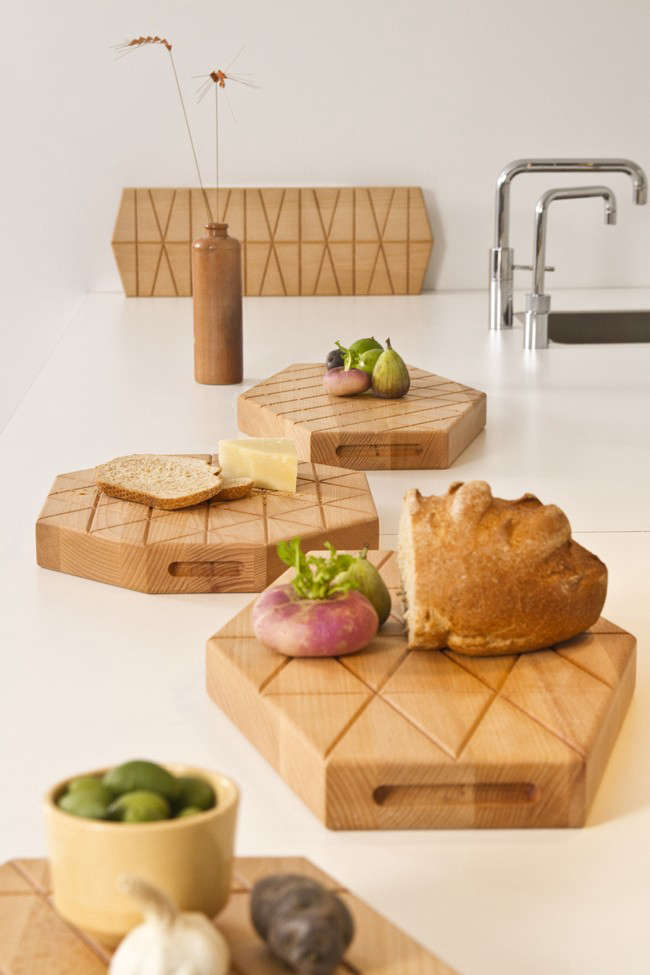
Some kitchen objects quietly do their job, retire to a drawer, and never ask for applause. Daphna Laurens’ Grid Planks are not those objects. These beech wood serving and cutting boards were designed to live in the charming middle ground between practical tool and tabletop conversation starter. They slice, serve, decorate, organize, and politely remind your cheese cubes to behave like they attended a geometry class.
Designed by Dutch studio Daphna Laurens for Areaware, the Grid Planks take a familiar household objectthe wooden boardand give it a graphic twist. One side is smooth for cutting, while the other side features a grid pattern for serving. It sounds simple, and that is exactly the point. The design does not rely on flashy gadgets, unnecessary attachments, or “revolutionary” features that require a manual thicker than a pancake stack. Instead, it uses proportion, surface, material, and restraint to turn everyday food preparation into a small design ritual.
In an era where kitchen accessories often compete to look louder, smarter, and more complicated, Daphna Laurens’ Grid Planks feel refreshingly calm. They are functional, beautiful, and just playful enough to make a snack board look like it has its own architectural plan.
What Are Daphna Laurens’ Grid Planks?
Daphna Laurens’ Grid Planks are wooden cut-and-serve boards made from beech wood. They were designed in multiple sizes and patterns, allowing them to work as chopping boards, serving planks, and decorative tabletop pieces. The concept is wonderfully direct: use the smooth side for food preparation, then flip to the grid side for presentation.
This dual-purpose idea is what gives the product its personality. The plank is not trying to be a cutting board on Monday and a sculpture on Tuesday. It is both at the same time. The smooth side welcomes bread, fruit, cheese, herbs, and casual prep work. The patterned side brings structure and visual rhythm to the table. Put olives, crackers, sliced pears, or tiny pastries on it, and suddenly your snack spread looks like it had a design consultant. A very tasteful one, naturally.
The official dimensions include small, medium, and large versions. The small plank measures about 11.75 x 11.5 x 1.5 inches, the medium about 15.75 x 11.6 x 1.5 inches, and the large about 20.75 x 11.6 x 1.5 inches. That range makes the series flexible: the small version suits intimate snacks, the medium handles appetizers, and the large board is ready for the kind of gathering where someone says, “I just made a little platter,” while revealing enough food to feed a polite design conference.
The Designers Behind the Planks
Daphna Laurens is not one person but a design studio formed by Daphna Isaacs Burggraaf and Laurens Manders. Based in Eindhoven, Netherlands, the studio was founded in 2008 after both designers graduated from Design Academy Eindhoven. Their work often sits between industrial design, applied art, and fine art, which explains why the Grid Planks feel both useful and expressive.
The studio’s approach is rooted in giving shape to ideas. That may sound poetic, but in this case it is also very literal. The Grid Planks came from grid studies, a method the studio uses to explore form and shape. Rather than decorating a board as an afterthought, the designers used the grid as a starting point. The result is a board that feels composed from the beginning, not dressed up at the last minute like a salad wearing a bow tie.
This matters because great product design often happens when form and function are not treated like rivals. The Grid Planks do not sacrifice usability for beauty, and they do not hide their beauty under pure utility. The grid pattern gives the board character, but it also creates a clear distinction between the cutting side and the serving side. That simple separation helps protect the presentation surface while making the object easier to understand at a glance.
Why the Grid Pattern Works So Well
The grid is the star of the design, but it does not behave like a diva. It is bold enough to be noticed and quiet enough not to fight with the food. That balance is harder to achieve than it looks. A serving board with too much decoration can make appetizers appear cluttered. A completely plain board can look elegant, but also predictable. Daphna Laurens’ Grid Planks land in the sweet spot.
A Visual System for Food Presentation
The grid gives users a subtle visual system. You can line up crackers along one section, place cheese in another, and scatter nuts or berries across the pattern without making the board look chaotic. Of course, nobody is required to arrange food with mathematical precision. This is a serving plank, not a final exam. Still, the pattern naturally encourages thoughtful placement.
For hosts, that is useful. A well-arranged board feels generous and intentional, even when the actual menu is wonderfully simple. A few slices of bread, softened butter, radishes, and sea salt can look restaurant-ready when given the right surface. The Grid Planks help create that effect without demanding professional styling skills.
A Playful Contrast With Natural Wood
The other reason the grid works is contrast. Beech wood has a warm, natural presence. The grid brings graphic structure to that warmth. Together, they create a meeting point between craft and modern design. The board looks at home in a minimalist kitchen, a colorful dining room, or a casual weekend brunch where the host is pretending not to care but absolutely arranged the grapes by color.
This mix of natural material and graphic order is a signature strength of the product. It keeps the plank from feeling too rustic or too sterile. It has warmth, but also clarity. It has personality, but not the kind that interrupts dinner to explain its podcast.
Material Matters: Why Beech Wood Makes Sense
The Grid Planks are made from beech wood, a material commonly valued in kitchenware for its durability, fine grain, and clean appearance. Beech has enough strength for regular kitchen use while maintaining a smooth, approachable look. On the Grid Planks, the material supports both sides of the design: the practical cutting surface and the decorative serving face.
Wood also brings a tactile quality that many plastic or glass boards lack. It feels warmer under the hand, looks better on the table, and ages in a more natural way when properly maintained. A wooden board can develop character over time, which is a polite way of saying it may collect little signs of real life. With care, those signs can add charm instead of chaos.
That said, wood needs respect. It should be washed properly, dried thoroughly, and conditioned when it starts to look dry. The Grid Planks are not designed to be abandoned in a sink like a forgotten shipwreck. Treat them well, and they remain both useful and attractive for years.
How to Use Daphna Laurens’ Grid Planks
The best way to use the Grid Planks is also the easiest to remember: cut on the smooth side, serve on the grid side. That single rule preserves the visual impact of the patterned surface and helps prevent knife marks from interrupting the clean grid design.
For Cheese and Charcuterie Boards
The Grid Planks are excellent for cheese boards. A small board can hold a wedge of brie, a handful of crackers, fruit, and a little bowl of jam. The medium board works well for mixed cheeses, sliced baguette, nuts, and pickles. The large version is ideal for a full entertaining spread with cheeses, cured items, fruit, vegetables, dips, and enough crackers to make guests suspiciously loyal.
The grid helps separate ingredients visually. It also gives the board a composed look, which is useful when working with foods that naturally tumble around like they missed their seating assignment.
For Breakfast and Coffee Tables
These planks are not limited to dinner parties. They can turn a quiet breakfast into something more special. Use one for toast, pastries, fruit, boiled eggs, or coffee accompaniments. The design feels especially suited to small rituals: Sunday breakfast, afternoon tea, or that dignified moment when you eat cookies and call it “a tasting.”
For Everyday Kitchen Prep
The smooth side is practical enough for everyday prep. It works for slicing bread, chopping herbs, cutting fruit, or preparing simple snacks. Because the board is attractive enough to stay visible, it can live on the counter instead of disappearing into a cabinet. That is one of the quiet benefits of good design: when an object looks good, you use it more often.
Design Analysis: Small Object, Big Lesson
Daphna Laurens’ Grid Planks are a strong example of how a modest product can carry a big design idea. The board does not shout about innovation. It simply solves a familiar problem with elegance: people need to cut food, serve food, and make the table look inviting. The Grid Planks answer all three needs in one object.
The project also shows the value of restraint. Many kitchen products add features to appear more useful. Handles, compartments, grooves, labels, collapsible sections, secret trayssometimes a board starts looking like it is preparing for a spy mission. The Grid Planks go the other direction. They remove clutter and rely on proportion, pattern, and material.
This restraint makes the design more timeless. A grid is not a trend in the same way a novelty shape might be. It is a visual language that has existed in architecture, graphic design, textiles, and furniture for generations. By applying it to a serving plank, Daphna Laurens gives the object a modern identity without making it feel disposable.
Care Tips for Wooden Grid Planks
Proper care helps preserve both the wood and the grid surface. After use, wash the board with warm, soapy water and a sponge. Avoid soaking it, because prolonged water exposure can damage wooden boards. Rinse carefully and dry it completely before storing. Standing the board upright while it dries can help airflow reach both sides.
For deeper care, condition the wood occasionally with a food-safe mineral oil or beeswax. Some retailers and design sources mention oiling the beech plank from time to time to extend its useful life. Avoid common cooking oils such as olive oil or vegetable oil for long-term conditioning, because they can become sticky or develop unpleasant odors.
Food safety is also important. If a board is used for raw meat, poultry, or seafood, it should be cleaned and sanitized thoroughly. Many home cooks prefer using separate boards for raw proteins and ready-to-eat foods to reduce cross-contamination. For the Grid Planks specifically, their beauty makes them especially well suited to bread, cheese, fruit, vegetables, and serving tasks.
Who Should Consider Daphna Laurens’ Grid Planks?
These planks are a great fit for people who appreciate everyday objects with a design story. They appeal to home entertainers, design collectors, minimalists, food stylists, and anyone who believes a snack plate deserves dignity. They are also appealing for small-space living because one object can handle preparation, presentation, and decoration.
They may not be ideal for someone who wants a purely heavy-duty butcher block for aggressive chopping. That is not the personality here. The Grid Plank is more refined. It can work, yes, but it also wants to be seen. Think of it as the board you use when the food is ready for its close-up.
Experiences With Daphna Laurens’ Grid Planks
Living with a design object like Daphna Laurens’ Grid Planks changes how you treat small routines. At first, the appeal is visual. You notice the grid, the thickness of the wood, the way the board looks on a table. Then, after a few uses, the appeal becomes behavioral. You begin arranging food with a little more attention. You slice bread on the smooth side and flip the plank over like you are revealing the final act of a very domestic theater performance.
One of the best experiences comes from using the plank for casual entertaining. Imagine a Friday evening with friends. Nobody wants a formal dinner, but everyone wants something to nibble. A Grid Plank makes simple ingredients feel intentional: sharp cheddar, apple slices, roasted almonds, crackers, maybe a little honey. Place them loosely across the patterned side, and the board does half the styling work. The grid gives the spread order, while the wood keeps it warm and relaxed.
Another enjoyable use is for solo rituals. Not every beautiful object has to wait for guests. A small Grid Plank can turn an ordinary afternoon snack into a tiny ceremony. Toast, fruit, dark chocolate, or a few cookies look better when they are not balanced on a paper towel like evidence from a snack crime scene. The plank encourages a slower moment. It says, “Yes, this is just toast, but we are treating it with respect.”
In a kitchen setting, the two-sided design becomes surprisingly practical. The smooth side handles cutting without damaging the decorative grid. The patterned side stays attractive for serving. This makes the plank feel more thoughtful than a typical board. You do not need to baby it, but you do become more aware of how you use it. That awareness is part of the pleasure. Good design often nudges people toward better habits without lecturing them.
The Grid Planks also work well as quiet decor. Left on a counter, shelf, or open kitchen rack, the board adds texture without clutter. The beech wood brings natural warmth, while the grid adds graphic structure. It can sit beside ceramic bowls, linen napkins, glassware, or cookbooks and look like it belongs. Unlike many decorative objects, it earns its space because it remains useful.
There is also a charming tension in the design. The grid looks precise, but food is rarely precise. Crackers lean. Grapes roll. Cheese crumbles. Herbs scatter. Instead of making those imperfections look messy, the grid gives them a background that makes the whole arrangement feel alive. It is the design equivalent of a calm friend at a chaotic picnic.
Over time, the board may gain small marks, changes in tone, and signs of use. That is not a failure. With proper care, those changes can make the object feel more personal. A wooden plank is meant to participate in daily life. It should host breakfasts, birthdays, lazy dinners, and spontaneous snacks. The Grid Planks succeed because they are not only made to be admired; they are made to be used.
Ultimately, the experience of using Daphna Laurens’ Grid Planks is about elevating ordinary moments without making them fussy. They do not demand a perfect table, a designer kitchen, or a heroic cheese budget. They simply bring clarity, warmth, and a little visual wit to the act of preparing and sharing food. And honestly, if a serving board can make crackers look cultured, it has earned its place in the kitchen.
Conclusion
Daphna Laurens’ Grid Planks prove that good design does not need to be complicated to be memorable. By combining beech wood, a practical two-sided format, and a graphic grid pattern, the studio created a product that feels useful, elegant, and quietly playful. The planks work as cutting boards, serving trays, tabletop accents, and small reminders that everyday rituals can be more beautiful than we think.
The real charm lies in their balance. They are functional without being boring, decorative without being fragile, and distinctive without becoming loud. Whether used for a cheese board, breakfast spread, casual appetizer tray, or simple kitchen prep, the Grid Planks bring a thoughtful design sensibility to the table. They are proof that even a humble wooden board can have personality, purpose, and just enough geometry to make snack time feel sophisticated.