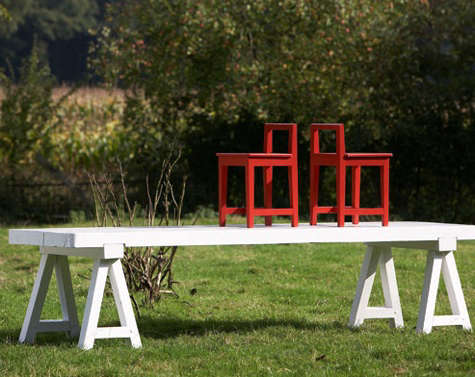
Some furniture politely enters a room. St. Paul Home furniture from Bruges does something quieter and more dangerous: it makes the room look as if it finally remembered its manners. No shouting finishes, no circus tricks, no chair trying to become a spaceship. Just proportion, honest materials, and the calm confidence of Belgian design.
Based in Bruges, Belgium, St. Paul Home is associated with finely made furniture, classic silhouettes, and a distinctly Flemish sense of restraint. The brand is best known among design followers for pieces that feel architectural without becoming cold, especially its collaborations connected to Belgian architect and designer Vincent Van Duysen. If your dream room includes solid oak, linen upholstery, pale walls, shadowy corners, and a table sturdy enough to survive both dinner parties and existential conversations, this design language is going to feel very familiar.
Bruges itself is part of the story. This is not a city that encourages disposable thinking. Its medieval center, canals, cobbled streets, lace tradition, and preserved façades create a setting where craftsmanship does not feel like a marketing slogan. It feels like the local weather. St. Paul Home belongs to that atmosphere: measured, tactile, and quietly luxurious.
What Makes St. Paul Home Furniture Special?
The appeal of St. Paul Home lies in its refusal to chase fashion. The furniture does not beg for attention. Instead, it earns attention through scale, weight, texture, and balance. That is a very Belgian move. Where some interiors depend on decorative drama, Belgian furniture often uses material depth: oak that looks better with age, linen that wrinkles beautifully, muted colors that cooperate with natural light, and forms that look simple until you realize how hard simplicity is to get right.
St. Paul Home pieces are frequently described through the language of classic silhouettes. That phrase matters. A classic silhouette is not boring; it is disciplined. Think of a dining table with a strong top and trestle-like base, a sofa with generous but not bloated proportions, a chair that looks comfortable without wearing a neon sign that says “I am ergonomic.” The best furniture in this style looks inevitable, as if the room had been waiting for it.
The Bruges Connection: Why Place Matters
Bruges is one of Europe’s best-preserved historic cities, famous for its medieval streets, canals, whitewashed façades, and rich visual culture. That environment matters when discussing furniture. In a city full of stone, brick, water, and patina, furniture cannot rely on surface shine alone. It must have presence. It must sit comfortably beside old floors, tall windows, thick walls, and rooms where light enters softly rather than barging in like a celebrity arriving late.
This is why St. Paul Home feels rooted rather than random. Bruges gives the furniture an architectural backdrop. The brand’s pieces make sense in heritage homes, canal houses, renovated lofts, and modern interiors that want warmth without clutter. It is furniture for people who appreciate negative space but still want somewhere excellent to put a cup of coffee.
Vincent Van Duysen and the St. Paul Home Design Language
One of the most important reasons design enthusiasts continue to search for St. Paul Home is its connection to Vincent Van Duysen. Van Duysen, a Belgian architect and designer, is known for interiors and furniture that combine minimalism with sensual materials. His work often explores the relationship between architecture, furniture, texture, and atmosphere. In plain English: he knows how to make a room feel calm without making it look like a dentist’s waiting area.
For St. Paul Home, Van Duysen designed the Living Room line and the Atelier Table, a piece often associated with the brand’s strongest identity. The Atelier Table is especially important because it captures the Belgian furniture philosophy in one object: solid oak, generous proportions, architectural clarity, and a practical spirit. It was designed for use, not just admiration. That is the difference between good furniture and furniture that looks nervous when someone sets down a glass.
The Atelier Table
The Atelier Table is the kind of dining or work table that seems to lower the room’s blood pressure. Its structure is simple, but not thin. It has mass, but not heaviness. The table has been described as a multi-purpose piece suited to homes and offices, with custom lengths that made it adaptable for both family dining and larger professional spaces. In design terms, that flexibility is gold. A great table should host breakfast, laptops, paperwork, wine, arguments about where to vacation, and one suspiciously large birthday cake.
Its material story is equally important. Natural oak brings grain, warmth, and durability. Unlike glossy engineered surfaces that can feel finished in the wrong way, oak develops character. Scratches become part of the record. Sunlight changes it. Hands polish it. Over time, the table becomes less like an object and more like a member of the household who happens to be very good at holding bowls.
The Living Room Collection
The Living Room collection for St. Paul Home reflects Van Duysen’s broader interest in comfort, proportion, and restraint. Instead of theatrical shapes, the pieces communicate through line and volume. Sofas and seating in this world are not overstuffed marshmallows. They are grounded, inviting, and architectural. The mood is relaxed but edited, like someone cleaned up before guests arrived but did not hide every sign of human life.
This matters because the modern living room has become a battleground. It must be stylish, photogenic, family-friendly, remote-work-ready, and comfortable enough for accidental naps. St. Paul Home’s approach works because it does not design for one perfect moment. It designs for daily rhythm.
Belgian Interior Style: The Bigger Picture
To understand St. Paul Home, it helps to understand Belgian interior style. Belgian design is often described as neutral, textural, and timeless, but those words can sound bland if we do not unpack them. Neutral does not mean lifeless. It means the palette is built from stone, linen, oak, plaster, clay, charcoal, cream, and weathered brown. Textural means the eye has something to read even when the colors stay quiet. Timeless means the room does not collapse emotionally when a trend report changes.
Belgian interiors often mix rustic and refined elements. A rough wooden table may sit under a precise modern light fixture. An old chair may stand beside a clean-lined sofa. Linen may soften a room with stone floors. The result is not a museum and not a showroom. It is a lived-in elegance that says, “Yes, we own nice things, but we also sit on them.”
How to Bring the St. Paul Home Look Into Your Own Space
Start With One Strong Anchor Piece
The easiest way to borrow the St. Paul Home mood is to begin with one major anchor: a solid oak dining table, a linen sofa, a low coffee table, or a strong wooden bench. Do not start with twelve decorative objects and hope the room becomes Belgian by committee. It will not. It will become a gift shop with ambition.
A table is the best starting point. Look for generous proportions, natural wood, visible grain, and a shape that feels sturdy but refined. Avoid anything too shiny or overly distressed. Belgian style is comfortable with age, but it does not fake history with a chainsaw and a can of gray stain.
Use a Muted, Natural Palette
St. Paul Home-inspired interiors work beautifully with warm whites, chalky grays, greige, taupe, sand, tobacco brown, charcoal, and muted black. These colors allow the furniture to breathe. They also make texture more visible. A linen sofa against a limewash wall looks layered, even if both are technically “beige.” This is where beige earns its graduate degree.
Choose Materials That Age Well
The Belgian approach favors materials with a future: oak, linen, wool, stone, iron, leather, plaster, and ceramic. These materials do not need to remain perfect to remain beautiful. In fact, many look better after use. A room inspired by St. Paul Home should not feel fragile. It should welcome a dinner party, muddy shoes near the door, and a dog who believes every rug is personally sponsored by him.
Keep Shapes Simple but Not Skinny
Minimal furniture sometimes becomes too thin, too sharp, or too visually nervous. St. Paul Home’s appeal is different. The silhouettes are simple, but they have weight. A table leg can be substantial. A sofa arm can be generous. A chair can have a calm outline. The secret is proportion. Simple does not mean underfed.
Where St. Paul Home Fits in Modern Furniture Trends
Today’s furniture market is full of fast-moving trends: curved sofas, mushroom lamps, boucle everything, checkerboard rugs, oversized sectionals, and tiny side tables that can barely hold a grape. Against that noise, St. Paul Home feels refreshingly durable. Its design values match what many homeowners now want: fewer pieces, better materials, flexible rooms, and furniture that can survive more than one decorating era.
The brand’s design language also fits the rising interest in quiet luxury. But unlike some versions of quiet luxury that feel a little too polished, Belgian quiet luxury has dirt under its fingernailsin the best possible way. It appreciates craft, age, and atmosphere. It allows imperfection. It does not confuse expensive with meaningful.
Collecting and Buying Considerations
Because St. Paul Home and older Vincent Van Duysen pieces may not always be easily available through standard retail channels, buyers should approach them like collectible design. Availability can vary, especially for legacy pieces such as the Atelier Table. Vintage dealers, European design galleries, architectural furniture specialists, and auction platforms may occasionally list original or related pieces.
When evaluating a St. Paul Home piece, look closely at provenance, dimensions, materials, condition, and production details. For a large oak table, measure twice and then measure your hallway three more times. A seven-meter table sounds glamorous until it meets a stairwell with the personality of a medieval tunnel.
For those who love the look but cannot source an original, the principles are still useful. Choose solid wood over veneer when budget allows. Favor linen or wool upholstery over synthetic shine. Leave space around furniture. Mix old and new pieces. Let the room feel collected rather than installed in a single afternoon by someone holding a clipboard.
Why This Furniture Still Feels Relevant
St. Paul Home remains interesting because it represents a design idea that has aged well: furniture should serve architecture, comfort, and daily life at the same time. It should not behave like sculpture that resents being touched. It should not disappear into generic functionality either. The best pieces occupy the middle ground, where beauty and usefulness shake hands like civilized adults.
That is why the Bruges setting matters so much. In a historic city, design has to understand continuity. New furniture must live with old surfaces. It must respect light, shadow, and proportion. St. Paul Home’s strongest pieces do exactly that. They feel modern, but not rootless; elegant, but not precious; minimal, but not empty.
Experience Notes: Living With the St. Paul Home Mood
A St. Paul Home-inspired room changes how you behave in it. That may sound dramatic, but furniture has manners, and rooms borrow those manners. Put a strong oak table in the center of a dining space and suddenly meals feel more intentional. People linger. Someone brings out bread. Someone else says, “We should do this more often,” which is usually code for “this table is doing emotional labor.”
The experience begins with touch. Your hand moves across oak and feels grain instead of plastic smoothness. Linen cushions shift slightly when you sit down. A plastered wall catches afternoon light differently at 3 p.m. than it did at 10 a.m. Nothing screams, but everything participates. This is the opposite of a room designed only for photos. It rewards time.
In a living room, the St. Paul Home feeling is calm but not stiff. Imagine a linen sofa with deep seats, a low table holding a ceramic bowl, a wool rug underfoot, and a stack of books that looks read rather than strategically abandoned. The palette is quiet: oatmeal, smoke, clay, oak, and soft black. The room does not need a dozen colors because the materials are doing the work. Even clutter looks better here, though let’s not abuse that privilege.
In a home office, an Atelier-style table can become the most useful object in the house. It gives you room to spread out drawings, laptops, notebooks, coffee, and the emotional debris of Monday morning. The table feels stable, and that stability affects the work. A flimsy desk makes every task feel temporary. A substantial table says, “Sit down. We are doing something real.” That is a surprisingly helpful message before answering email.
The dining experience may be where this furniture shines most. Belgian-style rooms are excellent at making meals feel generous without becoming formal. Pair a large oak table with mixed chairs, linen napkins, simple stoneware, and low lighting. Add soup, roasted vegetables, or a casual pasta dinner. Suddenly the room feels like it has hosted generations, even if the building is a new apartment and the pasta came from a recipe you found ten minutes ago.
There is also a slower emotional experience. Furniture like this asks you to stop replacing things just because you are bored. It encourages maintenance, repair, and patience. You oil the wood. You clean the linen. You move a chair from one room to another and discover it works there too. The pieces adapt because they are not trapped inside a trend. That is real luxury: not the loud kind, but the kind that quietly keeps making sense.
For American homes, the St. Paul Home approach is especially practical. It can soften a modern townhouse, bring discipline to a farmhouse interior, add warmth to a loft, or calm down a suburban open-plan living room that has been through one too many accent-wall experiments. You do not need a canal view in Bruges to borrow the mood. You need honest materials, fewer but better pieces, and enough restraint to let the room breathe.
Conclusion
St. Paul Home in Bruges represents a refined corner of Belgian furniture design: calm silhouettes, natural materials, architectural proportion, and a deep respect for everyday living. Its connection to Vincent Van Duysen gives the brand additional design significance, especially through pieces such as the Living Room collection and the Atelier Table. But the real lesson is broader than one brand or one table. It is about choosing furniture that feels grounded, useful, and beautiful over time.
In a world full of disposable décor and trend-chasing interiors, St. Paul Home reminds us that furniture can be quiet and still unforgettable. It can be simple without being plain, luxurious without being flashy, and practical without looking like it gave up. That is the Bruges effect: old-world patience, modern clarity, and just enough soul to make a room feel like home.
Note: This article is an editorial synthesis based on publicly available design references, historical context about Bruges, and documented information about St. Paul Home, Belgian furniture, and Vincent Van Duysen-related pieces. Product availability, pricing, and production status may change over time.