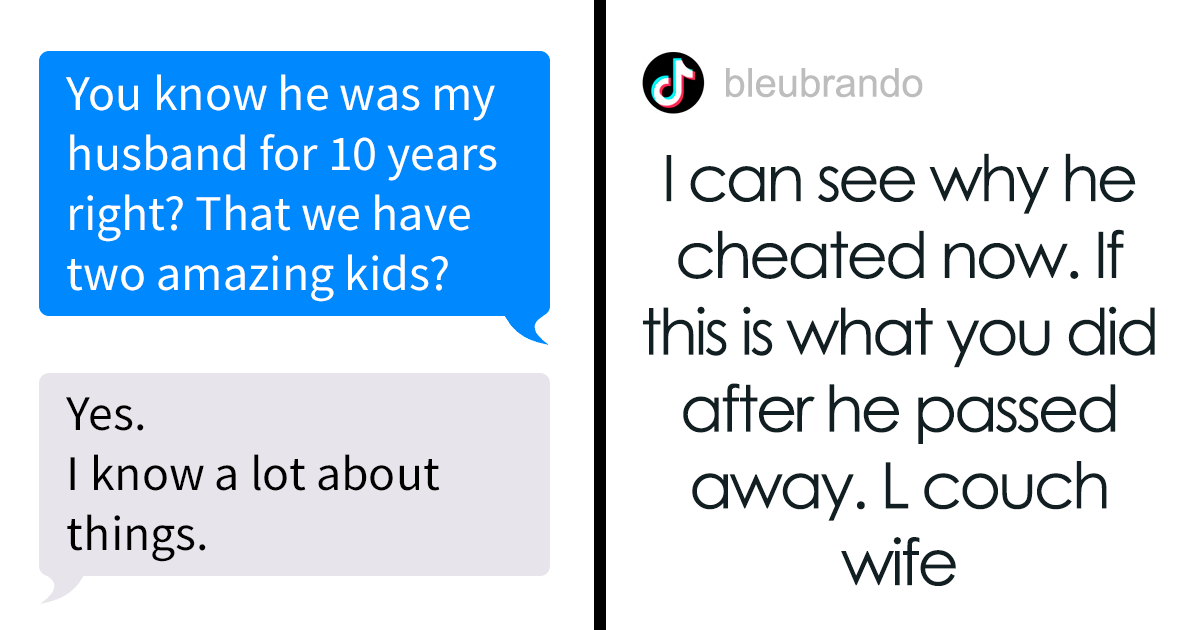
Some stories arrive on the internet wearing steel-toed boots. They kick open the door, spill a gallon of emotional chaos on the carpet, and leave everyone in the comments whispering, “Well, I did not have that on my bingo card.” This is one of those stories: a woman who had been married to her husband for 10 years discovered, after his death, that he had been involved with another woman. Then, instead of quietly filing the whole mess under “things I will scream about into a pillow,” she contacted the mistress to tell her he had passed away.
The situation is almost painfully cinematic: a grieving wife, a hidden affair, messages that reveal a second life, and a phone screen that suddenly becomes the world’s least welcome detective board. Yet what made the story go viral was not only the betrayal. It was the widow’s choice to tell the other woman the truth. Was it compassionate? Was it petty? Was it necessary? Was it a little of all three, like emotional lasagna?
At its core, this viral story is not just about infidelity. It is about grief with a plot twist, loyalty after death, and the strange moral math people must do when someone they loved leaves behind secrets instead of answers.
The Viral Story: A Widow, A Secret Affair, And One Brutally Awkward Message
According to public reporting about the viral account, the woman had been married for a decade and had children with her husband. After he passed away, she went through messages and discovered that he had been communicating with another woman. The affair had not been some ancient fossil from the early marriage years, either. It was recent enough to feel like a second loss stacked on top of the first.
Imagine grieving someone and then realizing you are also grieving the version of your marriage you thought you had. That is not a normal Tuesday problem. That is the kind of emotional whiplash that makes a person stare at the wall while a cup of coffee goes cold in their hand.
The widow eventually contacted the mistress to tell her that the husband had died. The exchange, later discussed online, sparked a huge debate. Some readers felt the mistress deserved to know. Others believed the widow owed her nothing. A third group appeared simply to clutch their digital pearls and refresh the comments section like it was premium cable.
Why This Story Hit Such A Nerve Online
Viral relationship stories tend to explode because they ask one big question in a thousand tiny forms: “What would I do?” This one hits especially hard because there is no clean answer. The husband was gone, so there could be no confrontation, no apology, no explanation, no late-night kitchen table conversation where someone finally tells the truth. The wife was left holding the emotional receipts.
Infidelity is already painful when both partners are alive and available for difficult conversations. When betrayal is discovered after death, the injured partner loses the chance to ask the most basic questions: How long? Why? Did you love her? Did you love me? What else was real? The silence can feel louder than any argument.
That is why many people responded so strongly. The story combines three universally powerful themes: marriage, death, and betrayal. Separately, each one can flatten a person. Together, they create a grief sandwich nobody ordered.
The Emotional Double Hit: Grieving A Husband And A Marriage
When a spouse dies, grief often comes with sadness, shock, loneliness, confusion, and a deep disruption of daily life. But when hidden infidelity comes to light after the death, the grief becomes complicated by betrayal. The widow may still mourn her husband, but she may also feel anger toward him. She may miss him and resent him in the same breath. She may want comfort from memories that now feel edited by someone else.
This is one reason stories like this are so emotionally messy. People like grief to behave politely. They want it to wear black, speak softly, and follow a predictable schedule. Real grief laughs at schedules. Add an affair to the picture, and grief starts throwing furniture.
She Was Not Just Asking “Who Was He?”
After discovering a secret affair, a surviving spouse may begin questioning the entire relationship. Ten years of marriage can suddenly feel like a courtroom full of evidence. Ordinary memories become suspicious. Business trips, late replies, unexplained moods, and phone habits may all be mentally replayed. The betrayed partner is not only grieving a person; she is also re-evaluating the story she lived inside.
That kind of emotional revision is exhausting. It is like being forced to reread a book you loved, only to discover someone changed the ending and scribbled in the margins.
Was Contacting The Mistress The Right Thing To Do?
The internet loves a clean verdict: hero or villain, queen or problem, mature or messy. But real life often lives in the gray area, wearing sweatpants and refusing to pick a side.
There are several ways to interpret the widow’s decision. On one hand, contacting the mistress could be seen as an act of basic human decency. If the other woman had an emotional attachment to the husband, she would eventually wonder why he disappeared. Telling her the truth gave her closure, even if the relationship itself was painful and inappropriate.
On the other hand, the widow was under no moral obligation to protect the feelings of someone who had participated in the betrayal, especially if that person knew he was married. Grief does not come with customer service requirements. A widow does not have to send courtesy updates to everyone involved in her pain.
Still, the action may have helped the widow reclaim control. When someone dies and leaves secrets behind, the surviving spouse can feel powerless. Sending that message may have been her way of saying, “I know the truth now, and I will not be the only person carrying it.”
The Mistress, The Wife, And The Complicated Question Of Blame
Many online readers immediately focused on the mistress. Did she know he was married? Did she know he had children? Did she care? These questions matter because they affect how people assign responsibility. But even when the other woman behaves badly, the primary betrayal still belongs to the spouse who made vows and broke them.
That does not mean the mistress is automatically innocent. If she knowingly pursued or continued a relationship with a married man, she played a role in the harm. But the husband was the person with the marriage, the family, and the obligation to be honest. He was not a confused houseplant accidentally placed in the wrong emotional window.
In stories of infidelity, people sometimes aim all their rage at the affair partner because it is easier than facing the betrayal from the person they loved most. After death, that becomes even more complicated. The spouse is gone, but the affair partner may still be reachable. That can make the other woman a lightning rod for anger, grief, and unanswered questions.
Why Hidden Affairs After Death Feel So Haunting
Discovering a secret after someone dies can feel different from discovering it while they are alive. There is no chance to demand honesty. There is no opportunity to watch body language, hear tone, or decide whether an apology feels real. The surviving spouse is left with screenshots, memories, and guesses.
That uncertainty can be one of the hardest parts. Human beings naturally try to make meaning from painful events. When the person who could explain is gone, the mind may keep circling the same questions. It wants a door, but it keeps finding a wall.
This is why support matters. A widow in this situation may need friends who can handle mixed emotions without forcing her into a single role. She should not have to be only the dignified grieving wife or only the furious betrayed partner. She can be both. She can cry over old photos in the morning and curse his password choices by lunch. Healing is not always elegant; sometimes it wears yesterday’s hoodie.
The Children Add Another Layer Of Pain
In the reported story, the couple had children, which makes the emotional landscape even more delicate. When children lose a parent, the surviving parent often becomes the keeper of memory. But what happens when that memory is fractured by betrayal?
Parents in this position face difficult choices. They may want to protect the children from adult details while also refusing to pretend everything was perfect. Age, maturity, timing, and emotional safety all matter. Young children do not need the heavy details of a parent’s affair. Older children may eventually have questions, especially if they discover pieces of the truth on their own.
The healthiest approach is usually not dramatic disclosure, but careful honesty. A parent might say, “There were adult problems in the marriage, and I am still working through my feelings, but your relationship with your father is your own.” That kind of answer protects the child without requiring the surviving spouse to perform a fake fairy tale.
Public Reaction: Sympathy, Outrage, And A Lot Of Side-Eye
Online reactions to the widow’s choice were mixed. Some people admired her for being honest. Others felt the mistress did not deserve a message. Many focused on the awkwardness of the exchange, because if the internet has one Olympic sport, it is analyzing screenshots like a committee of unpaid detectives.
But the intensity of the response says something about how people view marriage. Even in a culture full of dating apps, situationships, and “we’re just talking” arrangements that last longer than some car loans, marriage still carries symbolic weight. A 10-year marriage suggests shared bills, shared beds, shared holidays, shared inside jokes, and a shared life built brick by brick. An affair cracks that foundation.
The widow’s story reminded readers that betrayal is not only about romance. It is about reality. It is about discovering that someone else had access to a part of your life you did not even know existed.
What This Story Teaches About Infidelity And Closure
Closure is a popular word, but it is often misunderstood. People talk about closure as if it is a neat little box you can order online with free shipping. In reality, closure is usually something people build slowly. It may not come from the person who caused the pain. It may not come from an apology. It may not come from the perfect final conversation.
For the widow, contacting the mistress may have been one piece of closure. Not complete healing, not instant peace, not a magical reset button. Just one action in a situation where so much had been taken out of her hands.
For others facing a similar discovery, closure might look different. It could mean deleting messages after saving what is legally or practically necessary. It could mean talking with a therapist. It could mean telling one trusted friend the truth. It could mean deciding not to contact the affair partner at all. There is no universal script.
How Someone Can Cope After Discovering Betrayal After A Spouse Dies
1. Allow Conflicting Emotions
A person can love someone and be angry with them. They can mourn the death and hate the betrayal. They can miss the marriage and question it. Mixed emotions are not hypocrisy; they are humanity doing its best with terrible material.
2. Avoid Making Every Decision In The First Wave Of Shock
After finding proof of an affair, the urge to act immediately can be powerful. Sending messages, posting online, calling relatives, or confronting the affair partner may feel necessary. Sometimes it is better to pause, breathe, and choose a response instead of letting pain grab the steering wheel.
3. Protect Children From Adult Details
Children deserve emotional safety. That does not mean lying forever, but it does mean avoiding unnecessary details that could burden them. A surviving parent can validate the child’s grief while privately processing adult betrayal with appropriate support.
4. Build A Small Circle Of Safe People
Not everyone deserves access to a painful story. A trusted friend, therapist, counselor, support group, or family member can help the grieving spouse sort through anger and confusion without turning the situation into neighborhood theater.
5. Remember That Forgiveness Is Optional
One of the most damaging ideas people push after someone dies is that death automatically requires forgiveness. It does not. Forgiveness, if it comes, should be personal and freely chosen. No one should be rushed into emotional peace just because the person who caused pain is no longer alive.
Experiences And Lessons Related To This Topic
Stories like this resonate because they mirror experiences many people are too embarrassed or too exhausted to discuss openly. Some widows and widowers discover messages, photos, hidden accounts, secret spending, or emotional relationships only after a spouse is gone. The discovery can feel isolating because society has a script for widowhood: be sad, accept casseroles, speak kindly of the deceased, and slowly move forward. There is no easy script for “I am grieving, but I also found proof that my marriage had a secret basement.”
One common experience is the feeling of performing grief for other people. A widow may attend memorial events while hearing friends say, “He loved you so much,” and feel her stomach twist because she now knows there was another side to the story. She may feel guilty for being angry at someone who died. She may also feel guilty for still missing him. These emotions can pile up quickly, and none of them make her a bad person.
Another experience is the temptation to compare herself to the affair partner. Was the other woman younger? More exciting? Easier to talk to? Did he tell her the same jokes? Did he complain about the marriage? This comparison trap is brutal and usually unfair. An affair is not a balanced competition. The other person often receives a curated version: fewer bills, fewer sick days, fewer parenting arguments, and fewer discussions about whose turn it is to clean the mysterious sticky thing in the refrigerator.
Some people also struggle with what to do with digital evidence. Keeping every message can become painful, but deleting everything can feel like erasing proof. A practical middle ground is to save anything needed for legal, financial, or custody-related reasons, then place the rest somewhere less accessible. The goal is not to pretend the betrayal did not happen. The goal is to stop reopening the wound every night at 1:17 a.m. while the phone glows like a tiny emotional villain.
There is also the question of contacting the affair partner. Some people need answers. Others know that contact will only create more chaos. Before reaching out, it helps to ask: What am I hoping to gain? What will I do if they lie, blame me, ignore me, or reveal more than I can handle today? If the purpose is closure, remember that the affair partner may not be capable of giving it. Sometimes the most powerful closure is deciding, “I know enough to stop asking this person for truth.”
Finally, healing often comes from separating the marriage into truths that can coexist. A husband may have been loving in some moments and dishonest in others. A decade may have included real memories and real betrayal. A person may have been a good father in some ways and still caused deep harm as a partner. Holding those truths together is painful, but it can be more freeing than forcing the story into a cartoon of saint or villain.
The biggest lesson is this: betrayal after death does not cancel grief, and grief does not cancel betrayal. Both deserve space. The surviving spouse deserves support, privacy, and time to decide what healing looks like without the internet, relatives, or well-meaning casserole carriers demanding a performance of instant grace.
Conclusion: A Message That Was About More Than Death
The story of a woman contacting her late husband’s mistress to tell her he had died is not simply a viral drama. It is a painful example of what happens when love, secrecy, grief, and truth collide. The widow’s decision may look shocking from the outside, but from the inside, it may have been one of the few choices she had left.
Her story reminds us that relationships are not only measured by anniversaries and family photos. They are measured by honesty, accountability, and the private choices people make when they think no one is watching. When those choices are revealed after death, the people left behind must rebuild not only their lives, but also their understanding of the past.
And if there is one humane takeaway, it is this: people grieving complicated losses do not need judgment dressed up as advice. They need room to be devastated, furious, confused, tender, and occasionally darkly funny. Because sometimes laughter is not disrespect. Sometimes it is the tiny life raft floating through the emotional shipwreck.
Note: This article is an original, rewritten feature based on publicly reported story details and general relationship, grief, and counseling guidance. It avoids private speculation and graphic details while focusing on the emotional and social lessons of the situation.