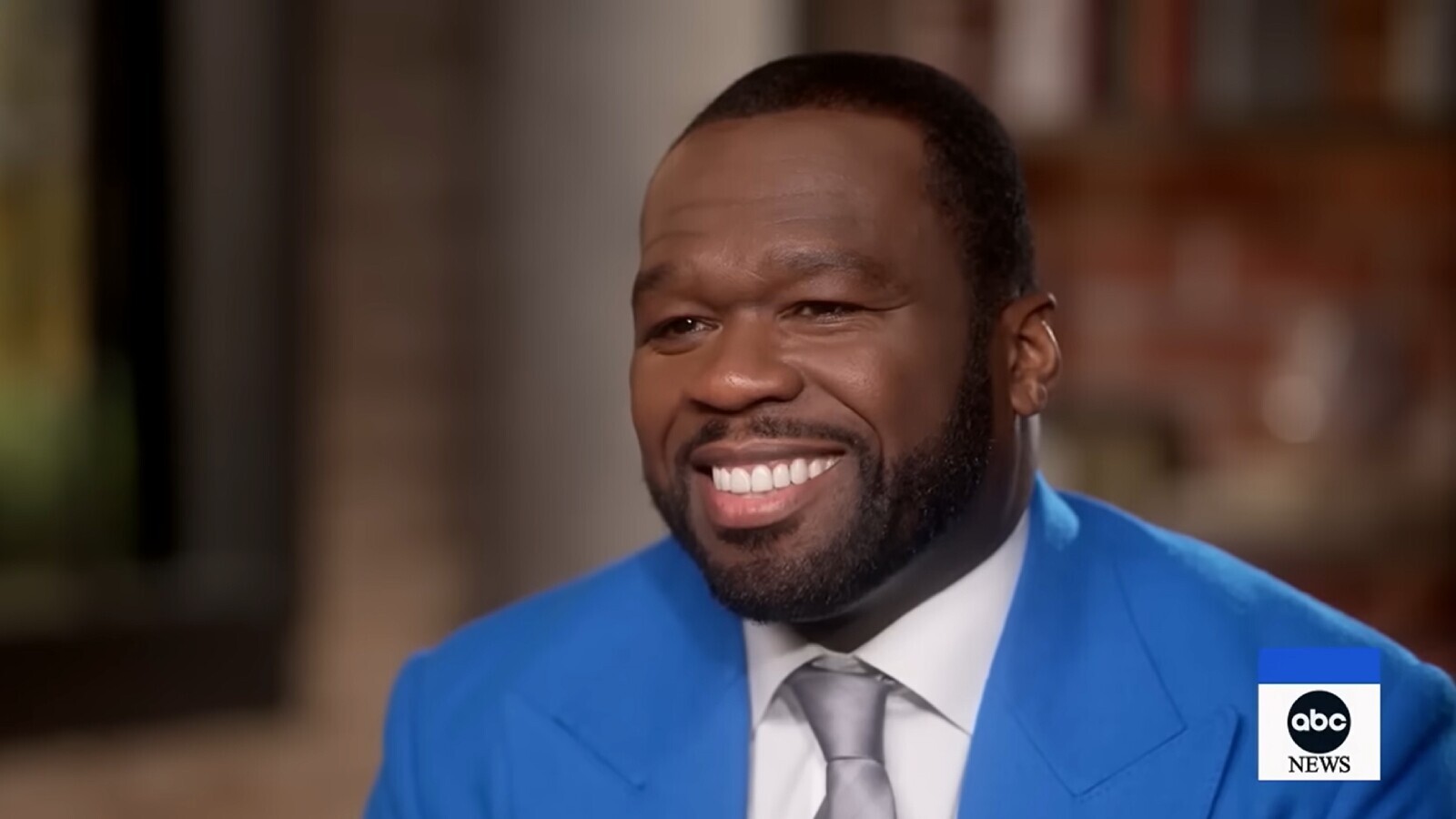
In hip-hop, beef is rarely just beef. Sometimes it is a diss record. Sometimes it is a caption. Sometimes it is a champagne-brand side-eye with a beat behind it. And sometimes, if you are Curtis “50 Cent” Jackson, it is a full documentary rollout, a national morning-show interview, and a wink so sharp it could cut glass.
The latest chapter in the long-running rivalry between 50 Cent and Sean “Diddy” Combs has hip-hop fans calling 50 one of the most committed trolls in entertainment history. The reason? After executive-producing the Netflix docuseries Sean Combs: The Reckoning, 50 Cent promoted it on Good Morning America, where he discussed why he felt compelled to speak publicly about Combs’ conduct and the allegations surrounding him. Online fans quickly noticed the deliciously petty detail: ABC is the kind of mainstream network that could be available on prison televisions, making the interview potentially visible to Combs while he is serving time.
That may sound like a conspiracy board made of pushpins, red string, and too much caffeine. But this is 50 Cent we are talking about. If there is a man in rap who can turn broadcast scheduling into a strategic roast, it is the same guy who has spent decades treating grudges like long-term investment portfolios.
The “Ultimate Troll” Moment: Why Fans Went Wild
The viral conversation took off after 50 Cent appeared with director Alexandria Stapleton to discuss Sean Combs: The Reckoning. The four-part Netflix series examines Combs’ rise, power, public image, criminal case, and the serious accusations made by former partners, employees, and others. It also includes never-before-seen footage of Combs in the days leading up to his 2024 arrest.
During the interview, 50 Cent said that staying silent would risk making it seem as though hip-hop accepted or excused the behavior being discussed. That was the serious part. The not-so-serious part came when fans began connecting dots around where the interview aired. Because Good Morning America airs on ABC, and because prison day rooms often rely on limited shared television programming, fans joked that 50 had chosen one of the few routes most likely to put the documentary’s promo directly in Diddy’s line of sight.
Was it confirmed as a master plan from the beginning? Not exactly. But 50 Cent’s public persona thrives in that gray area where plausible deniability wears a Yankees cap and laughs in your face. Fans did not need a signed confession. The smirk was enough evidence for the internet court of petty appeals.
A Rivalry Almost Two Decades in the Making
To understand why fans saw this as more than ordinary documentary promotion, you have to understand the history. The 50 Cent and Diddy tension did not appear overnight. Their public friction dates back to the mid-2000s, when 50 Cent took shots at Combs in music and interviews. One major flashpoint came with the 2006 diss track often cited in timelines of their feud, where 50 implied Combs had knowledge related to the murder of The Notorious B.I.G., an allegation Combs denied.
From there, the rivalry became a recurring subplot in hip-hop culture. It moved through music, business, social media, and brand warfare. 50 Cent mocked Diddy’s Ciroc vodka business while promoting his own liquor interests. He criticized Combs’ behavior in interviews. He revived old accusations whenever new headlines emerged. If rap beefs were weather systems, this one would not be a storm. It would be climate.
What makes 50 Cent different from many celebrity rivals is his stamina. Some entertainers throw shade and move on. 50 builds a whole pergola out of it. He understands timing, audience psychology, and the internet’s appetite for conflict. His trolling is not random; it is campaign-style messaging with jokes attached.
The Legal Context Behind the Documentary
The subject matter behind the jokes is serious. Sean Combs was arrested in September 2024 and later tried in federal court. In July 2025, a jury convicted him of two prostitution-related transportation counts under the Mann Act, while acquitting him of the more serious racketeering conspiracy and sex trafficking charges. In October 2025, he was sentenced to 50 months in federal prison.
That distinction matters. The internet often compresses legal outcomes into blunt labels, but a responsible article should be precise. Combs was convicted on the transportation counts. He was acquitted of racketeering and sex trafficking. He has also denied many civil allegations and criticized the Netflix documentary as unfair. Those facts can coexist with the broader cultural conversation about power, accountability, celebrity protection, and how the music industry handles allegations against its most influential figures.
Sean Combs: The Reckoning arrived in that atmosphere. The series was not simply another celebrity scandal recap. It landed after years of allegations, Cassie Ventura’s 2023 lawsuit and settlement, surveillance footage showing Combs assaulting Ventura in 2016, federal raids, a criminal trial, and a sentence that changed the way the public discussed one of hip-hop’s most powerful moguls.
Why 50 Cent’s Trolling Works So Well
50 Cent is not the first rapper to mock an enemy. Hip-hop was built, in part, on lyrical competition. But 50 has modernized the art of antagonism. He knows that a diss track can sting for a week, while a meme can travel forever. He also understands that fans love a story with continuity. When he trolls someone, it rarely feels like an isolated joke. It feels like episode 47 of a show people have been watching for years.
In the Diddy case, the trolling hit harder because it layered old rivalry over current events. 50 was not merely reposting headlines. He had a production credit on a major Netflix project. He had a media platform. He had a serious argument about accountability. And then, sitting on top of it all like a cherry on a petty sundae, he had the possibility that Diddy might see the promotion from prison.
That is why fans called it elite-level trolling. It was not loud. It was surgical. The joke was not that 50 yelled the most. The joke was that he may have arranged the stage so carefully that the punchline delivered itself.
From Rapper to Media Strategist
One reason this moment feels important is that 50 Cent is no longer just operating as a rapper with a grudge. He is a television producer, actor, businessman, liquor marketer, and media personality. His work on shows like Power helped reposition him as a serious entertainment executive. That makes his involvement in Sean Combs: The Reckoning more than a celebrity jab. It is also a business move.
For Netflix, the docuseries offered a high-interest subject with built-in cultural stakes. For 50 Cent, it offered a chance to shape a narrative around someone he has criticized for years. For viewers, it offered a complicated mix of investigation, celebrity downfall, hip-hop history, and real human harm. For fans of rap beef, it offered something else entirely: the sight of one longtime rival becoming an executive producer on the other man’s public reckoning.
That is the part that made the internet gasp. In the old days, a diss record was the nuclear option. Now, apparently, the nuclear option is a four-part streaming documentary with a press tour.
The Fan Reaction: Comedy, Shock, and “Petty Hall of Fame” Energy
Online, hip-hop fans responded with a mix of disbelief and admiration. Some called 50 Cent a menace. Others joked that his pettiness should be studied in universities. The humor was not only about Diddy; it was about 50’s almost cartoonish dedication to the craft of revenge. The man does not just hold a grudge. He waters it, gives it sunlight, builds a brand extension around it, and then sells tickets to the greenhouse.
At the same time, some viewers pushed back against reducing everything to comedy. The allegations and legal proceedings involve real people, trauma, and testimony. That is an important point. The reason this story resonates is not only because 50 Cent is funny online. It resonates because pop culture is wrestling with how to talk about accountability when the accused person is a beloved or powerful figure.
The fan reaction, then, sits in two lanes. One lane is pure internet comedy: “50 Cent really found a way to troll a man through ABC.” The other lane is cultural critique: “Why did it take rival pressure, lawsuits, video evidence, and documentary crews for some stories to be heard?” Both lanes are part of the conversation.
What This Says About Hip-Hop Culture
Hip-hop has always been a culture of memory. Fans remember bars, betrayals, alliances, label drama, award-show moments, old interviews, and who stood next to whom in a music video from 2003. That long memory is why the 50 Cent and Diddy feud has remained so potent. It is not just gossip; it is a timeline.
The situation also highlights hip-hop’s uneasy relationship with mogul mythology. For decades, the culture celebrated figures who turned street-level hustle into corporate power. Diddy was one of the clearest examples: Bad Boy Records, fashion, liquor, television, marketing, and a public image built on celebration and success. But the same machinery that builds icons can also protect them from scrutiny.
50 Cent’s documentary involvement forces an uncomfortable question: when does a rival’s criticism become useful accountability, and when does accountability risk being dismissed because the messenger has beef? The answer is not simple. A rival can have motives and still raise valid concerns. A documentary can be promoted with trolling energy and still contain serious reporting. Viewers have to be smart enough to separate the joke from the evidence.
Why the ABC Detail Became the Perfect Internet Punchline
The ABC angle worked because it felt like classic 50 Cent: funny, mean, indirect, and just believable enough. If he had posted, “I hope Diddy sees this in prison,” it would have been obvious. Instead, the humor came from fans discovering the possibility and treating it like a hidden Easter egg. That is stronger than a normal insult because it invites the audience to participate.
In digital culture, the best trolling is interactive. Fans do not just watch; they decode. They screenshot. They repost. They add context. They create the mythology around the move. Whether 50 planned every layer or simply leaned into the fan theory afterward, the result was the same: the story grew legs, put on designer sneakers, and sprinted across social media.
That is why people called it the ultimate troll. It combined timing, platform, history, legal drama, fan sleuthing, and celebrity ego. It was not just a joke. It was a distribution strategy with a punchline.
Experience Section: What This Moment Teaches About Public Image, Beef, and the Internet
Anyone who has watched online culture for more than five minutes knows one thing: the internet does not simply consume events; it seasons them. A news interview becomes a meme. A documentary becomes a battlefield. A network choice becomes a conspiracy theory with a laugh track. The 50 Cent and Diddy moment is a perfect example of how modern audiences experience celebrity conflict.
First, it shows that reputation is now a live performance. In the past, a star’s image could be shaped mostly through magazines, music videos, and carefully managed interviews. Today, fans monitor everything in real time. They notice captions, timing, platform choices, facial expressions, and who liked what post. 50 Cent thrives in that environment because he behaves like someone who knows the audience is always watching. He does not need to explain every joke. He just drops the bait and lets the comment section go fishing.
Second, this story teaches that humor can make serious subjects travel farther, but it can also make them harder to handle responsibly. The jokes about 50 trolling Diddy are funny because the rivalry has history. But the documentary’s subject matter is not a cartoon feud. It involves alleged abuse, criminal charges, testimony, legal consequences, and people who say they were harmed. The challenge for writers, fans, and commentators is to enjoy the absurdity of celebrity behavior without turning victims and witnesses into background props.
Third, the moment proves that hip-hop beef has evolved. In earlier eras, victory might mean the better diss track, the sharper freestyle, or the bigger crowd reaction. Now victory can look like owning the media pipeline. 50 Cent did not need to step into a booth to make this chapter sting. He used production credits, streaming distribution, morning television, and social-media timing. That is not just beef; that is brand management with brass knuckles.
Fourth, there is a lesson here for public figures: old conflicts do not disappear when the internet archives everything. A feud from 2006 can become newly relevant in 2026 if new facts, legal events, or cultural shifts give it fresh context. The past is no longer buried. It is searchable, remixable, and ready to trend again whenever the right headline arrives.
Finally, fans are drawn to this story because it feels like poetic structure. A man known for controlling image and spectacle becomes the subject of a documentary. A rival known for trolling becomes one of the people helping bring that documentary to the public. Then fans believe the promo may have been placed somewhere the subject could not easily avoid it. Whether one sees that as petty, brilliant, uncomfortable, or all three, it is undeniably modern.
The bigger experience is this: celebrity culture now operates like a group chat with a legal department. Everyone has jokes. Everyone has receipts. Everyone has opinions. And when 50 Cent is involved, someone is probably about to get cooked slowly, publicly, and with promotional support.
Conclusion
Hip-hop fans say 50 Cent pulled off the ultimate troll of P. Diddy because the moment combined everything that makes modern rap drama irresistible: old beef, new media, serious legal fallout, streaming power, fan detective work, and a level of petty precision that feels almost athletic. The Good Morning America appearance may have been a standard promotional stop on paper, but in the eyes of fans, it became a legendary chess move.
Still, the story is bigger than trolling. It reflects how hip-hop is confronting power, accountability, celebrity protection, and the complicated role of rivals in exposing uncomfortable truths. 50 Cent’s humor made the moment viral, but the underlying issues are serious. That tension is exactly why the story keeps people talking. It is funny, messy, disturbing, strategic, and deeply tied to the way pop culture works now.
In other words, 50 Cent did not just deliver beef. He may have found a way to make sure the order reached the right address.