Becoming an Icelandic citizen sounds a little like joining an exclusive club where the membership perks include volcanic landscapes, clean tap water that tastes like bottled luxury, and the ability to casually say, “I live near a glacier.” But behind the postcard-worthy scenery is a very real legal process. Icelandic citizenship is not granted because you love the Northern Lights, own three wool sweaters, or can pronounce Eyjafjallajökull without accidentally summoning a weather system.
For most foreign nationals, the journey to Icelandic citizenship involves years of lawful residence, a permanent residence permit or the right to live in Iceland without one, financial stability, a clean legal record, and proof that you have made a real effort to integrate into Icelandic society. The process is structured, document-heavy, and surprisingly practical. Iceland wants new citizens who are not just passing through for hot springs and dramatic Instagram captions, but people who have built a genuine life in the country.
This guide explains how to become an Icelandic citizen, including eligibility rules, residence requirements, language expectations, documents, application steps, costs, and real-life experience tips. Consider it your friendly map through the lava field of paperwork.
What Icelandic Citizenship Means
Icelandic citizenship gives you full legal membership in Iceland. As a citizen, you can live in Iceland permanently, vote in national elections, apply for an Icelandic passport, and enjoy the rights and responsibilities that come with belonging to the Icelandic state. Icelandic citizens also benefit from Iceland’s participation in the European Economic Area and the Schengen Area, which can make travel, work, and residence across much of Europe easier than it is for many non-European nationals.
Permanent residence is powerful, but citizenship goes further. A permanent resident may live and work in Iceland long-term, but a citizen has political rights, stronger security of status, and access to an Icelandic passport. In simple terms, permanent residence says, “You may stay.” Citizenship says, “You belong here.” Big difference. One is a solid rental agreement with the country; the other is getting your name on the mailbox.
Main Pathways to Icelandic Citizenship
There are several ways a person may become an Icelandic citizen. The most common route for foreign nationals is naturalization after living legally in Iceland for the required number of years. Other routes may apply to children of Icelandic citizens, former Icelandic citizens, Nordic citizens, stateless persons, refugees, and young people who grew up in Iceland.
Citizenship by Birth or Descent
A person may acquire Icelandic citizenship at birth if at least one parent is Icelandic, depending on the circumstances of birth, parentage, and registration. Children born to Icelandic parents often have a much simpler route than adults who move to Iceland later in life. If you believe you may qualify through an Icelandic parent, your first step should be to confirm your status through official Icelandic authorities rather than assuming you need full naturalization.
Citizenship by Naturalization
Naturalization is the standard route for most immigrants. In general, a foreign national can apply for Icelandic citizenship after having legal domicile and continuous residence in Iceland for seven years. This period is not just about physically being in the country. You must have lawful residence, maintain your immigration status properly, and avoid long absences that interrupt your residence history.
Citizenship by Notification or Special Rules
Some people may qualify through a simplified notification process, especially certain Nordic citizens and young people who have lived in Iceland for much of their childhood. Former Icelandic citizens may also have restoration options. These special routes exist because Iceland recognizes close historical, family, or regional connections. They are not shortcuts in the “skip the line because you like skyr” sense; they are specific legal categories with their own conditions.
How Long Do You Need to Live in Iceland?
The standard residence requirement for Icelandic citizenship is seven years of legal domicile and continuous residence. However, some applicants may qualify after a shorter period.
- Most foreign nationals: usually seven years of legal domicile and continuous residence.
- Nordic citizens: often four years through the general application route, with possible simplified options for certain Nordic nationals.
- Spouses of Icelandic citizens: may qualify after a shorter period if marriage, cohabitation, and citizenship-duration requirements are met.
- Registered cohabiting partners of Icelandic citizens: may have a reduced residence period when the relationship is officially registered and other rules are satisfied.
- Children of Icelandic citizens: may qualify after a shorter residence period if the Icelandic parent has held citizenship for the required time.
- Refugees and stateless persons: may qualify after a reduced residence period under special rules.
- Former Icelandic citizens: may have restoration or reduced-residence options.
These categories matter because applying too early can lead to rejection. The Icelandic authorities take residence timelines seriously. If the rule says seven years, “six years, eleven months, and a strong emotional attachment to Reykjavík coffee shops” is not the same thing.
Residence Permit Before Citizenship
For many non-EEA nationals, the path begins with a residence permit. You may move to Iceland for work, family reunification, study, protection, or another eligible purpose. Not every permit creates a smooth path to permanent residence, so it is important to choose the correct permit category from the beginning.
As a general rule, many applicants become eligible for permanent residence after four years of continuous legal residence on a qualifying permit. Permanent residence has its own requirements, including valid residence status, timely renewals, limits on absences, language study or testing, and proof of secure financial support. After permanent residence, the citizenship application becomes the next major milestone.
EU, EEA, EFTA, and Nordic citizens may have different residence rights than non-EEA citizens. U.S. citizens can generally visit Iceland for tourism or business for up to 90 days within the Schengen rules, but visiting is not the same as immigrating. You cannot simply arrive, fall in love with a waterfall, and declare yourself a future citizen by vibes alone. Long-term residence requires the correct legal basis.
Core Requirements for Icelandic Citizenship
1. Legal Domicile and Continuous Residence
You must usually show that you have lived legally and continuously in Iceland for the required period. “Continuous” does not mean you can never leave Iceland. People travel for family, work, study, and sanity-preserving winter sun. However, long or repeated absences may affect your eligibility. Keep records of your travel, residence permits, renewals, and address registration.
2. Permanent Residence or No Permit Requirement
Most applicants must either hold a permanent residence permit or be in a category that does not require a residence permit to live in Iceland. This is why planning matters. Citizenship is usually not the first immigration step; it is the final chapter after lawful residence, renewal discipline, and integration.
3. Proof of Identity
Applicants must prove their identity clearly. This usually means submitting a valid passport and other official documents. If your name has changed because of marriage, divorce, adoption, or another legal reason, prepare supporting documents. Icelandic authorities are not fond of mystery novels inside immigration files.
4. Icelandic Language Requirement
Applicants generally must pass an Icelandic language test for citizenship unless an exemption applies. Icelandic has a reputation for being challenging, and frankly, it earned that reputation honestly. The grammar can feel like it was carved into a Viking stone tablet and then hidden inside a crossword puzzle.
Still, the language requirement is not meant to torment you. It reflects the idea that citizenship includes participation in society. Start early. Take classes, practice with locals, listen to Icelandic radio, read children’s books, label items around your apartment, and celebrate every correctly declined noun like you just won Eurovision.
5. Financial Self-Sufficiency
Applicants must usually show they can support themselves in Iceland. This may involve tax records, employment income, bank statements, or other proof of lawful financial stability. Receiving certain forms of local financial support may affect eligibility, especially within the years before applying.
The practical lesson is simple: keep your finances clean, documented, and boring. Immigration officers like boring financial files. Boring means clear pay slips, filed taxes, paid debts, and no dramatic plot twists.
6. No Serious Criminal Issues
A clean record is important. Applicants may need to submit criminal record certificates from Iceland and from countries where they previously lived. Criminal convictions, pending charges, unpaid fines, or serious legal problems can delay or prevent citizenship approval. Minor issues may not always be fatal, but they should never be ignored.
7. No Tax Arrears or Serious Debt Problems
Icelandic citizenship rules also consider whether an applicant is in arrears with taxes or has unresolved financial enforcement issues. Before applying, check your tax status, municipal obligations, and any debts that might create problems. If something needs fixing, fix it before the application, not after receiving a stern letter that makes your stomach fall into your socks.
8. Good Reputation and References
Applicants may need testimonials from Icelandic citizens of good standing. These references help show that you are integrated, trustworthy, and known in the community. Do not wait until the week before applying to discover you need local references. Build real relationships over time through work, school, volunteering, sports clubs, neighborhood life, and community events.
Documents Commonly Needed
The exact document list can vary by applicant, but common supporting documents include:
- Copy of passport or travel document
- Certificate of legal residence or domicile history
- Icelandic language test certificate
- Foreign criminal record certificate
- Tax and income documentation
- Proof of employment or financial support
- Marriage, cohabitation, birth, adoption, or family documents if relevant
- Testimonials or references when required
- Certified translations for documents not accepted in their original language
Documents may need to be originals, certified copies, legalized, apostilled, or officially translated. This is where many applicants lose time. A document that is perfectly valid in your home country may still need formal authentication for Icelandic use. Translation and legalization are not glamorous, but neither is having your application delayed because your birth certificate arrived wearing the wrong bureaucratic hat.
Step-by-Step: How to Become an Icelandic Citizen
Step 1: Confirm Your Immigration Category
Before counting years, confirm which pathway applies to you. Are you a general applicant, Nordic citizen, spouse of an Icelandic citizen, child of an Icelandic citizen, refugee, stateless person, former citizen, or young person raised in Iceland? Your category determines your residence timeline and document list.
Step 2: Build Lawful Residence in Iceland
Live in Iceland under the correct legal status. Renew permits on time. Register addresses properly. Avoid long absences. Keep copies of every approval, renewal, and official letter. Future-you will want to hug present-you for keeping a tidy folder.
Step 3: Apply for Permanent Residence if Required
If your route requires permanent residence, apply when eligible. Do not let your current permit expire while waiting. Permanent residence processing can take longer than a regular renewal, so many applicants must think carefully about timing and may need to renew their current permit while the permanent residence application is pending.
Step 4: Learn Icelandic Early
Do not postpone the language requirement until year six and a half. Icelandic rewards patience, repetition, and humility. You will mispronounce things. You will accidentally say something weird. This is normal. The goal is progress, not poetic perfection.
Step 5: Prepare Your Records
Collect passports, residence records, tax documents, criminal record certificates, income proof, language certificates, and family documents. Check whether documents need apostilles, legalization, or certified translation. Make a checklist and update it as rules change.
Step 6: Submit the Citizenship Application
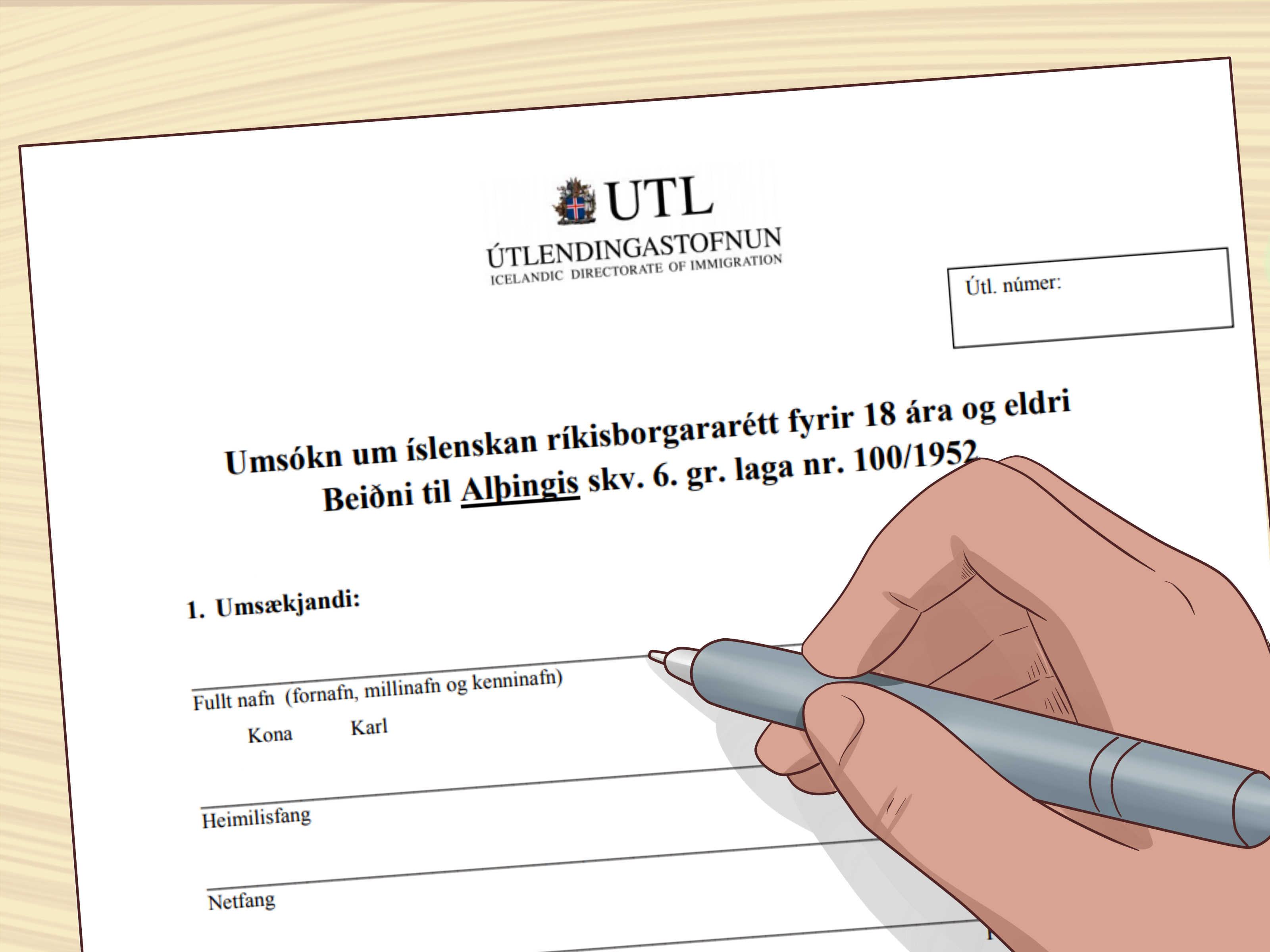
Icelandic citizenship applications can be submitted electronically through the official system when available. Applicants generally need a digital ID to complete the online application. You may be able to include children under 18 in the same application, depending on your family situation.
Step 7: Pay the Fee
The application fee for Icelandic citizenship is currently listed at 60,000 ISK for an adult application. A child application has a separate lower fee, though when children are included with an adult application, only one fee may apply in some cases. Fees can change, so applicants should always confirm the current amount before submitting.
Step 8: Wait for Processing and Respond Quickly
Processing times can vary. If authorities request additional documents, respond promptly and completely. Half-answers create delays. A good rule: if the request asks for three things, send three things, not two things and a hopeful smile.
Step 9: Receive the Decision
If approved, you become an Icelandic citizen and may then apply for Icelandic citizenship documents and eventually an Icelandic passport. If refused, read the decision carefully. In some situations, you may be able to correct problems and apply again later.
Common Mistakes to Avoid
Applying Too Early
Submitting before you meet the residence requirement can lead to rejection. Count your qualifying residence carefully, especially if you had permit gaps, long absences, or time in Iceland under a status that does not count toward citizenship.
Ignoring Absence Rules
Travel can affect continuous residence. Keep a travel log with dates, destinations, and reasons. It sounds tedious until you need it. Then it sounds like genius.
Underestimating Icelandic
Icelandic is manageable with time, but it is not a weekend hobby if your goal is citizenship. Start early and use real-life practice. Ordering coffee in Icelandic counts. Understanding the reply counts even more.
Poor Document Preparation
Missing translations, outdated criminal record certificates, unclear identity documents, and uncertified copies can slow down an application. Treat documentation like a serious project, not a scavenger hunt conducted the night before submission.
Tax or Debt Problems
Before applying, confirm that taxes, municipal obligations, and financial records are in good order. A citizenship application is not the ideal time for old debts to leap out like trolls from under a bridge.
Can You Keep Your Original Citizenship?
Iceland permits dual citizenship. This means Iceland generally does not require you to give up your previous nationality when becoming Icelandic. However, your original country may have its own rules. Some countries allow dual citizenship freely, some restrict it, and others may treat naturalization abroad as a loss of citizenship. Always check both sides before applying.
Is Icelandic Citizenship Worth It?
For people who have built a life in Iceland, citizenship can be deeply meaningful. It offers security, political rights, identity, and long-term belonging. But it is not something to pursue casually. Iceland is beautiful, safe, and unique, but it is also expensive, remote, weather-intense, and culturally specific. Winter darkness is real. So are housing challenges, language barriers, and the humbling moment when a toddler corrects your Icelandic pronunciation.
The best applicants are not simply chasing a passport. They are people who want to participate in Icelandic society, contribute to the community, respect the language, and make a long-term home there.
Experience Notes: What the Journey Feels Like in Real Life
The experience of becoming an Icelandic citizen is less like a dramatic movie montage and more like a long, steady relationship with paperwork, weather, and personal persistence. Many people begin with excitement: the first job offer, the first apartment, the first walk past colorful houses in Reykjavík, the first time they realize the wind is not “breezy” but actively negotiating with their skeleton. Then reality arrives. You need permits, ID numbers, bank accounts, housing, tax records, language classes, and a calendar full of renewal deadlines.
One of the biggest lessons applicants learn is that Iceland rewards preparation. The country may feel relaxed in daily life, but official processes expect accuracy. If a document must be translated, translate it. If a permit must be renewed before a deadline, renew it early. If a certificate must be recent, do not submit one from the archaeological era of your filing cabinet. People who treat the citizenship journey as a long-term project usually have a smoother experience than those who treat it as one big final application.
The language journey is often the most emotional part. At first, Icelandic can feel impossible. Street signs look like someone spilled Scrabble tiles into a snowstorm. Conversations move quickly. Locals may switch to English because they are trying to be helpful, which is kind but also makes practice harder. The trick is to keep going. Tell people you are learning. Ask them to speak slowly. Use everyday situations: grocery stores, swimming pools, workplace greetings, parent-teacher meetings, doctor appointments, and community events. Fluency grows through repetition, embarrassment, and stubborn optimism.
Social integration matters too. Iceland can be friendly but reserved. Many newcomers find that relationships develop through repeated contact rather than instant warmth. Join a sports club, choir, volunteer group, hiking community, union activity, language exchange, or local class. The goal is not just to collect references for citizenship. The goal is to become part of ordinary life. Citizenship is much easier to understand when you have neighbors who recognize you, coworkers who trust you, and friends who invite you to things where dried fish may appear without warning.
Financially, applicants should expect Iceland to be expensive. Rent, food, transportation, and services can surprise newcomers, especially those coming from countries with lower living costs. A stable income and clean tax record are not only legal requirements; they are survival tools. Keep pay slips, tax returns, employment contracts, rental agreements, and official notices organized from the beginning. A simple digital folder system can save hours later.
Finally, patience is essential. Immigration and citizenship processes can feel slow, and waiting can be stressful when your future depends on a decision. Use that waiting time wisely. Improve your Icelandic, strengthen your community ties, update your documents, and keep your life moving. The applicants who do best are usually the ones who understand that Icelandic citizenship is not a single form. It is the result of years of residence, responsibility, and belonging. Also, owning a good waterproof jacket does not hurt.
Conclusion
Learning how to become an Icelandic citizen starts with understanding that citizenship is a long-term legal and personal commitment. Most applicants need seven years of lawful residence, permanent residence or an equivalent right to stay, proof of identity, Icelandic language ability, financial stability, clean legal records, and strong documentation. Some applicants, including Nordic citizens, spouses or children of Icelandic citizens, refugees, stateless persons, and former Icelandic citizens, may qualify under shorter or special rules.
The smartest approach is to plan early. Choose the right residence permit, renew everything on time, learn Icelandic before panic becomes your study method, keep your taxes clean, and organize documents as if your future passport depends on itbecause it might. Icelandic citizenship is not instant, but for those who genuinely build a life in Iceland, it can be a powerful final step from resident to full member of the community.
Note: Immigration rules, document requirements, fees, and processing practices can change. Always confirm the latest requirements with Iceland’s Directorate of Immigration or qualified legal counsel before applying.