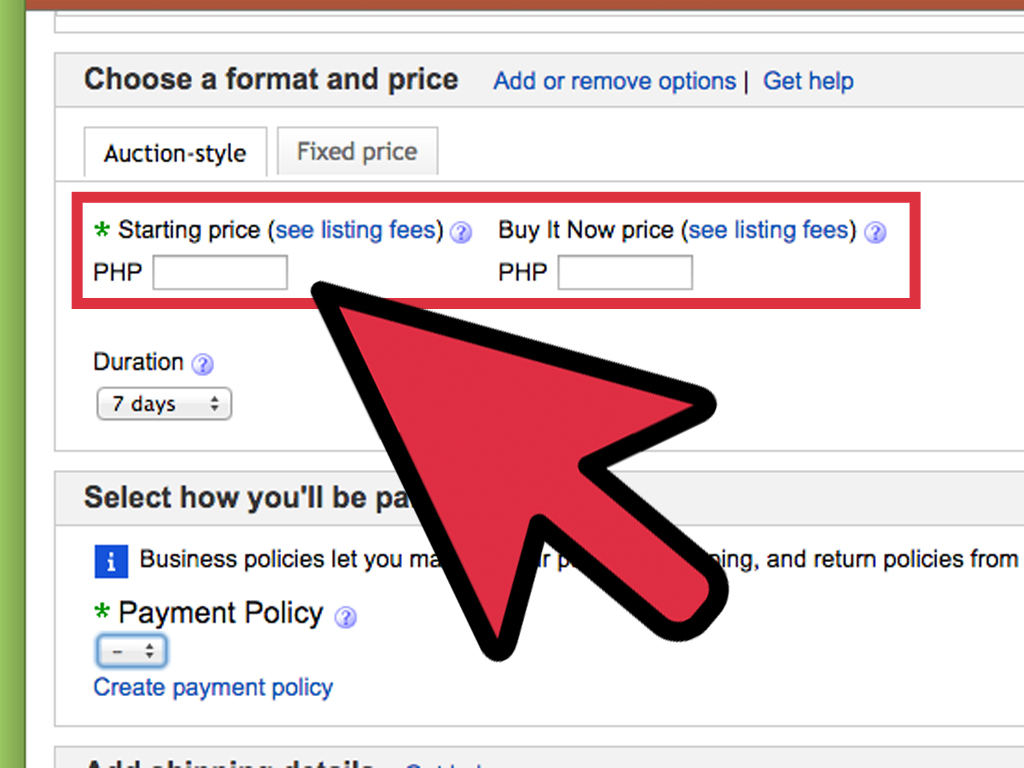
Pricing an eBay item can feel like trying to guess the weight of a watermelon while blindfolded. Price too high, and your listing sits there gathering digital dust. Price too low, and your item sells in nine minutes while you stare at the screen wondering whether you just donated profit to a stranger named “bargainhunter77.”
The good news? You do not need magical instincts, a reseller sixth sense, or a crystal ball from the collectibles category. You need a simple process. Whether you are selling sneakers, vintage cameras, used electronics, collectible toys, books, auto parts, trading cards, clothing, or that mysterious kitchen gadget from the back of your cabinet, the best eBay pricing strategy starts with real market data.
This guide breaks down how to determine what to price your eBay items in four practical steps. You will learn how to research sold listings, compare condition, calculate fees and shipping, choose between auction and fixed price, and adjust your listing based on buyer behavior. By the end, you will have a pricing method that is realistic, profitable, and much less stressful than shouting “surely someone will pay $80 for this!” into the void.
Step 1: Research Sold Listings, Not Wishful Thinking
The biggest mistake new sellers make is checking active listings and assuming those prices represent market value. Active listings show what sellers want. Sold listings show what buyers actually paid. That difference matters. A seller can list a used coffee mug for $499 and call it “rare.” That does not mean the mug is worth $499. It might simply mean someone got ambitious after too much espresso.
To price your eBay items accurately, start with completed and sold listings. Search for the exact item or the closest possible match, then filter by sold items. Focus on recent sales because the market changes quickly. Electronics, fashion trends, collectibles, seasonal products, and viral items can rise or fall in value faster than you can say “limited edition.”
How to Search Like a Smart Seller
Use specific keywords. Instead of searching “Nike shoes,” search the model, size, colorway, and condition. Instead of “old camera,” search the brand, model number, lens type, and whether it has been tested. The more specific your search, the cleaner your pricing data will be.
For example, suppose you are selling a used Nintendo Switch OLED console. Searching “Nintendo Switch” will return a messy pile of regular consoles, OLED models, bundles, broken units, games, accessories, and listings from sellers who apparently believe keywords are confetti. A better search would be “Nintendo Switch OLED white joy-con console used tested.” That narrows the results to comparable listings.
Look at at least 10 to 20 sold listings when possible. One unusually high sale does not prove your item is worth that amount. One low sale does not mean you must panic-price your item either. You are looking for a realistic range. If most similar items sold between $145 and $170, your price should probably live somewhere in that neighborhood unless your item has a strong reason to be higher or lower.
Use eBay Product Research for Deeper Data
For sellers who want stronger pricing confidence, eBay Product Research, formerly associated with Terapeak research tools, can provide deeper marketplace data such as sales trends, average sale prices, sold price ranges, and historical performance. This is especially useful if you sell regularly, manage multiple listings, or deal in categories where prices change often.
Product Research can help answer questions such as: Is the item selling quickly? What is the average sold price? Are prices trending upward or downward? Which condition sells best? Is the market flooded with similar listings? These answers help you avoid pricing based on emotion, nostalgia, or the dangerous phrase “I saw one listed for way more.”
Step 2: Compare Condition, Completeness, and Seller Reputation
Once you have sold-price data, the next step is comparing your item honestly. This is where sellers sometimes become poets. “Gently used” becomes “battle-tested.” “Minor wear” becomes “character.” “Untested” becomes “probably works, but let us all use our imaginations.” Buyers, however, care about condition, completeness, and trust.
Condition can dramatically change an eBay item’s price. A new-in-box collectible may sell for several times more than the same item opened, scratched, missing accessories, or smelling faintly like a garage from 1998. A tested electronic device with clear photos and original packaging may command a higher price than an untested one with a blurry photo taken under a lamp that has seen better centuries.
Match Your Item to the Right Condition Tier
Before pricing, decide which condition tier your item truly belongs in. Is it new, open box, refurbished, used, for parts, or not working? Be honest. A slightly lower but accurate price usually performs better than an inflated price attached to a condition claim buyers do not trust.
For used items, note visible wear, defects, missing parts, stains, scratches, dents, odors, battery health, authenticity concerns, or anything else that could affect buyer confidence. Clear disclosure does not just protect you from returns; it also helps justify your price. A buyer may accept a small flaw if the price reflects it and the photos show it clearly.
Completeness Changes Value
Accessories matter. Original boxes, manuals, chargers, cables, certificates of authenticity, dust bags, replacement parts, cases, tags, and receipts can raise value. For example, a used camera body with the original box, battery, charger, strap, and manual may sell for more than the same camera body alone. A collectible action figure with its original packaging can land in a completely different pricing universe from one loose in a drawer next to paper clips.
When comparing sold listings, do not compare your incomplete item to the highest-priced complete listing. That is like comparing a bicycle frame to a fully loaded mountain bike and saying, “Close enough.” Instead, find listings that match your item’s actual package.
Your Seller Profile Also Affects Pricing
Buyers consider more than the item. They also consider the seller. A top-rated seller with thousands of positive reviews, professional photos, fast shipping, and easy returns may charge more than a brand-new seller with three feedback points and a photo that looks like it was taken during an earthquake.
If you are new to eBay, pricing slightly below highly established sellers can help you compete while you build trust. That does not mean racing to the bottom. It means understanding that reputation is part of the value equation. As your feedback improves, your listings may support stronger pricing.
Step 3: Calculate Fees, Shipping, and Your Real Profit
Revenue is not profit. This sentence deserves a tiny parade because many sellers forget it. If you sell an item for $50, you do not keep $50. eBay selling fees, payment-related costs, shipping labels, packaging supplies, promoted listing ad fees, returns, and your original cost all affect your actual profit.
Before setting your price, calculate your break-even point. At minimum, include your item cost, eBay final value fee, per-order fee, shipping cost, packaging materials, and any optional advertising cost. If you sourced the item from a thrift store for $12, paid $8 to ship it, used $1.25 in packaging, and expect marketplace fees, your $29.99 sale may not be as exciting as it looks.
A Simple eBay Pricing Formula
Use this practical formula:
Target price = item cost + shipping cost + packaging cost + estimated fees + desired profit
For example, imagine you bought a vintage jacket for $18. Similar jackets have sold for $55 to $70. You estimate $9 shipping, $1.50 packaging, and marketplace fees. You want at least $20 profit. A realistic Buy It Now price might be around $64.99 plus calculated shipping, or $74.99 with free shipping if that matches the market. The key is making sure the math works before your buyer clicks “Buy It Now.”
Free Shipping vs. Buyer-Paid Shipping
Free shipping can improve buyer appeal, but it is not actually free. Someone pays for it, and that someone is usually you unless you build it into the item price. Free shipping works best for lightweight items with predictable shipping costs, such as small accessories, media, clothing, or compact collectibles.
For heavy, bulky, fragile, or distance-sensitive items, calculated shipping may be safer. eBay’s calculated shipping tools can estimate buyer shipping charges based on package weight, dimensions, shipping service, and buyer location. This helps prevent the painful moment when you charge $12 shipping and discover the actual label costs $27. Congratulations, you have invented negative profit.
Do Not Forget Promoted Listings
If you use promoted listings, include ad costs in your pricing strategy. Advertising can help listings gain visibility, especially in competitive categories, but the ad rate reduces profit when the item sells through the promotion. A small ad rate may be worthwhile for slow-moving inventory, but if your margin is thin, promoted listings can quietly eat your lunch.
For example, if you sell an item for $100 and use a 5% ad rate, that promotion may cost about $5 when the sale qualifies. Add regular selling fees, shipping, packaging, and item cost, and your profit may be thinner than expected. This does not mean you should avoid advertising. It means you should price with your eyes open.
Step 4: Choose the Right Pricing Format and Adjust Over Time
After researching sold prices and calculating profit, choose the format that fits the item. On eBay, most sellers use either fixed-price listings, auctions, or fixed price with Best Offer. Each format has a place. The wrong format can cost you money or slow down your sale.
When to Use Fixed Price
Fixed-price listings are ideal when you know the market value and want a predictable sale. This works well for common items with steady demand, such as replacement parts, used electronics, clothing basics, books, tools, collectibles with consistent comps, and household goods. If sold listings show a stable range, a fixed price lets you position your item strategically.
A common approach is to price near the upper-middle of the sold range if your item has strong photos, accurate details, fast shipping, and good condition. If similar items sell between $35 and $45, pricing at $42.99 may work if your listing is better than average. If your item has flaws or you need a faster sale, $34.99 may be more realistic.
When to Use Auction
Auctions can work well for rare, high-demand, hard-to-price, or collectible items where buyers may compete. They are less ideal for ordinary items with many available alternatives. Starting an auction too low can be risky if there is limited demand. Starting too high can discourage bidding. The best auction candidates are items with active watchers, emotional buyers, scarcity, or uncertainty about final value.
If you are selling a rare vintage concert shirt, a signed collectible, or a hard-to-find part, an auction may reveal market demand. If you are selling a used phone charger, an auction may reveal the sound of crickets.
When to Use Best Offer
Best Offer is useful when you want negotiation room. It allows buyers to submit offers while you maintain a higher list price. You can also set automatic accept and decline thresholds to save time. This works especially well for items with flexible value, higher-priced goods, collectibles, antiques, used electronics, and inventory that has room for negotiation.
For example, if sold listings suggest an item usually sells around $80, you might list it at $94.99 with Best Offer enabled and set your private minimum at $78. This gives buyers the satisfying feeling of “winning” a deal while still protecting your profit. Everyone gets a tiny dopamine snack.
How to Know Whether Your eBay Price Is Too High or Too Low
Pricing does not end when you publish the listing. Watch how buyers respond. If your listing gets impressions but few views, your title or main photo may be weak. If it gets views but no watchers, your price may be too high, your shipping may look expensive, or your listing may lack trust signals. If it gets watchers but no offers, you may be close, but buyers are waiting for a discount.
Review your listings after seven to fourteen days, depending on the category. Fast-moving items may need quicker adjustments. Rare collectibles may require more patience. If similar items are selling and yours is not, compare your price, photos, shipping speed, return policy, seller feedback, and item specifics.
Signs Your Price May Be Too High
Your price may be too high if you have many views but no watchers, watchers but no offers, repeated lowball offers, or competing listings selling below yours. Another warning sign is when your item has been listed for weeks while newer similar listings sell quickly. The market is giving feedback. It may not use polite words, but it is still feedback.
Signs Your Price May Be Too Low
Your price may be too low if the item sells instantly, especially if you receive multiple messages right away or buyers purchase without hesitation in a category where items usually sit longer. A quick sale is not always bad. Fast turnover can be a strategy. But if it happens repeatedly, you may be leaving money on the table.
Specific Pricing Examples for Common eBay Items
Example 1: Used Smartphone
Suppose you are selling a used iPhone with light wear, no cracks, good battery health, and original box but no charger. Sold listings show similar phones selling between $280 and $330. Phones with scratches sell closer to $260, while excellent-condition phones with accessories reach $340. A reasonable fixed price might be $319.99 with Best Offer, accepting offers above $295 if your fees and shipping still leave the profit you want.
Example 2: Vintage Denim Jacket
A vintage denim jacket has sold in similar style and size for $40 to $65. Your jacket has a desirable wash but minor cuff wear. You might list it at $59.99 plus shipping or $69.99 with free shipping. If it gets watchers but no sale after two weeks, send offers around $52 to $55. Clothing buyers love a deal almost as much as they love asking for measurements already shown in the photos.
Example 3: Collectible Toy
A collectible toy in sealed packaging has sold for $90 to $140. Open-box versions sell for $35 to $55. Yours is sealed but the package has corner wear. Do not price it like a perfect mint-condition example. A smart price may be $109.99 with detailed photos of the packaging flaws. Serious collectors appreciate honesty, and honest listings reduce returns.
Common eBay Pricing Mistakes to Avoid
One common mistake is copying the highest active listing. Another is ignoring shipping. Another is using emotional value as market value. You may remember buying the item during a special trip, or receiving it as a gift, or storing it carefully for years. That history matters to you, but buyers are comparing price, condition, photos, shipping, and trust.
Another mistake is racing to the bottom. Being the cheapest seller can produce quick sales, but it can also train you to accept weak margins. Sometimes the better move is improving your photos, title, item specifics, and shipping speed so you can justify a stronger price. Price is important, but it is not the only lever.
Finally, do not ignore taxes and records. If you sell regularly, track your sales, costs, fees, shipping, mileage, supplies, and returns. Online marketplace reporting rules can change, and sellers may still have taxable income even if they do not receive a form. Organized records make pricing smarter and tax season less terrifying.
Experienced Seller Notes: Practical Lessons From Pricing eBay Items
After pricing many kinds of eBay items, one lesson becomes obvious: the market does not care what you hope an item is worth. It cares what comparable buyers have recently paid. That sounds harsh, but it is actually freeing. You do not need to argue with the marketplace. You need to listen to it.
A useful habit is creating a pricing checklist before listing anything. First, check sold listings. Second, compare condition. Third, calculate the lowest price you can accept without regretting your life choices. Fourth, decide whether you want a fast sale or maximum profit. Those two goals are related, but they are not identical. A fast-sale price is usually below the middle of the sold range. A maximum-profit price may sit near the top of the range and require patience, better photos, and stronger listing details.
Another experience-based tip: photos can support price. Two sellers may list the same item at the same price, but the one with bright, clear, detailed photos often wins. Show labels, model numbers, flaws, accessories, measurements, serial-number areas when appropriate, and scale. Buyers cannot touch the item, so photos become their inspection tool. If your photos answer their doubts, your price becomes easier to accept.
Descriptions matter too, but not in the old-school “write a novel about your garage sale journey” way. Buyers want useful details. Include brand, model, size, color, measurements, condition, included accessories, testing status, shipping method, and any flaws. A clean, direct description can help you charge more because it reduces uncertainty. Uncertainty lowers price. Confidence supports price.
One underrated strategy is setting a price slightly above your true target and enabling Best Offer. This works when the item has room for negotiation. Buyers enjoy feeling like they got a discount, and sellers enjoy not immediately surrendering margin. But do not overdo it. If sold comps are around $50 and you list at $129.99 with Best Offer, buyers may not negotiate; they may simply laugh quietly and move on.
For slow-moving items, use scheduled price reviews. After 10 to 14 days, check whether similar items are selling. If yes, improve your listing or adjust your price. If no, the whole category may be slow, and patience may be better than panic. Seasonal products deserve special attention. Winter coats, holiday décor, pool parts, patio furniture, school supplies, and sports gear often perform best during predictable windows. Pricing a Christmas ornament in February is possible, but do not be shocked if buyers are not stampeding toward it.
Shipping experience also teaches painful lessons. Always weigh and measure before listing. Guessing shipping is how sellers accidentally turn profit into confetti. Keep a small scale, measuring tape, and basic packaging supplies nearby. For fragile items, price in the cost of proper materials. Bubble wrap, boxes, padding, tape, and time are real costs. A cheap shipping setup can become expensive if the item arrives broken and the buyer opens a return.
Finally, understand your own selling style. Some sellers prefer fast flips: lower margins, quicker turnover, less storage. Others prefer premium pricing: better presentation, slower sales, higher profit per item. Neither approach is automatically better. The right eBay pricing strategy depends on your inventory, space, cash flow, category, and patience level. The best sellers know their numbers, test carefully, and adjust without taking it personally.
Conclusion
Determining what to price your eBay items is part research, part math, and part common sense wearing a seller badge. Start with sold listings, not active-listing fantasies. Compare your item honestly by condition, completeness, and seller trust. Calculate fees, shipping, packaging, and profit before choosing a price. Then select the right format: fixed price, auction, or Best Offer.
The best eBay sellers do not guess wildly. They study the market, test prices, improve listings, and adjust when buyer behavior sends a message. Price too high and you may wait forever. Price too low and you may sell fast but earn less than you should. The sweet spot is where market demand, buyer trust, and your profit goal meet. That is where eBay pricing becomes less of a mystery and more of a repeatable system.