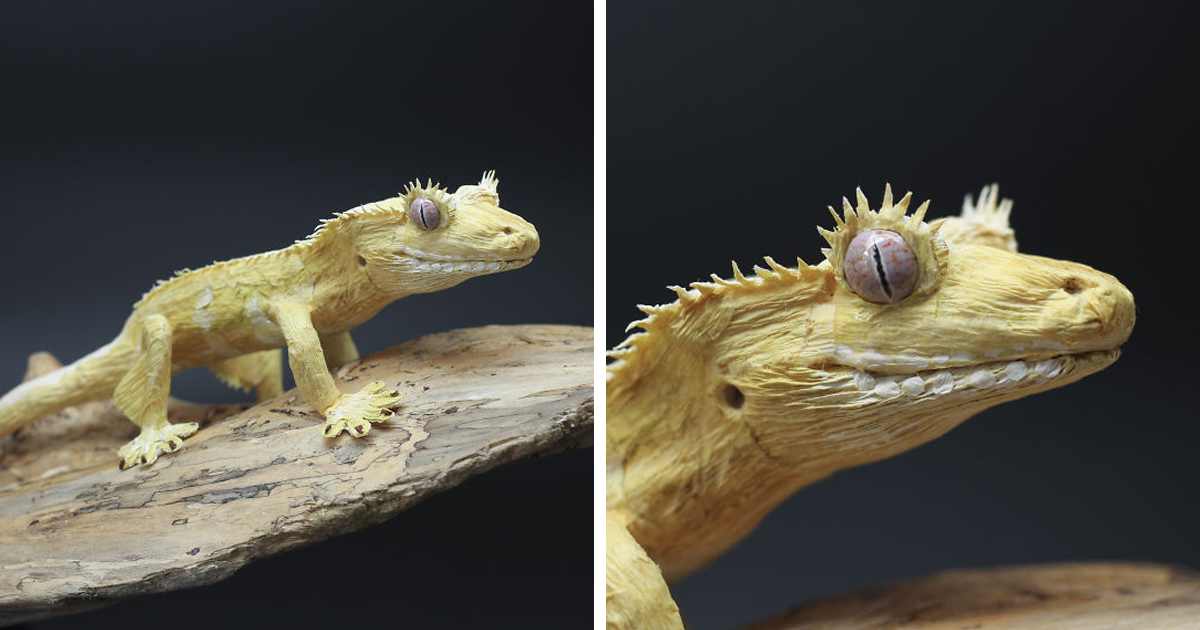
Some artists need marble. Some need bronze. Some need a wall, a ladder, and a very understanding landlord. Tina Kraus needs paper, wire, pastel chalk, glue, and the kind of patience that makes a praying mantis look impatient. Her realistic paper animals and insects do not simply imitate nature; they ask viewers to slow down, lean closer, and wonder how something so fragile can look so alive.
This is the magic of lifelike paper sculpture. A sheet of crepe paper becomes a wing. A wire skeleton becomes a grasshopper’s leg. A dab of pastel becomes the dusty blush on a mantis that looks as if it has just stepped out of a tropical flower. The results are playful, delicate, and slightly suspicious. Your brain keeps saying, “That is paper.” Your eyes reply, “Absolutely not. That insect is plotting.”
The title “I Am A Paper Artist And I Make Realistic Animals And Insects From Paper (24 Pics)” captures the heart of a growing fascination with handmade paper art: the transformation of ordinary material into extraordinary miniature wildlife. It is not origami in the strict one-sheet, no-cutting sense. It is not simple craft-night decoration. It is sculptural paper engineering, botanical observation, insect anatomy, and visual storytelling folded into one tiny, handmade world.
Who Is Tina Kraus, The Paper Artist Behind These Lifelike Creatures?
Tina Kraus is a freelance paper artist and illustrator based in Münster, Germany. Her work includes paper fauna, paper flora, pop-up books, paper toys, paper objects, and illustration projects. What makes her animal and insect sculptures especially memorable is the way they combine charm with scientific curiosity. She does not only make “cute bugs.” She makes mantises, stick insects, grasshoppers, moths, geckos, carnivorous plants, and other creatures that are beautiful precisely because they are a little strange.
Her process began with flowers, then moved toward more unusual plants such as the Venus flytrap. From there, insects were a natural leap. Many insects already look like folded paper designed by a genius with a flair for drama. Leaf insects mimic leaves. Walking sticks mimic twigs. Orchid mantises look like nature’s own paper-cut costume party. For an artist working with crepe paper, these creatures are perfect subjects because they share paper’s best qualities: texture, lightness, flexibility, and surprise.
Why Realistic Paper Animals Feel So Mesmerizing
Realistic paper animals and insects work because they play with expectation. Paper is familiar. We use it for grocery lists, receipts, school notes, packaging, birthday cards, and emergency “I forgot a gift bag” situations. But when paper becomes a crested gecko with curled toes or a giant grasshopper with segmented legs, the material suddenly feels less ordinary. The artwork changes the viewer’s relationship with something everyday.
The effect is similar to seeing a magician reveal a trick and still feeling amazed. You may know the sculpture is made from crepe paper, wire, glue, and pigment, but that knowledge does not ruin the wonder. It deepens it. The mind starts to reverse-engineer the creature: How were the wings shaped? How did the artist make the abdomen curve? How did she create that tiny transition from green to brown without making the surface muddy? Why does that paper mantis look more composed than most people on Monday morning?
The Power Of Detail
Insects are unforgiving subjects. A mammal can be simplified and still read as expressive. A beetle, mantis, or stick insect demands structure. Legs must attach in the right places. Wing cases must sit convincingly. Antennae must feel fine but not flimsy. Too much glue and the sculpture looks heavy. Too little support and the creature collapses into a tragic craft-store pancake.
Kraus’s paper insects stand out because the small details are treated as the main event. Crepe paper gives the surface a natural grain, which can resemble veins, scales, leaf edges, or chitin. Pastel chalk and paint add subtle color shifts, while wire gives thin limbs the strength to hold a pose. The result is not just “a paper bug.” It is a miniature performance of anatomy.
From Crepe Paper To Creature: How The Sculptures Come Together
Realistic paper sculpture begins long before the first cut. The artist studies reference images, looks at proportions, notices how a leg bends, and decides which details must be accurate and which can be translated artistically. This matters because paper is not skin, shell, fur, or leaf tissue. It has its own behavior. It stretches, wrinkles, frays, resists, softens, and sometimes does that delightful thing where it refuses to cooperate until you threaten to reorganize the entire studio.
For lifelike insects, the underlying structure is often the secret. Wire can form legs, antennae, stems, or hidden armatures. Crepe paper can be cut into narrow strips, wrapped around wire, layered into wings, or shaped into petal-like limbs. Glue secures the form, while pastel chalk, paint, or pencil can add shadows, stripes, spots, and organic discoloration. The goal is not to hide the paper completely. The goal is to let paper behave like nature’s understudy.
Materials That Matter
Crepe paper is especially useful because it can stretch and hold curves. Unlike flat cardstock, crepe paper has texture and movement built into it. That makes it ideal for petals, leaves, folded joints, abdomen segments, soft wings, and the uneven surfaces of living things. Wire provides the frame, while glue acts like a quiet stage manager keeping the entire performance from falling apart.
Pastel chalk is another smart choice because it creates soft, buildable color. A real insect is rarely one flat shade. Even a green mantis may have yellow edges, brown shadows, pale highlights, or a dusty bloom of color where the body bends. Pastel can suggest those transitions without making the sculpture look painted like a toy. It keeps the surface breathable and tactile.
The 24-Picture Gallery Effect: Why Viewers Love These Paper Creatures
A single sculpture can impress. A full gallery of 24 pictures creates a stronger reaction because it shows range. One image says, “Nice mantis.” Twenty-four images say, “Wait, this is a whole tiny ecosystem, and apparently I live here now.” A paper mantis, an orchid mantis, a giant grasshopper, a Goliath stick insect, a thorny devil stick insect, a crested gecko, a Venus flytrap, and paper foliage all work together to create a miniature natural history cabinet.
That gallery format also helps viewers appreciate scale and process. Close-up shots reveal surface texture. Side angles show posture. Images of different species show how the same basic materials can become wildly different forms. The gecko needs body volume and soft curves. The stick insect needs spiky realism and camouflage. The Venus flytrap needs botanical tension, as if the paper jaws could snap shut at any second. The orchid mantis needs elegance with a tiny hint of menace.
Why Insects Make Perfect Paper Models
Insects are already master designers. Walking leaves have bodies that resemble torn foliage. Stick insects use shape and movement to disappear into branches. Orchid mantises use floral resemblance in one of nature’s most theatrical examples of disguise. These adaptations make insects ideal for paper art because the artist is not inventing beauty from nothing. She is translating an existing natural illusion into a handmade one.
This is why realistic paper insects feel different from decorative paper crafts. They carry a sense of discovery. The viewer begins by admiring the artwork and ends by thinking about camouflage, biodiversity, evolution, and the overlooked genius of small animals. A paper insect can become an invitation to respect the real insect, which is a lovely outcome for a material that usually gets blamed for printer jams.
Paper Art, Origami, And The Long Love Story Between Humans And Folding
Paper folding has deep cultural roots. Long before contemporary paper artists created museum-quality sculptures, paper was used in ceremonial wrapping, gift exchange, religious practice, education, play, and design. Japanese origata and origami traditions show how folded paper developed from formal ritual into a broader art form. Today, paper folding connects to mathematics, engineering, architecture, fashion, robotics, medical design, and contemporary sculpture.
Kraus’s work belongs to this larger story but also branches away from traditional folding. Her pieces are not only folded; they are cut, shaped, wrapped, colored, assembled, and sculpted. That hybrid approach is part of what makes modern paper art exciting. The field is no longer limited to one technique. Artists can borrow from illustration, model-making, pop-up engineering, sculpture, botanical art, and natural science.
In museums and art institutions, paper is increasingly treated not as a humble support material but as a serious creative medium. Contemporary origami exhibitions, paper installations, artist books, conservation departments, and handmade paper sculpture workshops all point to the same truth: paper is not weak. It is responsive. It can be flat or dimensional, graphic or organic, temporary or carefully preserved. Give it to the right artist, and it grows legs. Sometimes six of them.
The Beauty Of “Vegan Taxidermy”
One phrase often associated with lifelike paper animals is “vegan taxidermy.” It sounds funny at first, like something a beetle might request on a wellness retreat, but the idea is meaningful. Realistic paper sculptures let people enjoy the beauty of animals and insects without collecting, pinning, or harming them. For rare or fragile species, this matters. A paper orchid mantis can be admired in a glass dome without removing a living creature from its habitat.
This approach also changes the emotional tone of display. Traditional specimen cases can be scientifically valuable, but they often involve death and preservation. Paper fauna creates a parallel experience rooted in observation, admiration, and imagination. It says: Look closely. Study the weirdness. Celebrate the design. Leave the actual bug outside doing bug business.
That message has real cultural value. Many people overlook insects unless they are biting, buzzing, or appearing unexpectedly in the shower. Art can shift that reaction. A realistic paper grasshopper or mantis invites the viewer to see structure, color, and personality. It turns “ew” into “wow,” which is one of art’s most underrated superpowers.
What Makes A Paper Insect Look Real?
Realism in paper sculpture is not only about copying every detail. It is about choosing the right details. A convincing insect needs proportion, posture, texture, and believable color. The legs must feel weight-bearing. The antennae must suggest sensitivity. The wings must look thin enough to move. The body must have rhythm, because insect anatomy is full of repeated segments and elegant mechanical patterns.
Color is especially important. Nature rarely uses straight-from-the-tube colors. Leaves have bruises, spots, fading edges, and veins. Insect bodies may include transparent sections, dusty surfaces, metallic reflections, or camouflage patterns. A skilled paper artist layers color gradually, allowing the material’s texture to remain visible. That is how a sculpture avoids looking plastic.
Movement Without Motion
The best paper creatures appear ready to move. A mantis leans forward as if calculating distance. A grasshopper crouches as if one more breath will launch it across the room. A gecko clings as if its tiny toes understand gravity better than we do. None of these sculptures actually move, yet the poses imply motion. This is where sculpture becomes storytelling.
For viewers, that frozen movement is irresistible. It creates tension. The paper is still, but the animal feels alert. The artwork becomes a pause button pressed at the perfect moment.
Why This Kind Of Paper Art Performs Well Online
Realistic paper animals are highly shareable because they deliver an instant double-take. Online audiences love transformations: cake that looks like glass, wood that looks like fabric, embroidery that looks like paint, and paper that looks like wildlife. The brain enjoys being fooled, especially when the trick is harmless and beautiful.
There is also a strong educational angle. A gallery of paper insects can attract art lovers, craft enthusiasts, biology fans, teachers, collectors, and people who simply clicked because the mantis looked too real to be legal. The subject crosses categories: paper craft, realistic sculpture, animal art, insect art, handmade decor, sustainable art, and nature-inspired design. That gives the topic excellent SEO potential without forcing keywords into every sentence like confetti in a vacuum cleaner.
How Beginners Can Learn From These Paper Animals
Beginners should not start by trying to make a hyper-realistic orchid mantis with thirty-seven tiny body parts and emotional complexity. Start smaller. Make a leaf. Then make a petal. Then make a simple beetle body. Learn how crepe paper stretches. Learn how glue behaves. Learn how wire changes posture. Learn how pastel looks when applied before shaping versus after shaping.
Observation is the real foundation. Before cutting paper, study the subject. Notice where the body widens, where the legs attach, how the wings overlap, how color changes at joints, and how the creature holds itself. A paper sculpture becomes stronger when the artist understands the animal, not just the outline.
Simple Practice Ideas
Try making a paper leaf insect from green crepe paper and a thin wire frame. Add veins with pastel or colored pencil. Cut tiny irregular notches along the edge to imitate leaf damage. Next, try a simple moth with layered wings. Use soft chalk to shade the wing edges. Finally, practice a small lizard or gecko body using wrapped paper over a lightweight armature. These exercises teach shape, layering, and surface detail without requiring a full natural history degree or a panic snack.
Artist’s Experience: What Making Realistic Paper Animals Teaches You
Studio experience with realistic paper animals teaches a lesson that sounds simple but is surprisingly difficult: slow down. Paper does not reward rushing. If you pull crepe paper too quickly, it tears. If you overload a joint with glue, the limb thickens and loses elegance. If you paint too heavily, the delicate grain disappears. The process trains your hands to listen before they act.
The first challenge is learning to respect reference images without becoming trapped by them. A real insect may have hundreds of tiny details, but a paper version needs a visual hierarchy. You decide what the viewer must notice first. On a mantis, it may be the folded forelegs and triangular head. On a grasshopper, it may be the powerful hind legs. On a gecko, it may be the toes, eyes, and soft curve of the spine. Realism is not the same as copying everything. It is knowing what to emphasize so the creature feels alive.
The second lesson is that mistakes are not always disasters. A wrinkle can become a vein. A slightly uneven edge can become natural damage on a leaf. A color that looks too bright can be softened with chalk. Paper art rewards problem-solving because the material has personality. Sometimes it behaves beautifully; sometimes it behaves like a tiny theatrical villain. The artist’s job is to negotiate.
Another important experience is learning how fragile strength can be. A thin wire leg wrapped in paper may look delicate, but when balanced correctly, it can support a convincing pose. A wing can be almost weightless and still create visual impact. This changes how you think about structure. Strength does not always mean thickness. Often, it means balance, tension, and smart placement.
Making realistic paper animals also changes how you look at nature. After studying a stick insect, ordinary twigs become more interesting. After shaping a paper moth, you notice the powdery softness of real wings. After building a Venus flytrap, you pay more attention to plants that seem to have opinions. The craft turns observation into a habit, and that habit follows you outside the studio.
There is also a quiet emotional reward. A finished paper creature feels like proof that patience can become visible. Hours of cutting, shaping, wrapping, shading, adjusting, and occasionally muttering at glue are compressed into one small object. Viewers may see the result first, but the artist remembers every problem solved along the way. That memory gives the sculpture a second life: not just as an image of an animal, but as a record of attention.
Perhaps the best experience is watching someone discover the material. They look at the mantis, smile politely, and then realize it is paper. Their face changes. They lean closer. They ask how it was made. That moment is the real gallery magic. The sculpture has done its job. It has turned curiosity into wonder, and wonder into respect for both the artist and the natural creature that inspired the work.
Conclusion: Small Paper Creatures, Big Wonder
“I Am A Paper Artist And I Make Realistic Animals And Insects From Paper (24 Pics)” is more than a catchy title. It is a reminder that art does not need expensive materials to feel extraordinary. Crepe paper, wire, glue, and pastel chalk can become a mantis, a gecko, a grasshopper, or a plant with attitude. In the right hands, paper stops being a flat surface and becomes a living illusion.
Tina Kraus’s lifelike paper fauna celebrates the overlooked beauty of insects and small animals. It also shows why paper art continues to evolve as a serious, flexible, and deeply expressive medium. These sculptures are delicate, but their impact is strong. They invite us to look closer at the handmade object, the natural world, and the humble sheet of paper waiting patiently on the desk, pretending it is not secretly full of legs.