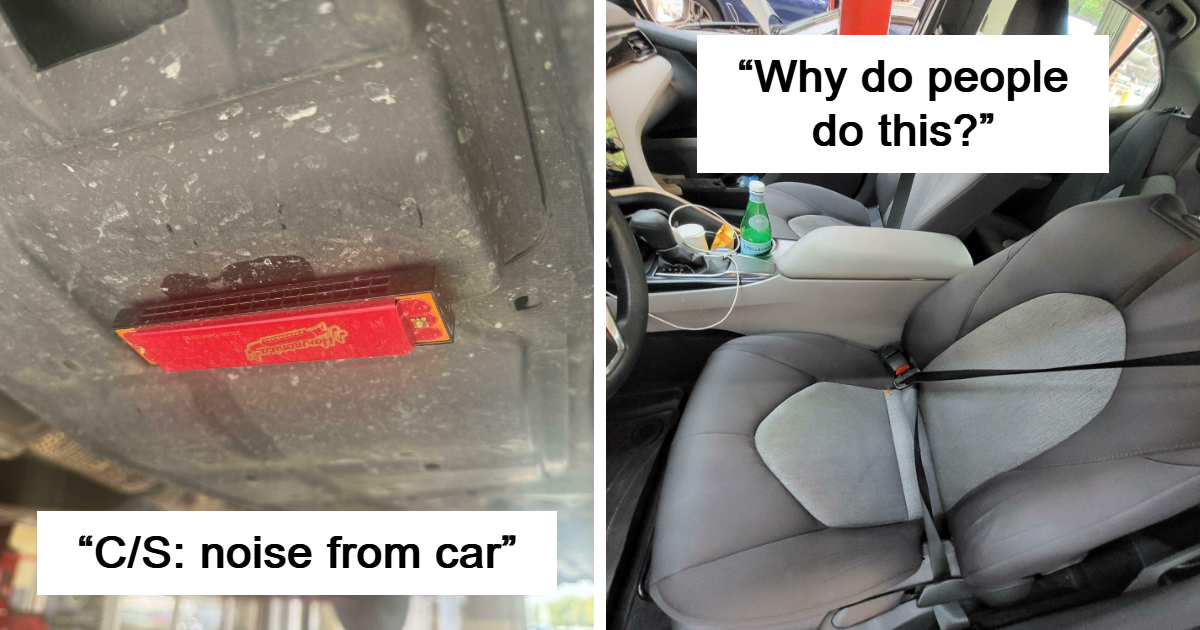
Every mechanic has a story that begins with, “You’re not going to believe this.” Sometimes the culprit is a loose gas cap. Sometimes it is a mouse condo in the cabin air filter. And sometimes it is a vehicle behaving so strangely that the only reasonable first step appears to be sprinkling holy water on the hood and asking the dashboard what it wants.
The world of bizarre car repairs is not just a comedy museum of zip ties, mystery noises, and “my cousin said he fixed it.” It is also a reminder that cars are complicated machines full of sensors, fluids, belts, modules, hoses, seals, wiring, software, and tiny parts that can cause enormous drama when ignored. A flashing check engine light, strange smell, low tire pressure warning, coolant issue, or brake warning light may look small at first, but the real problem can be hiding underneath like a raccoon in a wheel well. Modern vehicles use systems such as OBD-II diagnostics, dashboard warning lights, tire pressure monitoring, and onboard sensors to alert drivers before small failures become wallet-devouring monsters. Consumer Reports and Kelley Blue Book both advise drivers not to ignore warning lights, especially flashing check engine, oil, temperature, and red safety warnings.
So let’s laugh, learn, and wince together. Here are 43 examples of car repairs that sounded less like routine maintenance and more like a haunted object trying to communicate through metal, smoke, and bad decisions.
Why Some Car Repairs Feel Completely Cursed
Most strange car problems come from normal causes: heat, vibration, corrosion, worn parts, neglected maintenance, bad wiring, incorrect fluids, cheap replacement parts, or “creative” DIY repairs. The spooky part is that symptoms do not always point neatly to the source. A fuel smell might be a loose hose. A clicking sound might be a weak battery. A dashboard that lights up like a haunted arcade cabinet might be a failing alternator, a low-voltage issue, or a sensor network throwing a tantrum.
That is why professional diagnosis matters. A modern mechanic does not just listen for clunks and guess. They inspect, scan diagnostic codes, test voltage, check fluid condition, examine wear patterns, and compare symptoms against manufacturer service information. A check engine light can be triggered by something simple, such as a loose fuel cap, or by a serious issue involving the engine, emissions system, ignition system, fuel system, or catalytic converter. CarMD’s recent Vehicle Health Index data shows common check engine-related repairs include catalytic converters, oxygen sensors, ignition coils, spark plugs, mass airflow sensors, EVAP purge valves, fuel injectors, ABS wheel speed sensors, thermostats, and spark plugs.
43 Examples Of Car Repairs That Needed An Exorcism, Not A Mechanic
1. The Check Engine Light That Survived Three Repairs
A driver replaces the gas cap, oxygen sensor, and spark plugs, yet the check engine light keeps returning like a horror movie villain. The lesson: codes identify a system problem, not always the exact failed part. Guessing can get expensive fast.
2. The Car That Screamed Only On Tuesdays
A squeal that appears only on damp mornings may be a belt, pulley, brake hardware, or moisture-related friction. It sounds supernatural, but humidity can make worn parts perform their worst opera.
3. The Dashboard Christmas Tree
ABS, traction control, tire pressure, battery, and check engine lights all appear at once. This often points to a shared electrical or sensor issue, not five separate demons. Low voltage from a weak battery or failing alternator can confuse multiple systems.
4. The Mystery Clunk From The Trunk
Some “suspension failures” turn out to be a bowling ball, loose jack, forgotten tool, or water bottle rolling around. Before replacing shocks, check for cargo with dramatic timing.
5. The Burning Smell With No Fire
A burning odor can come from overheated brakes, oil dripping on hot exhaust, slipping belts, electrical insulation, or clutch wear. It is never a perfume option. Burning smells deserve quick inspection because heat and fluids are not a friendly couple.
6. The Tire Pressure Light That Started A Family Argument
One person blames the sensor, another blames the weather, and the tire blames the nail. The tire pressure monitoring system warns when pressure is significantly low, and underinflated tires can affect safety, wear, and fuel economy.
7. The Car That Shook Like A Washing Machine Full Of Bricks
Vibration at speed can be caused by tire imbalance, bent wheels, bad alignment, worn suspension, warped brake rotors, or drivetrain issues. The car is not possessed; it is asking for geometry and balance.
8. The “Free Repair” That Cost $1,400 Later
A friend clears a code without fixing the problem. Weeks later, the catalytic converter fails because the root cause was ignored. Resetting a light is not repairing a vehicle; it is putting tape over a smoke alarm.
9. The Cabin Air Filter Ecosystem
Leaves, dust, acorns, mouse nests, and mystery fluff can clog cabin air filters. The result: weak airflow, strange smells, and passengers wondering why the A/C smells like a shed with opinions.
10. The Brake Pedal That Felt Like A Marshmallow
A soft brake pedal can indicate air in the brake lines, low brake fluid, leaks, worn components, or hydraulic problems. Brake warnings are not “wait until next payday” warnings. They are “protect your spine and everyone else’s bumper” warnings.
11. The Car That Only Started When Complimented
Intermittent no-start problems can involve battery terminals, starter motors, ignition switches, relays, fuel pumps, or security systems. Emotional support is nice, but voltage testing is better.
12. The Oil Leak That Traveled Like A Crime Scene
Oil can drip from one place, blow backward while driving, and appear somewhere completely different. A good technician cleans the area, uses dye if needed, and traces the leak instead of accusing the first wet bolt.
13. The Rattle That Vanished At The Shop
Every mechanic knows this ghost. The customer hears a noise daily, but the car behaves perfectly during inspection. Recording the sound and noting speed, temperature, road surface, and braking behavior can help catch the phantom.
14. The Coolant Disappearing Act
Coolant loss without a puddle can come from small leaks, evaporating coolant on hot surfaces, heater core problems, radiator cap issues, or internal engine trouble. The temperature warning light deserves attention because overheating can cause major engine damage.
15. The Car That Smelled Like Gas But Had No Visible Leak
Fuel smells can come from loose hoses, vapor system faults, fuel cap issues, injectors, or leaks that only appear under pressure. A fuel odor is not quirky. It is a safety issue wearing cologne.
16. The Window That Went Down And Never Returned
Power window failures can involve regulators, motors, switches, wiring, or tracks. The glass does not hate you; it just joined a labor strike.
17. The Headlight That Ate Bulbs
If a bulb keeps failing, the issue may be moisture in the housing, voltage irregularity, poor installation, a bad connector, or vibration. Replacing bulbs repeatedly without checking the socket is automotive whack-a-mole.
18. The A/C That Blew Hot Air With Confidence
Air conditioning problems can come from refrigerant leaks, failed compressors, blend door actuators, electrical faults, clogged condensers, or bad sensors. The system may be cold at heart but hot in execution.
19. The Engine That Misfired Like Popcorn
Misfires can involve spark plugs, coils, injectors, compression, vacuum leaks, or fuel quality. Ignoring a misfire can damage the catalytic converter, turning a smaller repair into a financial jump scare.
20. The Car That Pulled Left Like It Had A Destination
Pulling can come from alignment issues, uneven tire pressure, worn suspension, brake drag, or tire defects. When a car chooses its own lane, it is time for inspection.
21. The Transmission That Waited Three Seconds To Think
Delayed shifting can come from low fluid, old fluid, solenoid problems, software issues, worn clutches, or internal transmission wear. A transmission pause should not feel like the car is reading terms and conditions.
22. The Battery That Tested Good But Still Failed
Batteries can pass one basic test and still fail under load, in heat, in cold, or after sitting. Corroded terminals and parasitic draws can also drain a healthy battery while everyone blames the poor rectangle.
23. The Alternator That Turned The Radio Into A Séance
Flickering lights, whining audio, weak charging, and random electronic behavior can point to charging system trouble. Modern cars are sensitive to voltage, and low voltage can make modules act like they have seen a ghost.
24. The Exhaust Leak That Sounded Like A Monster Truck
A tiny exhaust leak near the manifold can sound enormous. Besides noise, exhaust leaks can affect emissions, cabin safety, and sensor readings.
25. The “Just Needs Freon” Myth
Refrigerant does not vanish for fun. If A/C refrigerant is low, there is usually a leak. Refilling without finding the leak is like topping off a bucket with a hole and calling it plumbing.
26. The Wheel Bearing That Hummed A Funeral Song
A failing wheel bearing often makes a humming or growling noise that changes with speed or steering load. It is one of those sounds that starts subtle and ends with your wallet whispering, “We should have listened.”
27. The Brake Job With One Pad Worn To Nothing
Uneven brake pad wear can signal stuck calipers, bad slide pins, collapsed hoses, or installation problems. Brakes should wear fairly evenly, not like one pad carried the whole group project.
28. The Wiper That Worked Only In A Mood
Intermittent wiper problems can involve motors, relays, switches, linkages, or wiring. Rain has excellent timing, and wipers love failing during the weather’s dramatic finale.
29. The Steering Wheel That Clicked Like A Game Show
Clicking while turning can point to CV joints, steering components, clock springs, or suspension parts. A clicking sound is not applause for your driving.
30. The Car That Ate One Tire Repeatedly
If one tire keeps wearing faster, look for alignment problems, suspension wear, bent components, or improper inflation. Tires are evidence. Read them like rubber detectives.
31. The Engine Bay Full Of Acorns
Rodents store food, chew wiring, and build nests in warm engine bays. This can create electrical faults, smells, airflow problems, and repairs that make technicians question the food chain.
32. The Sunroof That Became A Water Feature
Clogged sunroof drains can send water into headliners, carpets, electronics, and footwells. A “leaky roof” may actually be a blocked drain tube with a tiny plumbing crisis.
33. The Car That Went Into Limp Mode During A Merge
Limp mode reduces power when the vehicle detects a serious fault in critical systems. It feels like betrayal, but it is designed to protect the engine or transmission from further damage.
34. The Spare Tire From Another Century
Spare tires age, lose air, and become unsafe even when rarely used. Checking the spare is boring until the day you need it and discover it has the structural confidence of a stale donut.
35. The Radiator Fan That Took A Vacation
A failed cooling fan can cause overheating at idle but seem fine at highway speed. This is why symptoms matter: “overheats in traffic only” is a valuable clue, not a personality trait.
36. The Door Lock That Chattered Like Teeth
Rapid clicking from door locks can involve weak actuators, control modules, wiring, or low voltage. It may sound haunted, but it is usually electricity having a small nervous breakdown.
37. The Exhaust Smoke Color Decoder
Blue smoke can suggest oil burning, white smoke can involve coolant or condensation depending on conditions, and black smoke may point to a rich fuel mixture. Smoke is the car’s way of writing a complaint in the sky.
38. The “New Part” That Was Bad Out Of The Box
Replacement parts can fail early or arrive defective. Good diagnosis includes verifying the repair after installation, because “new” does not always mean “innocent.”
39. The Fuel Economy Drop That Was Really Tire Pressure
Low tire pressure, bad alignment, dirty air filters, dragging brakes, sensor problems, or poor maintenance can reduce fuel economy. Sometimes the gas mileage ghost is just four underinflated tires asking for air.
40. The Car Alarm That Protected Everyone From Sleep
Random alarms can involve hood switches, door sensors, key fobs, battery voltage, or aftermarket alarm wiring. Nothing builds neighborhood friendship like a car screaming at 2:17 a.m.
41. The “Oil Change Only” That Found A Suspension Disaster
Routine maintenance visits often reveal worn ball joints, leaking shocks, damaged boots, brake wear, and tire problems. Consumer Reports recommends regular inspections and scheduled maintenance because small issues are cheaper before they audition for disaster.
42. The Recall Everyone Ignored
Some scary repairs are not the owner’s fault at all. Recalls exist because a safety-related defect or noncompliance needs correction. NHTSA lets drivers check vehicles, tires, and equipment for safety recalls, which is worth doing before assuming the vehicle is simply cursed.
43. The DIY Fix Held Together By Hope
Electrical tape on fuel lines, household wire nuts under the dash, random screws in place of clips, and parts installed backward can turn a repair into performance art. DIY work is not automatically bad, but guessing on brakes, steering, fuel, airbags, high-voltage systems, or critical electronics can create real safety risks.
What These Haunted Repairs Teach Car Owners
The funniest repairs usually have a serious lesson hiding under the punchline. Cars rarely fail “out of nowhere.” More often, they whisper first. The whisper might be a faint squeak, a slight vibration, a small drip, a warning light, a slow start, a new smell, or a change in how the brake pedal feels. Ignore the whisper long enough, and the car begins speaking in smoke, clunks, and invoices.
A smart car owner does not need to become a master technician. The goal is not to rebuild an engine on the kitchen table while your family asks why there is a piston next to the cereal. The goal is to notice changes early, keep up with scheduled maintenance, document symptoms, and choose a qualified repair shop when the issue is beyond basic maintenance.
When something strange happens, write down the conditions. Does the noise happen while braking, turning, accelerating, idling, or driving over bumps? Does it appear only when cold? Does it stop after ten minutes? Is the smell sweet, oily, sulfur-like, electrical, or fuel-like? Are there warning lights? Is the light solid or flashing? Did the problem begin after a recent repair, tire change, battery replacement, or pothole impact?
These details help a technician diagnose faster and reduce guesswork. “It makes a noise” is useful. “It makes a metallic scraping noise from the front right wheel only while braking at low speeds after sitting overnight” is much better. That sentence may save time, money, and the technician’s remaining faith in humanity.
Of Real-World Experience: When The Car Acts Haunted, Start With The Boring Stuff
Anyone who has owned an aging vehicle knows the feeling: you turn the key, hear a sound no machine should legally make, and immediately begin bargaining with the universe. The funny thing is that the most terrifying symptoms often come from boring causes. A car that refuses to start may not need an engine. It may need clean battery terminals. A car that shakes violently may not need a new transmission. It may need a balanced tire. A dashboard full of warning lights may not mean every system failed at once. It may mean the battery voltage dropped and the modules started gossiping.
One of the best habits a driver can develop is checking the simple things before assuming catastrophe. Look at tire pressure. Check fluid levels when the engine is cool and the owner’s manual says it is safe. Notice whether the fuel cap is tight. Look for puddles under the vehicle. Pay attention to whether the temperature gauge is rising. Listen for brake grinding. Smell matters too. Sweet smells can hint at coolant, fuel smells can signal danger, and burning plastic smells should never be treated like “new car scent with consequences.”
Another useful habit is separating emotion from diagnosis. Cars are excellent at making people panic because repairs can be expensive and transportation is personal. If your car is your commute, school run, weekend freedom, or paycheck machine, every warning light feels like a small betrayal. But panic leads to bad decisions: buying random parts, clearing codes without repairs, ignoring red lights, or continuing to drive while the vehicle is overheating. Calm observation is cheaper than automotive denial.
It also helps to understand that mechanics are not magicians, even when the repair order looks like ancient scripture. They need repeatable symptoms, accurate history, and enough time to test. If a problem is intermittent, record a video or audio clip when it happens. Note the speed, weather, temperature, road condition, and whether any warning lights appeared. Tell the shop what was recently repaired. A loose connector after a battery replacement, a pinched hose after an oil change, or an incorrectly installed aftermarket accessory can create symptoms that look far more dramatic than the actual fix.
The most memorable “exorcism repairs” often come from neglect mixed with creativity. Someone ignores a tiny coolant leak until the engine overheats. Someone tapes a broken intake hose and wonders why the idle is possessed. Someone installs the wrong bulb and creates electrical weirdness. Someone hears brake grinding for months and then acts surprised when the rotor looks like it survived a dragon attack. These stories are funny afterward, but they are stressful and expensive in the moment.
The better approach is simple: respect warning signs, maintain the car on schedule, do not ignore safety lights, and avoid turning critical repairs into experiments. A vehicle does not need to be perfect, but it does need brakes that stop, tires that grip, lights that work, fluids that stay where they belong, and an engine that is not trying to communicate through smoke signals. When a repair seems impossible to believe, the answer is usually not supernatural. It is maintenance, diagnosis, and sometimes a very tired technician staring at a nest of acorns where an air filter used to be.
Conclusion: The Car Is Not Possessed, But It Does Want Attention
Bizarre car repairs are entertaining because they remind us how strange machines can become when small problems are ignored, misunderstood, or “fixed” with confidence and the wrong tool. The best defense against repairs that feel cursed is not luck. It is early attention, routine maintenance, good documentation, and professional diagnosis when warning signs appear.
So the next time your car clicks, hums, flashes, smells, shakes, or behaves like it has unfinished business, do not panic. Do not immediately blame ghosts. Start with the basics, respect safety warnings, and get help before a cheap repair turns into a mechanical horror story with a payment plan.
Note: This article is written as original editorial content and synthesizes real automotive maintenance, warning-light, recall, tire-safety, and diagnostic guidance from reputable U.S. sources including NHTSA, AAA, Consumer Reports, Kelley Blue Book, J.D. Power, CarMD, RepairPal, and Allstate.