Note: This article is written for web publication and synthesizes public business insights, B2B sales research, and real-world go-to-market lessons. Conversion results vary by market, sales execution, deal size, and buyer readiness.
Introduction: The Handshake Is Not DeadIt Just Got Smarter
For years, sales teams were told the future would be fully digital. Zoom would replace the conference room. Email sequences would replace coffee meetings. Product-led growth would do the heavy lifting while sales reps politely stayed out of the buyer’s way. And yes, digital selling is efficient. It scales. It saves airfare. Nobody misses airport sandwiches.
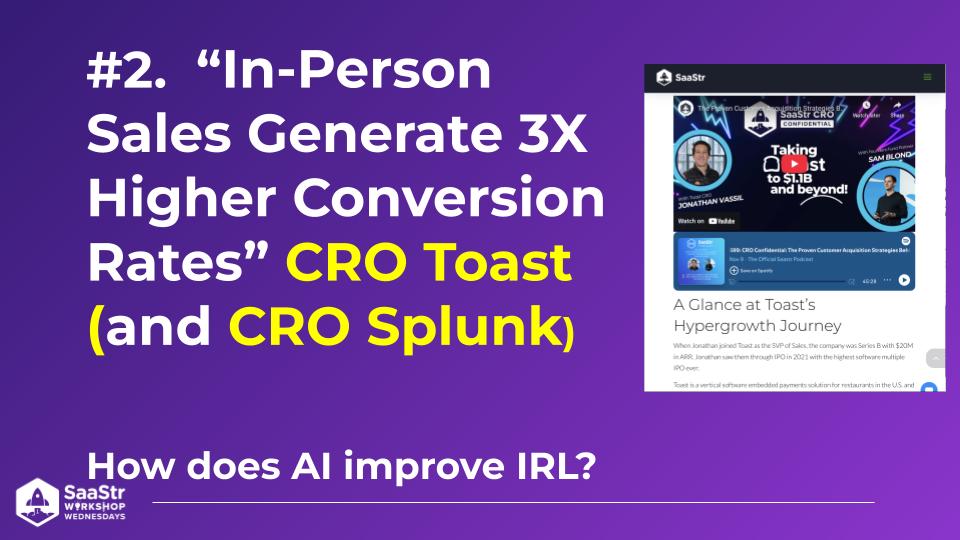
But here is the twist: some of the sharpest revenue leaders in SaaS and B2B technology are saying that in-person sales still outperform remote-only sellingsometimes dramatically. According to discussions involving revenue leaders from Toast, Splunk, Brex, and Slice, in-person sales can generate up to 3x higher conversion rates compared with virtual-only sales motions. That is not nostalgia talking. That is pipeline math wearing comfortable shoes.
The lesson is not that every sales rep should immediately book a flight, rent a car, and appear uninvited in a prospect’s lobby holding a branded notebook. The lesson is more strategic: when the deal is complex, the customer is local, the market is relationship-driven, or the buying committee is nervous, showing up in person can build trust faster than another “just bubbling this up” email ever will.
Why In-Person Sales Still Works in a Digital-First B2B World
B2B buyers have changed. They research more on their own, compare vendors before talking to sales, and often prefer self-service for early-stage education. Modern buyers do not want to be chased by generic outreach or trapped in a demo that should have been a two-minute product video. Fair enough.
At the same time, complex purchases still create uncertainty. Buyers worry about implementation, risk, cost, integrations, security, internal adoption, and whether the vendor will still answer the phone after the contract is signed. That is where human interaction becomes valuablenot as a pitch machine, but as a confidence-building mechanism.
In-person selling gives a rep more context than a video call can provide. A restaurant owner can show the chaos of a dinner rush. A finance team can explain workflow problems across departments. An enterprise buyer can gather multiple stakeholders in one room and test whether the vendor understands the real business problem. Body language, side conversations, office dynamics, and operational details all become part of the sales intelligence.
The CRO Lesson: Field Sales Creates Trust at Speed
The central idea from the CROs of Toast, Splunk, Brex, and Slice is simple: trust compounds faster face-to-face. In B2B sales, trust is not a fluffy word for LinkedIn posts. It is the difference between “send us pricing” and “let’s build a rollout plan.”
When a seller visits a customer in person, the buyer receives a message that no email signature can communicate: this account matters. The vendor is investing time, effort, and attention. That signal becomes especially powerful when competitors are relying only on automated follow-ups and calendar links.
In-person engagement also helps buyers feel seen. Instead of forcing a generic sales deck onto every account, the rep can observe the customer’s world and tailor the conversation. A great seller does not just say, “Here is our platform.” They say, “Here is how your team is working today, here is where friction appears, and here is how we can remove it.” That is consultative selling with actual context.
Toast: Why Local Markets Reward Face-to-Face Selling
Toast is a strong example because it sells restaurant technology into a market where daily operations are physical, hectic, and deeply personal. Restaurant owners are not evaluating software in an abstract spreadsheet universe. They are managing staff, food costs, payments, kitchen flow, guest experience, and the occasional customer who believes “extra crispy” is a constitutional right.
For Toast, field sales makes sense because restaurants are geographically dense and relationship-driven. A rep who owns a territory can learn the local dining scene, understand neighborhood competition, and build reputation through referrals. When one restaurant has a good experience, nearby owners notice. Local proof matters.
This is why in-person sales can be so powerful in vertical SaaS. The seller is not merely introducing a product; they are entering a community. In markets like restaurants, healthcare clinics, local retail, logistics, or construction services, buyers often trust peers and local reputation more than polished marketing pages. A field rep who becomes known as helpfulnot pushycan create a durable advantage.
Slice: Vertical SaaS Runs on Relationship Capital
Slice focuses on independent pizzerias, which makes the relationship lesson even clearer. A local pizza shop is not just a business unit. For many owners, it is family history, community identity, and a daily operational marathon powered by dough, phones, ovens, and customer loyalty.
Selling technology into that environment requires more than a clever cold email. Owners need to believe the vendor understands the realities of the pizza business. They want practical help: more orders, better phone handling, lower supply costs, customer support, marketing, and tools that do not make a busy night more complicated.
That is why face-to-face selling works well in a market like this. A rep can walk into the shop, see how orders are handled, listen to the owner’s concerns, and explain the value in plain business terms. Instead of selling “software,” the rep is selling fewer headaches, more repeat customers, and better control over operations.
Brex: The Data Case for 3x Higher Conversions
Brex adds an important layer to the story because the company’s sales motion has involved finance leaders, startup founders, and larger organizations evaluating spend management, corporate cards, expense workflows, and financial operations. These are trust-heavy decisions. Buyers are not choosing a casual app; they are choosing infrastructure that touches money, controls, compliance, and executive visibility.
According to the CRO discussion, Brex tracked the difference between virtual opportunities and opportunities that included in-person engagement. The reported result was striking: in-person meetings produced roughly 3x higher conversion. If a virtual sales motion converted at 15% to 20%, in-person engagement could lift that range to 45% to 60%.
That difference is not magic. It is the result of higher commitment, clearer discovery, better stakeholder alignment, and stronger buyer confidence. When a sales team meets the customer in person, it can uncover hidden objections earlier. Finance may care about controls. Operations may care about workflow. Executives may care about visibility. A live meeting allows the seller to connect those dots faster.
Splunk: Enterprise Sales Still Depends on Deep Relationships
Splunk represents the enterprise side of the lesson. Enterprise technology sales usually involve long cycles, multiple stakeholders, technical requirements, procurement reviews, security questions, renewals, expansions, and internal politics. In other words, it is not a one-call close unless the buyer is a unicorn riding a skateboard.
For enterprise customers, in-person engagement can be especially valuable because the sale is rarely just about features. It is about risk reduction. Buyers need to know whether the vendor can support a complex environment, integrate with existing systems, and help internal teams succeed after purchase.
In-person meetings help enterprise reps build relationships across the account. They can meet technical champions, economic buyers, procurement stakeholders, and executive sponsors. They can run workshops, map priorities, and show that the vendor is serious about long-term partnership. In large deals, that credibility often matters as much as the product demo.
The Modern Buyer Wants Digital Convenience and Human Confidence
Here is the part many teams get wrong: the rise of self-service does not mean buyers hate salespeople. It means buyers hate low-value sales interactions. They do not want generic outreach, irrelevant decks, or demos that ignore their business. But they do want expert guidance when the decision becomes risky, expensive, or politically complicated.
That is why the winning model is hybrid. Digital content should educate buyers before they talk to sales. Websites, comparison pages, product videos, ROI calculators, case studies, and interactive demos can answer basic questions. Then, when the buyer is ready for deeper context, the seller should add something the website cannot: judgment, experience, customization, and confidence.
In-person sales becomes most effective when it is not used as a replacement for digital education, but as an upgrade to it. The buyer should arrive informed. The rep should arrive prepared. The meeting should focus on the buyer’s specific situationnot a 47-slide tribute to the vendor’s logo collection.
When In-Person Sales Is Worth the Cost
In-person sales is powerful, but it is not free. Travel costs money. Field teams require management. Territory planning matters. Reps can waste time if they visit poor-fit accounts or turn every coffee meeting into an expensive hobby.
The key is to use in-person selling where it has the highest return. Good candidates include enterprise accounts, competitive late-stage deals, strategic renewals, expansion opportunities, high-density local markets, and vertical industries where trust is built through community relationships.
For example, a startup selling a $49 monthly tool to freelancers probably does not need a national field sales team. But a company selling restaurant operations software, cybersecurity platforms, spend management tools, healthcare technology, or industrial workflow systems may gain a serious advantage by meeting customers where work actually happens.
How to Build an Effective Field Sales Strategy
1. Segment Accounts by In-Person Potential
Not every lead deserves a visit. Segment accounts by deal size, buyer complexity, industry density, expansion potential, and competitive risk. A simple scoring model can help determine which opportunities should move from virtual engagement to in-person selling.
2. Make Reps Territory Experts
Field sales works best when reps understand local context. A restaurant technology rep should know the local dining market. A healthcare software rep should understand regional practice dynamics. A seller who knows the customer’s world earns credibility faster.
3. Train Reps to Diagnose, Not Pitch
The worst in-person meeting is just a remote demo with parking fees. Train reps to ask better questions, observe workflows, identify pain points, and connect product value to real business outcomes.
4. Use CRM Data to Measure Lift
Track conversion rates for deals with and without in-person meetings. Measure stage progression, deal size, sales cycle length, renewal rate, expansion revenue, and win rate. If in-person selling works, the data should show it. If it does not, the process needs tuning.
5. Combine Events, Customer Visits, and Local Referrals
Field sales does not have to mean one-off meetings. Local dinners, user groups, industry events, customer visits, and peer referrals can turn a territory into a network. The goal is to create momentum that competitors cannot copy with another email cadence.
Why AI Makes In-Person Selling More Important, Not Less
AI is changing sales. It can summarize calls, personalize outreach, score accounts, draft follow-ups, analyze intent signals, and help reps prepare faster. That is useful. But AI also increases the amount of automated noise buyers receive. When every vendor can send “personalized” outreach at scale, genuine human effort becomes more noticeable.
This is the irony of AI-powered selling: the more automated the market becomes, the more valuable authentic interaction feels. A thoughtful customer visit stands out because it is scarce. It shows commitment. It creates memory. Buyers may forget the fifth automated email, but they remember the person who came onsite, listened carefully, and helped solve a real problem.
The best sales organizations will not choose between AI and in-person selling. They will use AI to make human engagement better. AI can help identify the right accounts to visit, summarize previous interactions, suggest stakeholder-specific talking points, and generate follow-up materials. The human seller then brings empathy, judgment, and presence.
Common Mistakes That Kill In-Person Sales ROI
In-person selling fails when teams treat it like a performance instead of a business conversation. The first mistake is showing up too early, before the buyer has a clear reason to meet. The second mistake is showing up unprepared. Nothing says “trusted advisor” like asking questions that were answered on the company’s website. Spoiler: that was sarcasm.
Another mistake is sending the wrong person. A junior rep may be great at prospecting but unprepared for a room full of executives and technical stakeholders. For strategic meetings, bring the right mix of sales, solutions, customer success, and leadership when appropriate.
Finally, teams often forget the follow-through. The visit is not the win. The win comes from what happens after: a clear recap, agreed next steps, tailored proposal, stakeholder alignment, and continued value creation. A great meeting without disciplined follow-up is just a nice afternoon with branded pens.
Practical Experience: What In-Person Sales Teaches Revenue Teams
Experience from real B2B selling shows that in-person meetings often reveal the truth faster than remote calls. On video, buyers can hide hesitation. They can multitask. They can nod politely while privately wondering whether the product will create more work than it saves. In person, the seller sees friction immediately. A stakeholder’s silence, a manager’s skeptical glance, or a frontline employee’s practical objection can reveal what the CRM notes never captured.
One of the biggest lessons is that the buyer’s stated problem is often not the real problem. A company may say it needs “better reporting,” but an onsite conversation may reveal that the true issue is poor team adoption, messy data entry, or a process nobody wants to own. A restaurant may say it needs a new POS system, but the deeper issue could be order accuracy during rush hours, staff training, payment speed, or integration with delivery platforms.
In-person selling also improves internal alignment. When multiple stakeholders sit together, disagreements surface earlier. Finance wants cost control. Operations wants ease of use. Executives want growth. IT wants security. Customer-facing teams want fewer complaints. A skilled seller can facilitate that conversation and help the buying group agree on what matters most.
Another practical lesson: local credibility compounds. In territory-based sales, one happy customer can influence five nearby prospects. This is especially true in industries where owners talk to each otherrestaurants, clinics, agencies, retailers, manufacturers, and professional services firms. When a seller can say, “We helped a business like yours three blocks away,” the conversation changes. The proof feels real because it is close.
In-person selling also creates better product feedback. Reps who visit customers see workflows in the wild. They notice awkward workarounds, missing features, training gaps, and unexpected use cases. That insight can improve messaging, onboarding, customer success, and product development. A field sales team can become an early warning system for what customers actually need, not just what executives assume they need from a conference room.
However, experience also shows that field sales requires discipline. Reps must plan routes, prioritize accounts, document insights, and avoid spending time with friendly prospects who will never buy. Managers need to coach quality, not just activity. “I had six meetings today” means nothing if none of them moved pipeline forward.
The best in-person sellers are not aggressive closers. They are business translators. They connect the customer’s messy reality to a clear path forward. They know when to listen, when to challenge, when to bring proof, and when to stop talking. That kind of selling is hard to automate because it depends on judgment.
For companies considering a field sales motion, the smartest approach is to test before scaling. Pick one dense market, define target accounts, create clear qualification rules, and compare performance against remote-only selling. Measure not just conversion rate, but also deal quality, time to close, customer retention, expansion, and referral activity. If the numbers prove the lift, expand carefully.
The human takeaway is simple: buyers want confidence. Digital channels can inform them, but in-person engagement can reassure them. When the purchase is important enough, the seller who shows up with insight, humility, and a useful plan often wins the trust that remote-only competitors struggle to earn.
Conclusion: The Future of Sales Is Hybrid, Human, and Measurable
The claim that in-person sales can generate 3x higher conversions is not a call to abandon digital selling. It is a reminder that efficiency and effectiveness are not the same thing. Remote selling is efficient. Self-service is necessary. AI is useful. But when buyers face complexity, risk, and competing internal priorities, human presence can still move the deal forward faster.
The CROs of Toast, Splunk, Brex, and Slice point toward a practical truth: the best sales teams meet customers where they aresometimes online, sometimes onsite, and often through a thoughtful mix of both. In-person sales works because it builds trust, uncovers context, strengthens relationships, and turns vendor claims into lived experience.
In a world overflowing with automated outreach, the simple act of showing up may become one of the most underrated competitive advantages in B2B sales. The handshake is not dead. It just needs a good CRM note afterward.