Every founder of a fast-growing software company eventually meets the same villain: the calendar. At first, the CEO builds product, talks to customers, reads code, debates strategy, and still somehow remembers where the office snacks are hidden. Then the company grows. Suddenly the day becomes board prep, investor meetings, hiring loops, compensation reviews, enterprise sales escalations, international expansion, compliance, and one mysterious recurring meeting called “alignment sync,” which is where productivity quietly goes to nap.
That is why Klaviyo’s decision to add Chano Fernández as co-CEO alongside co-founder Andrew Bialecki is such an interesting SaaS leadership story. On the surface, it is a corporate appointment. Underneath, it is the founder dream: bring in a world-class operator to run go-to-market and global operations so the product-minded founder can get closer to the work that made the company special in the first place.
In Klaviyo’s case, the move is especially timely. The company is no longer just the email-and-SMS engine loved by ecommerce teams. It is positioning itself as an autonomous B2C CRM, with AI agents, customer service tools, analytics, omnichannel messaging, and an ambition to become the system where consumer brands understand and act on customer data. That is a bigger product surface, a bigger sales motion, and a bigger operational challenge. In other words, it is no longer a tidy SaaS houseplant. It is a rainforest with a finance team.
The Basic Story: Klaviyo Adds Chano Fernández as Co-CEO
Klaviyo announced that Chano Fernández would become co-CEO effective January 1, 2026, leading the company alongside co-founder Andrew Bialecki. Fernández brings serious enterprise software credentials: leadership roles at SAP, a prior co-CEO role at Workday, and more recently co-CEO experience at Eightfold, an AI-native talent platform. He had also been on Klaviyo’s board, meaning this was not a parachute hire dropped from the sky with a glossy résumé and a suspicious number of “transformational leader” adjectives.
The stated division of labor is the heart of the story. Fernández is expected to drive go-to-market, global operations, and scaling discipline. Bialecki, meanwhile, can focus more deeply on AI-first product development and Klaviyo’s next technology chapter. That split makes intuitive sense. In a modern SaaS company, product and distribution are both full-time wars. Trying to personally command both while also running a public company is like trying to cook Thanksgiving dinner, fix the oven, and host a live earnings call at the same time.
Why This Move Makes Strategic Sense
Klaviyo has entered a different stage of company life. It went public in 2023, grew into a billion-dollar revenue business, and continued posting strong growth afterward. For fiscal 2025, the company reported $1.2 billion in revenue, up 32% year over year. It also said it had more than 193,000 customers at the end of 2025, with growing traction among larger customers and international markets.
By Q1 2026, Klaviyo reported $358 million in revenue, representing 28% year-over-year growth, and raised its full-year outlook. Those numbers show that Klaviyo is not making this leadership change from a position of panic. This is not the corporate equivalent of duct-taping the bumper back on. It is a scale move: the company is bigger, the category is changing, and AI is forcing product roadmaps to move faster than a marketer spotting a 20% conversion lift.
From Marketing Automation to B2C CRM
Klaviyo’s original strength was helping ecommerce and consumer brands use their own customer data to send smarter email and SMS campaigns. That remains important, but the company’s ambition has expanded. Klaviyo now talks about unifying marketing, service, analytics, data, and AI agents into one B2C CRM platform.
That matters because the CRM market is crowded with giants. Salesforce, Adobe, HubSpot, Braze, Attentive, Mailchimp, and a parade of specialized tools all want pieces of the customer engagement budget. Klaviyo’s pitch is that B2C brands need a CRM built around real-time consumer behavior, not a B2B sales pipeline wearing a party hat.
The addition of AI agents makes this even more urgent. Klaviyo has introduced Marketing Agent, Customer Agent, and Composer, aiming to let brands generate campaigns, resolve service issues, and act on customer data more autonomously. If that vision works, the product is no longer just a dashboard where marketers click buttons. It becomes a system that recommends, creates, executes, and learns. That is powerful. It is also hard. AI products require trust, workflow design, permissions, brand controls, data quality, and measurable outcomes. “We added AI” is easy to write in a press release. Making it useful without terrifying the legal team is the actual game.
The Co-CEO Model: Dream Setup or Boardroom Jenga?
The co-CEO structure has always divided opinion. Supporters see complementary leadership: one executive focuses on product and technology, the other on revenue, operations, customers, or global scale. Critics see confusion: two bosses, unclear accountability, and the possibility that every hard decision turns into a polite knife fight conducted over spreadsheets.
Research and market history suggest both sides have a point. Co-CEO structures are still relatively rare among large public companies, but they are becoming more visible. Netflix, KKR, Oracle, Comcast, Spotify, and others have used or announced dual-leader models. The most successful versions usually have three ingredients: clear roles, deep trust, and a shared definition of who decides what when things get uncomfortable.
Why Klaviyo’s Version Has a Chance
Klaviyo’s co-CEO structure has a few advantages. First, the responsibilities appear complementary rather than overlapping. Fernández is not being brought in to also be the product visionary. Bialecki is not pretending he can casually run all global operations between code reviews. The split is clean: go-to-market and operations on one side, product and AI innovation on the other.
Second, Fernández already knows Klaviyo. He served on the board before becoming co-CEO, so he has context on the company’s market, culture, product, and leadership team. That lowers the risk of the classic outsider problem, where a new executive arrives with a playbook from a previous company and tries to install it like enterprise software from 2008.
Third, Bialecki’s identity is deeply tied to product and engineering. He has described himself as an engineer and has talked about preferring deep work, small-team collaboration, and a “creator-type” schedule. Klaviyo’s internal “We’re 1% done” mindset also fits a product-led culture that wants to keep experimenting rather than protecting yesterday’s success. Adding a co-CEO could give that mindset more operating room.
The Workday Question: What Does Chano’s Track Record Tell Us?
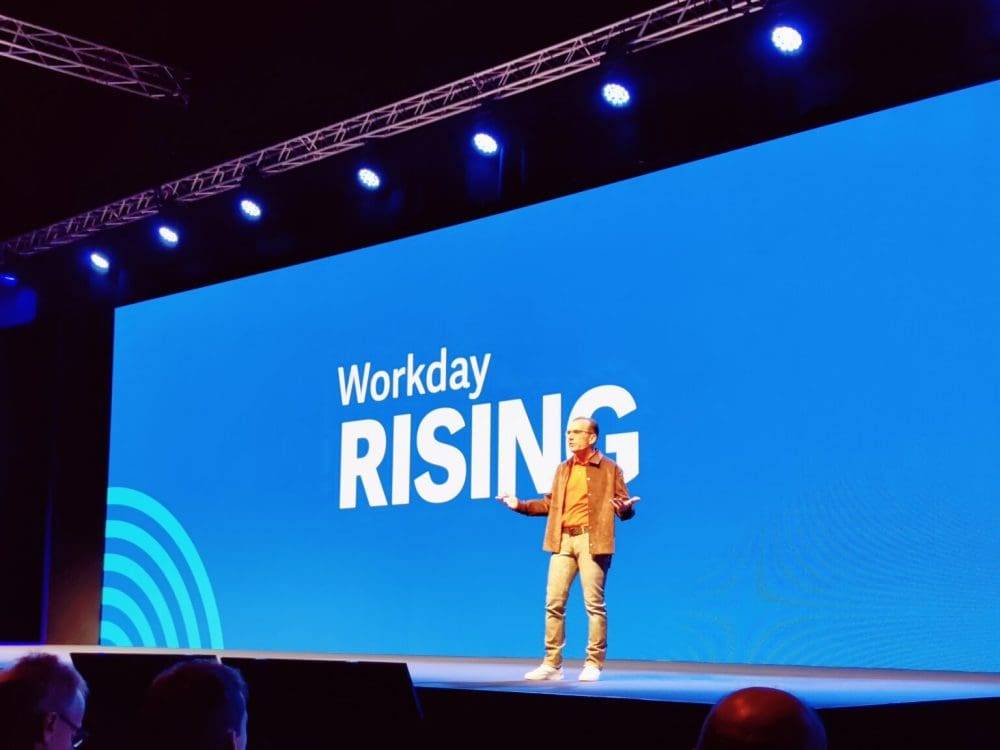
Chano Fernández’s Workday background is central to the story because Workday is one of the better-known enterprise SaaS scale stories. Fernández became Workday co-CEO in 2020 after years in senior go-to-market and international roles. Workday later changed its leadership structure in 2022, with Carl Eschenbach appointed co-CEO and Fernández stepping down.
That history can be read two ways. The optimistic reading is that Fernández has already operated at the altitude Klaviyo is trying to reach: global enterprise customers, complex sales motions, partner ecosystems, and disciplined scaling. The skeptical reading is that co-CEO models can be transitional, fragile, or dependent on timing and personalities. Both readings are fair. Business history is annoying like that; it refuses to behave like a clean LinkedIn carousel.
The more useful takeaway is not “Workday proves it works” or “Workday proves it fails.” It is that co-CEO structures need constant maintenance. The title is not the strategy. The strategy is the operating system underneath it: who owns which metrics, how conflicts get resolved, how the executive team receives direction, and whether employees know whose call is final.
What Klaviyo Gains If This Works
If the model works, Klaviyo could gain speed in two places at once. On the product side, Bialecki can spend more time shaping the AI-first roadmap, working through technical architecture, and staying close to customer problems. That is valuable because founder-led product intuition can be hard to replace. Founders often carry a living map of why the company exists, which features matter, and which customer complaints are actually strategic warnings in disguise.
On the operating side, Fernández can bring enterprise discipline. Klaviyo’s growth increasingly depends on larger customers, international markets, channel expansion, and multi-product adoption. Those motions require repeatable sales processes, customer success rigor, partner strategy, localization, compliance, and executive-level selling. In plain English: the stuff that makes a company boring enough to scale and exciting enough to keep growing.
The AI Product Race Needs Founder Attention
The most compelling argument for the move is AI. Klaviyo is trying to turn its data platform and marketing automation base into something more autonomous. That means product decisions made in 2026 could define the next decade of the company. Should AI agents recommend campaigns or execute them? How much control should brands keep? How do teams measure agent performance? How do marketers trust outputs? How does customer service automation avoid becoming the digital version of being trapped in a phone tree?
These are not side quests. They are core product questions. If Bialecki can spend more time on them, Klaviyo may move faster and make sharper choices. The risk of a founder stepping too far away from product is that the company slowly becomes optimized for selling what already exists. In SaaS, that can look great for a few quarters and then suddenly feel like waking up in a museum of your own roadmap.
What Could Go Wrong?
The first risk is ambiguity. Even with a clean public split, real company life is messy. Product affects sales. Sales affects roadmap. Customer success affects product packaging. International expansion affects compliance and localization. AI affects everything. If both co-CEOs are not deeply aligned, the organization may start triangulating between them. That is when teams stop asking, “What is right for the customer?” and start asking, “Which CEO will approve this faster?”
The second risk is internal politics. Dual leadership can create invisible factions, especially if one side is associated with product purity and the other with revenue pressure. Great companies need both. A product nobody buys is a science project. A sales machine without product innovation is a treadmill with a quota. The co-CEO model must prevent the company from turning into “builders versus sellers,” because that movie always ends with Slack threads nobody wants to read.
The third risk is investor interpretation. Public-market investors like accountability. If growth slows, margins compress, or AI products take longer to monetize, investors may ask who is responsible. A co-CEO structure can look elegant in good times and blurry in bad times. Klaviyo will need crisp communication about strategy, metrics, and leadership ownership.
How to Judge Whether It Works
The answer will not come from the announcement. Leadership announcements are like gym memberships: the purchase is not the transformation. The results show up later, in behavior and output.
Watch Product Velocity
First, watch product velocity. Does Klaviyo keep shipping meaningful AI capabilities that customers adopt, or does it mostly rename existing tools with shinier nouns? The difference matters. Real product velocity shows up in usage, retention, expansion, and customer stories. Fake velocity shows up in launch pages with too many gradients.
Watch Enterprise and Mid-Market Expansion
Second, watch larger-customer momentum. Klaviyo has already reported growth in customers generating more than $50,000 in ARR and said customers over $1 million in ARR doubled year over year in 2025. If Fernández’s operating experience is working, that motion should become more repeatable without breaking Klaviyo’s appeal to smaller and mid-sized brands.
Watch Multi-Product Adoption
Third, watch adoption beyond email. SMS, WhatsApp, mobile push, service, analytics, and AI agents all expand the platform story. The more customers use Klaviyo as a unified B2C CRM rather than a campaign tool, the stronger the strategic position becomes. The danger is complexity. Klaviyo must add power without becoming the kind of software that requires a priest, a consultant, and three browser tabs just to launch a campaign.
Watch Culture
Finally, watch culture. Bialecki’s “1% done” mindset is valuable because it keeps the company restless. But scaling companies also need process, forecasting, controls, and operating discipline. The trick is to add grown-up systems without replacing the founder spirit with laminated bureaucracy. Nobody wants innovation to die in a meeting titled “Innovation Governance QBR.”
So, Does It Work?
The honest answer: it can work, but only if the partnership is designed like a product, not decorated like an org chart. Klaviyo’s version has real logic. Fernández brings global enterprise and go-to-market experience. Bialecki gets more room to focus on product and AI. The company is growing, expanding its market, and facing a technology shift big enough to justify a leadership redesign.
But co-CEO models do not succeed because two impressive people share a title. They succeed because the company knows how decisions are made, where responsibility lives, and how conflict gets resolved before it becomes theater. If Klaviyo gets that right, the move could help it move faster in product while becoming more disciplined in distribution. If it gets that wrong, the model could create friction at exactly the moment the company needs speed.
For SaaS founders, the Klaviyo story is worth watching because it captures a universal tension: the work that builds a company is not always the work required to scale it. The founder wants to get back to product. The business needs operational excellence. The market wants growth, margins, innovation, and certainty, preferably by next Tuesday. A co-CEO structure is one way to answer that tension. It is not magic. But when the roles are clear and the trust is real, it might be the closest thing to founder leverage that does not involve cloning.
Experience-Based Reflections: What Klaviyo’s Move Teaches SaaS Teams
Anyone who has worked around growing SaaS teams has seen a smaller version of Klaviyo’s challenge. In the early days, the founder or product leader is everywhere. They jump into customer calls, rewrite onboarding copy, review feature specs, answer support tickets, and somehow know which integration is secretly held together by hope and one heroic engineer. That closeness creates magic. Customers feel heard. Product decisions are fast. The roadmap has a pulse.
Then growth arrives, wearing a nice blazer and carrying a spreadsheet. The company needs sales territories, partner programs, security reviews, revenue operations, finance discipline, and customer success segmentation. None of this is bad. In fact, it is necessary. But it changes the founder’s job. A leader who once spent mornings thinking about product suddenly spends them approving headcount plans and discussing procurement friction with enterprise buyers. Important? Absolutely. Soul-feeding? Not always.
The lesson from Klaviyo is that founders should be honest about where they create the most unique value. Some founders are brilliant company operators. Others are product visionaries who can see customer behavior before the dashboard catches up. Some can do both for a while, but almost nobody can do both forever at public-company scale. The brave move is not pretending to be superhuman. The brave move is designing leadership around reality.
For product-led SaaS companies, this is especially important during platform shifts. AI is not just another feature category. It changes user expectations, workflow design, pricing, support, security, and competitive positioning. If a founder has deep product instincts, pulling that founder back toward product during an AI transition can be smart. It keeps the company from treating AI as a marketing sticker slapped onto old software. Customers can tell the difference. They may not use the phrase “agentic workflow architecture,” but they definitely know when a tool saves them three hours versus when it generates a cheerful paragraph they still have to fix.
At the same time, product obsession without operating discipline can become expensive chaos. This is where someone like Fernández can matter. A scaling SaaS company needs consistency in how it sells, supports, expands, and serves customers across regions. The best go-to-market leaders do not simply demand more pipeline; they translate customer reality back into product strategy. They notice which segments are adopting, which features cause confusion, which promises sales teams are tempted to overmake, and which customers are quietly becoming champions.
The practical takeaway for other companies is not “hire a co-CEO.” That would be like reading about a marathon runner and immediately buying neon shoes. The takeaway is to ask: where is leadership drag slowing the company? Is the founder trapped in operating details? Is the product team too far from the market? Is go-to-market scaling faster than the product can support? Is the company entering a new category that requires a different executive rhythm?
If the answer is yes, a leadership redesign may be needed. That might mean a president, COO, chief product officer, general manager structure, or, in rare cases, co-CEOs. The title matters less than the clarity. Employees should know who owns product, who owns revenue, who owns customer outcomes, and how tradeoffs get made. Without that clarity, even the most impressive leadership announcement becomes expensive fog.
Klaviyo’s move is fascinating because it is ambitious and practical at the same time. It protects founder-product energy while adding enterprise-scale leadership. It recognizes that AI is a product race and a distribution race. And it reminds SaaS leaders that getting back to product is a dream only if someone equally strong is helping carry the rest of the company. Otherwise, “back to product” becomes “back to product after this one last forecast review,” which, as every operator knows, is how calendars learn to laugh.
Conclusion
Klaviyo adding Chano Fernández as co-CEO is not a simple leadership reshuffle. It is a bet on specialization at scale. Andrew Bialecki can lean harder into AI-first product innovation while Fernández brings global go-to-market and operational experience to the next chapter of growth. The model has obvious upside: faster product focus, stronger enterprise execution, and better leadership bandwidth. It also has real risks: blurred accountability, internal politics, and investor confusion if results wobble.
The move will work if Klaviyo keeps the split clear, the partnership healthy, and the customer at the center of both product and revenue decisions. The dream is not merely having two CEOs. The dream is having two leaders who make the company feel faster, sharper, and more focused than one overloaded CEO ever could. For Klaviyo, the next test is simple: keep shipping, keep scaling, and prove that the co-CEO structure is not just elegant on paper, but powerful in practice.