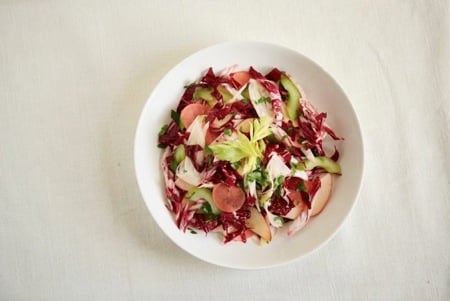
Some fall salads arrive wearing a heavy coat of roasted squash, bacon, and enough cheese to qualify as a minor dairy event. This one takes a brighter route. Shaved fall vegetable salad with tea-pickled radishes is crisp, colorful, pleasantly tart, and sophisticated without becoming fussy. Thin ribbons of fennel, apple, radicchio, and celery create a pile of contrasting textures, while radishes soaked in a black-tea and apple-cider-vinegar brine provide the zing.
The tea is more than a novelty ingredient. It rounds out the vinegar, adds a gently tannic background, and gives the radishes a flavor that feels deeper than an ordinary refrigerator pickle. Honey softens the sharp edges, fresh parsley lifts the earthy vegetables, and the reserved pickling liquid becomes the base of a quick vinaigrette. Nothing is wasted, and the salad tastes as if it has been thinking about autumn all year.
Why This Shaved Fall Vegetable Salad Works
A successful raw vegetable salad needs more than a heroic amount of chopping. It needs balance. Fennel is aromatic and lightly sweet. Apples add fruitiness and snap. Radicchio brings bitterness, celery supplies clean crunch, and pickled radishes contribute acid, salt, heat, and color. Every ingredient has a job, which is useful because unemployed vegetables tend to loiter sadly at the bottom of the crisper drawer.
Shaving the vegetables paper-thin changes the eating experience. Dense produce that might seem tough in chunks becomes delicate and flexible. The vinaigrette can coat more surface area, so every bite tastes seasoned without requiring a lake of dressing. A mandoline makes the most even slices, but a sharp chef’s knife or sturdy vegetable peeler can also do the work.
The Role of Tea in the Pickling Brine
Black tea contributes subtle bitterness, fragrance, and tannic structure. Apple cider vinegar supplies the main acidity, while salt seasons the radishes from within. A little sweetness connects the brine to the apples in the salad and keeps the vinegar from shouting through a megaphone. Garlic and peppercorns add savory warmth without turning the radishes into a spice cabinet clearance sale.
Use plain brewed black tea when you want full control over sweetness. Bottled sweet tea also works, but reduce or omit additional honey in the brine. Earl Grey gives a floral citrus note, while a straightforward breakfast tea produces a more neutral, food-friendly pickle.
Ingredients for the Best Fall Vegetable Salad
For the Tea-Pickled Radishes
- 1 cup strong black tea, warm but not boiling
- 1 cup apple cider vinegar
- 1 tablespoon kosher salt
- 1 to 2 tablespoons honey or granulated sugar
- 8 to 10 small red radishes, or 3 to 4 watermelon radishes
- 2 garlic cloves, thinly sliced
- 1/2 teaspoon whole black peppercorns
For the Shaved Salad
- 1/4 cup reserved tea-pickling liquid
- 1 tablespoon honey
- 3 tablespoons extra-virgin olive oil
- 1 large fennel bulb
- 2 crisp apples, such as Fuji, Gala, Honeycrisp, or Pink Lady
- 2 small heads radicchio
- 4 celery stalks, with leaves reserved
- 2 tablespoons chopped flat-leaf parsley
- Kosher salt and freshly ground black pepper
- All of the drained tea-pickled radishes
Optional Finishes
Toasted pepitas add nutty crunch. Shaved Parmesan, crumbled goat cheese, or feta adds richness. A handful of pomegranate arils makes the salad look ready for a holiday photograph. None is required, but each can move the dish from refreshing side salad to conversation-starting centerpiece.
How to Make Tea-Pickled Radishes
- Prepare the tea. Brew black tea slightly stronger than you would for drinking. Measure 1 cup and let it cool until warm. Extremely hot liquid can soften thin radish slices more than necessary.
- Dissolve the seasonings. In a glass or stainless-steel bowl, stir the warm tea, kosher salt, and honey until dissolved. Add the apple cider vinegar.
- Slice the radishes. Trim the tops and roots. Cut the radishes into very thin rounds, ideally about 1/16 inch thick. Watermelon radishes can be halved before slicing if the rounds are too large for comfortable eating.
- Build the pickle. Place the radishes, garlic, and peppercorns in a clean glass jar or nonreactive container. Pour in the tea brine, making sure the radishes are submerged.
- Chill. Cover and refrigerate for at least 1 hour. Four hours gives fuller flavor, and an overnight rest creates a more integrated sweet-tart bite.
- Drain and reserve. Before assembling the salad, drain the radishes and save 1/4 cup of the pickling liquid for the vinaigrette.
Food-safety note: These are refrigerator pickles, not shelf-stable canned pickles. Keep them refrigerated in a clean, covered container. Do not treat the jar as pantry decor, no matter how attractive the pink radishes become.
How to Assemble the Shaved Fall Vegetable Salad
- Make the vinaigrette. In a large mixing bowl, whisk the reserved pickling liquid with 1 tablespoon honey. Slowly stream in the olive oil while whisking until the dressing looks lightly emulsified. Taste before adding salt because the pickling liquid is already seasoned.
- Prepare the fennel. Remove the stalks and tough outer layer. Halve the bulb through the root and cut out most of the core, leaving just enough to hold the layers together. Shave crosswise into thin slices.
- Slice the apples. Core the apples and cut them into thin half-moons. Add them to the dressing promptly so the acid helps limit browning.
- Cut the radicchio and celery. Slice the radicchio into fine ribbons. Cut the celery thinly on a diagonal, which creates broad, elegant pieces and avoids the stringy feeling of thick chunks.
- Toss gently. Add the fennel, apples, radicchio, celery, parsley, and drained radishes to the bowl. Toss with clean hands or flexible salad servers until the dressing is evenly distributed.
- Finish and serve. Add black pepper and more salt only if needed. Transfer to a wide platter and garnish with celery leaves and any optional toppings.
Technique Tips for Crisp, Restaurant-Style Results
Choose Fresh, Firm Produce
Because the vegetables remain raw, quality is impossible to hide. Select fennel bulbs that feel heavy and firm, with no spongy brown patches. Radicchio should be tight and vividly colored. Apples should be crisp rather than mealy, and celery should snap cleanly. Radishes are best when firm, smooth, and free of soft spots or deep cracks.
Use a Mandoline Carefully
A mandoline is ideal for consistent slices, but it is also extremely efficient at shaving objects you did not intend to serve. Use the hand guard or a cut-resistant glove. Create a flat surface on round vegetables before slicing, keep the tool stable, and stop while there is still a safe piece of produce left. The final half-inch of fennel is not worth donating a fingertip to dinner.
Dress Close to Serving Time
The sturdy vegetables tolerate dressing better than lettuce, but they will gradually soften. For maximum crunch, toss the salad 10 to 20 minutes before serving. That short rest allows the flavors to mingle while preserving the lively texture that makes a shaved vegetable salad special.
Flavor Variations and Smart Substitutions
Change the Fall Produce
Thinly shaved turnips, kohlrabi, carrots, celery root, golden beets, or delicata squash can join the mix. Raw winter squash must be sliced exceptionally thin and is best used in a modest amount. Pears can replace apples, especially firm varieties such as Bosc or Anjou. If radicchio tastes too bitter for your crowd, use half radicchio and half finely shredded green cabbage.
Turn It Into a Main Course
Add roasted chicken, seared salmon, sliced pork tenderloin, or crispy chickpeas. Cooked farro or quinoa makes the salad more substantial without burying its crunch. For a holiday buffet, serve it beside roast turkey, glazed ham, or a rich mushroom Wellington; the acidic radishes provide welcome relief between heavier bites.
Make-Ahead, Storage, and Serving Advice
The radishes are the best make-ahead component. Prepare them one or two days before serving and keep them submerged in their brine in the refrigerator. The vinaigrette can also be mixed a day ahead, though it may need re-whisking. Fennel, radicchio, and celery can be sliced several hours in advance and refrigerated separately in airtight containers.
Slice the apples closer to serving time. Although the acidic dressing slows browning, freshly cut apples look and taste best. Once assembled, the salad is at its peak during the first few hours. Leftovers remain edible the next day, but the vegetables will be softer and the radicchio may deepen the dressing’s color.
Serve the salad on a broad platter rather than in a deep bowl. A platter displays the jewel-toned radishes and prevents the heavier pieces from disappearing beneath the radicchio. It also reduces the unfortunate buffet phenomenon in which the first guest takes all the interesting toppings and leaves everyone else a bowl of purple ribbons.
What to Serve with Tea-Pickled Radish Salad
This shaved fall vegetable salad is particularly useful when the rest of the menu is rich. Pair it with roast chicken and potatoes for a weeknight dinner, or serve it alongside turkey and stuffing at Thanksgiving. It also complements grilled sausages, braised short ribs, baked ham, or creamy pasta because its acidity resets the palate.
For a lighter meal, add crusty bread and a soft cheese, or serve the salad with a bowl of butternut squash soup. At brunch, it works beside a savory tart or quiche. The salad can even anchor a vegetarian lunch when topped with toasted walnuts, chickpeas, and crumbled goat cheese.
Kitchen Experience: Lessons from Making This Salad Repeatedly
The first time I made a shaved fall vegetable salad, I treated the mandoline like a carnival ride: exciting, fast, and apparently exempt from normal caution. The vegetables came out beautifully. My sense of personal invincibility did not. Since then, the guard goes on before the fennel comes out of the refrigerator, and I stop slicing while a safe chunk remains. That small discipline makes the preparation calmer and, importantly, keeps bandages off the ingredient list.
I also learned that “thin” is not a single setting. Fennel benefits from whisper-thin slices because its fibers can otherwise feel woody. Apples can be slightly thicker so they retain juicy crunch. Radicchio is better cut with a knife into narrow ribbons; on a mandoline, loose leaves can slip and fold. Celery tastes best on a sharp diagonal, which exposes more surface to the vinaigrette without turning it into limp confetti.
The tea-pickled radishes were the surprise. After one hour, they tasted bright and recognizably radish-like, with a peppery center. After an overnight soak, the flavors became rounder: tangy first, then lightly sweet, with tea and garlic in the background. I prefer the overnight version for holiday meals because it tastes more composed, while the one-hour pickle is excellent when dinner planning began at 5:37 p.m. and optimism is doing most of the work.
Sweetness required the most adjustment. Bottled sweet tea plus honey produced a brine that leaned toward dessert pickle, which is not a phrase anyone needs at the dinner table. Unsweetened black tea made the result easier to control. When using sweet tea, I now taste it first and add no extra sweetener until the vinegar and salt are mixed in. A pleasantly sweet tea may already contain everything needed to balance the cider vinegar.
Another useful lesson was to season the finished salad, not merely the dressing. The brine tastes strong on its own, but once distributed across fennel, apples, radicchio, and celery, its intensity drops. After tossing, I wait two minutes, taste a complete forkful, and then decide whether the bowl needs salt, pepper, honey, or more acid. Tasting only one apple slice is misleading; the ideal bite includes bitter radicchio, sweet fruit, aromatic fennel, and a pickled radish.
Presentation changed the way guests responded. In a deep mixing bowl, the salad looked crowded and the pink radishes sank. On a white platter, every ingredient became visible, and people who normally approach raw vegetables with the enthusiasm of a tax audit took generous portions. Celery leaves, parsley, pepitas, and a few strategically placed radish rounds made the dish look abundant without requiring complicated garnish work.
Finally, this recipe taught me that make-ahead cooking is not about doing everything early. It is about doing the right things early. Pickle the radishes, mix the dressing, wash the produce, and toast any seeds the day before. Shave the sturdy vegetables a few hours ahead, but cut the apples and toss the salad shortly before eating. That sequence protects the texture while leaving enough time to deal with the rest of dinneror to stand in the kitchen pretending the roast is resting intentionally.
Conclusion
Shaved fall vegetable salad with tea-pickled radishes proves that an autumn side dish does not need to be roasted, creamy, or buried under breadcrumbs to feel satisfying. Its appeal comes from contrast: sweet apples against bitter radicchio, aromatic fennel against clean celery, and crisp vegetables against tangy, tea-scented radishes. The reserved brine ties everything together in a vinaigrette that is efficient, flavorful, and too useful to pour down the drain.
Prepare the pickles ahead, slice with care, dress shortly before serving, and taste the complete salad before making final adjustments. The result is colorful enough for a holiday table, practical enough for a weeknight, and lively enough to wake up even the richest fall menu.