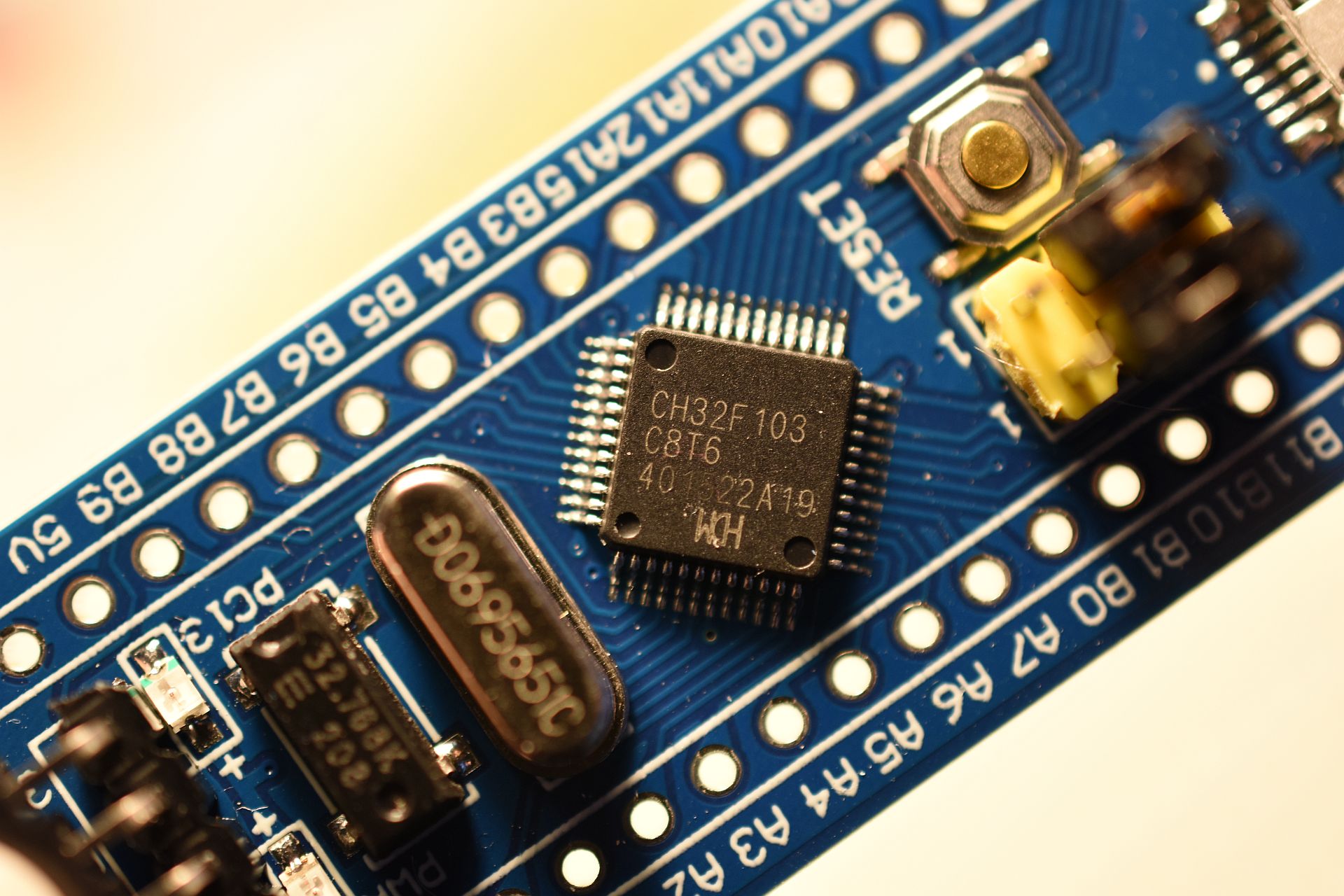
If you’ve ever bought a $2 “Blue Pill” board and felt like you were playing silicon roulette, welcome to the club.
The STM32 ecosystem is huge, popular, and (thanks to global shortages and the internet’s love of bargain bins) full of
look-alikes: some are respectable “form-fit-function” alternatives, some are “compatible-ish,” and some are straight-up
counterfeits wearing an STM32 costume like it’s Halloween in Shenzhen.
This guide breaks down STM32 clones into three bucketsthe good, the bad, and the uglywith
practical examples, real-world pitfalls, and a survival checklist so you can spend less time yelling at OpenOCD and more time shipping firmware.
First, What Counts as an “STM32 Clone”?
“Clone” is a messy word in microcontrollers. People use it to describe everything from a legitimate second-source alternative
to a suspicious chip that claims to be an STM32F103 but behaves like a sleepy toaster.
1) Counterfeits (The “Ugly”)
These parts are marked as genuine STM32 devices (logos, part numbers, date codesthe whole disguise). They might be recycled,
re-marked, rejects, or a completely different die pretending to be ST’s. The big problem isn’t just ethicsit’s unpredictability.
Your “STM32” might fail basic programming, misreport memory sizes, or break in fun new ways after a firmware update.
2) Compatible/Imitation MCUs (The “Good” or “Bad”)
These are chips from other manufacturers that intentionally mimic STM32 pinouts and peripheral registers (especially the popular STM32F1 era).
They usually have their own branding (e.g., GD32, CH32, CS32, APM32), and they range from “shockingly close” to “close enough until you use USB.”
3) “Similar, Not a Drop-In” Alternatives
Some parts get lumped into “clones” even when they aren’t trying to be binary compatible. They may require changes in startup code,
clock trees, bootloaders, or peripheral setup. They can still be a smart supply-chain movebut don’t treat them like Lego bricks.
The Good: When STM32-Like Chips Actually Help You
Let’s be honest: clones wouldn’t exist if they didn’t solve real problems. The STM32 family is popular, supply chains are imperfect,
and engineers hate redesigns that could’ve been avoided with a $0.40 part swap.
Good Thing #1: Availability (a.k.a. “The Part Exists in Reality”)
During shortages, it’s common to see lead times stretch into “check back after you finish grad school.” STM32-compatible alternatives can be a
lifesaver for prototypes, low-volume builds, and products that would otherwise stall. Even outside shortages, second-source options reduce risk:
if your entire product depends on one specific MCU, your business is basically on a single-silicon diet.
Good Thing #2: Familiar Tooling and Libraries (Sometimes)
Many STM32-ish parts can run firmware built for STM32 with minimal changesespecially in the STM32F103 universe. That means existing codebases,
community libraries, and board support packages can transfer over with less pain than a full MCU migration.
Good Thing #3: Some Clones Bring Legit Improvements
Here’s the plot twist: a few “clones” aren’t worsethey’re different, and occasionally faster or more flexible.
A well-known example is the STM32F103-style ecosystem where certain compatibles advertise higher clock speeds or different flash behavior.
That can be attractive for hobby projects, cost-sensitive designs, and “I just need it to blink and speak UART” hardware.
Example: The “It Runs Blinky” Test Isn’t Nothing
The embedded world loves to dunk on the Blinky demo, but it’s a useful first filter. If a chip can’t reliably program and run basic code,
it’s not a “bargain,” it’s a time vampire. Some STM32-compatible parts do pass that baseline easilyand that’s where the “good” starts.
The Bad: A Thousand Paper Cuts (a.k.a. Why “Compatible” Needs an Asterisk)
The “bad” category is where most clone drama lives: not total failure, but subtle differences that waste your afternoons.
Your code compiles, it flashes, and then somethingUSB, ADC, UART timing, bootloader behavioracts just different enough to be annoying.
Bad Thing #1: Programmer/Debugger Weirdness (IDCODE Surprises)
Debug probes and programming tools often expect a specific chip ID. Some STM32-like MCUs report a different ID, which can cause errors such as
“unexpected idcode” in OpenOCD or failures in vendor tools. This doesn’t always mean the chip is uselessjust that your toolchain is strict,
and the clone didn’t memorize the handshake perfectly.
Translation: your MCU is saying, “Hello, I’m basically an STM32.” Your tools reply, “You don’t look like your driver’s license photo.”
Bad Thing #2: Peripheral Differences That Only Show Up When You Ship
Many clones mirror the STM32 register layout closely enough for basic GPIO, SysTick, and simple timers. But the deeper you goDMA quirks,
ADC sampling behavior, SPI/I2C edge cases, USB timing, low-power modesthe more likely you’ll find mismatches.
- USB: Often the first “gotcha” peripheral. Enumeration issues and timing sensitivity can expose small silicon differences.
- Flash programming/erase: Page erase times, wait states, and write algorithms can differ enough to break assumptions.
- Startup/boot behavior: Some parts boot slower or behave differently when coming out of reset, especially if flash architecture differs.
- Analog quirks: ADC input impedance, sampling clocks, and calibration behavior may not match STM32 app notes.
Bad Thing #3: Documentation and Support Gaps
ST’s STM32 documentation is famously deep: datasheets, reference manuals, errata, app notes, Cube libraries, and example projects.
Many clone vendors provide less detail, fewer examples, or inconsistent translations. That’s not a moral failureit’s a practical one:
if you can’t quickly confirm a register bit’s behavior, you end up debugging by superstition.
Bad Thing #4: Vendor Tools Might Not Love You Back
ST tools are designed for ST parts. Clones may work, partially work, or break in ways that are hard to diagnose. And even if they work today,
a future tool update could tighten checks, change programming algorithms, or assume errata behavior that your chip doesn’t share.
In other words: you might be building your workflow on a handshake agreement nobody signed.
The Ugly: Counterfeits, Liability, and the “Surprise, It’s Not ST” Moment
The ugly side isn’t about “compatible alternatives.” It’s about parts that pretend to be something they’re notespecially counterfeits that carry
STM32 markings. This is where cost savings can turn into risk, rework, and (in serious products) liability.
Ugly Thing #1: The Fake That Looks Legit
Counterfeit STM32F103 parts have shown up on popular low-cost dev boards. Visual inspection sometimes helpspackage markings, font quality,
and surface features can be cluesbut looks alone don’t prove authenticity. The hard truth: the only real proof is behavior under test
(programming reliability, correct IDs, correct peripherals, stable operation over time).
Ugly Thing #2: Reliability and Long-Term Drift
Even if a counterfeit runs your demo today, you can’t assume consistent wafer quality, process control, or screening. In consumer gadgets that’s annoying.
In industrial control, power, automotive-ish environments, or anything safety-relevant, it’s unacceptable. “Works on my bench” is not a reliability spec.
Ugly Thing #3: Trust and Security Boundaries
Microcontrollers sit at the center of trust: firmware integrity, debug interfaces, unique IDs, secure boot (for modern parts), and key storage.
With unknown or counterfeit silicon, you lose confidence in those trust anchors. That doesn’t mean every clone is maliciousit means you can’t assume
the same guarantees you’d rely on with genuine parts and documented security features.
Ugly Thing #4: Business and Legal Reality
Selling products containing counterfeits can expose you to recalls, customer distrust, and contractual issues (especially if your BOM promises branded parts).
Even if you’re a hobbyist, you still paywith your time, your sanity, and sometimes a scorched PCB.
How to Spot and Survive STM32 Clones (Without Losing Your Weekend)
Step 1: Buy Smart (If You Actually Care)
If your project mattersdeadlines, clients, safety, repeatabilitybuy from authorized distributors and reputable channels.
You’re not paying for magic; you’re paying for traceability, anti-counterfeit processes, and a supply chain that doesn’t involve a guy named
“BestChip-Store-Official-Real-100%” in a digital alleyway.
Step 2: Triage Checklist for Boards You Already Own
- Read the chip markings: Does it clearly show a non-ST brand (GD32/CH32/etc.) or is it pretending to be an STM32?
- Check debug/program ID behavior: Does your toolchain recognize it cleanly? Any “unexpected IDCODE” warnings?
- Verify memory expectations: Does reported flash/RAM match what your linker script expects? Don’t assume.
- Run a peripheral smoke test: GPIO + UART + SPI/I2C + a timer. Add USB early if you rely on it.
- Do a power/reset test: Brown-out, reset cycling, and cold boot can expose “it only works sometimes” parts.
Step 3: Production Checklist (Where Clones Stop Being Cute)
- Document the exact silicon: Vendor, part number, lot/markings, and tested firmware/tool versions.
- Lock the toolchain: Pin your compiler, OpenOCD version, and programmer firmware versions.
- Build a validation suite: Automated tests for critical peripherals and timing behavior.
- Qualify multiple sources: If you’re using alternates, qualify them intentionallydon’t let purchasing “surprise you.”
- Decide on a policy: “Compatible alternatives allowed” is different from “counterfeits tolerated.” Write it down.
So… Should You Use STM32 Clones?
Here’s a practical decision guideno moral lectures, just engineering tradeoffs.
Use clones if you are…
- Hobbyist / learner: Great for experimenting, especially if you enjoy debugging as a sport.
- Prototyping under supply pressure: Fine if you add tests and accept possible rework.
- Building non-critical gadgets: Acceptable if failures are inconvenient, not dangerous.
Avoid clones (or be extremely strict) if you are…
- Shipping safety-related systems: Use genuine parts and validated supply chains.
- Relying on security features: Unknown silicon undermines your trust model.
- Supporting customers at scale: Variability turns support into an expensive mystery novel.
Extra: of “Clone Encounters” from the Real World
The first time you meet an STM32 clone is usually not in a lab with a white coat and a calm heart rate.
It’s at 1:13 a.m., when your “simple” firmware upload turns into an “unexpected idcode” warning and you suddenly develop
a strong emotional relationship with your debug logs.
One classic experience goes like this: you buy a handful of Blue Pill boards because they’re cheap, and because the internet told you
they’re “basically STM32 dev boards.” The first board flashes fine. The second refuses to connect unless you power-cycle three times,
hold your breath, and promise to finally read the datasheet. The third “works,” but USB never enumerates, which is impressive because
your entire project is a USB device. By this point you’re bargaining: “I don’t need USB. I never needed USB. USB is overrated.”
Then there’s the “it’s not fake, it’s just… different” story. You discover the chip isn’t branded ST at allmaybe it says GD32 or CH32.
That’s not automatically bad! Sometimes it’s actually refreshing, like the board is being honest with you. But the honeymoon ends when
you realize your favorite ST-only tool expects ST-only behavior. You switch to a more flexible workflow (often OpenOCD or a different programmer),
and suddenly the board becomes usable again. The emotional arc is real: denial, annoyance, grudging acceptance, and finally, a half-proud sense
that you now know more about SWD than you ever wanted to.
Another common experience is the “memory mirage.” Your linker script is set for 64 KB because you bought an STM32F103C8.
Then someone on a forum says, “Many of these have 128 KB, just try it.” You try it, it works, and you feel like you found free money.
But with clones and counterfeits, memory reporting can be inconsistentsome parts misreport sizes, and some behave differently under stress.
The responsible version of this story ends with: “Cool, but I’m still going to constrain my build, add checks, and not treat surprise memory
as a production feature.”
The best “clone survival” stories usually share the same ending: the engineer stops treating the MCU like a logo and starts treating it like a component
that must be validated. They create a small test firmware that exercises the exact peripherals they care abouttimers, UART, DMA, ADC, and especially USB.
They pin their toolchain versions. They label boards once tested. And if the project matters, they source genuine parts through authorized channels.
The clone doesn’t become “good” or “bad” by reputationit becomes known, measured, and managed.
In a weird way, STM32 clones teach a valuable embedded lesson: the real enemy isn’t a different vendor. The enemy is unknown behavior.
Once you reduce unknowns with testing and disciplined sourcing, even a cheap board can be a useful tool instead of a tiny chaos machine.
Conclusion
STM32 clones are a spectrum. On the “good” end, you have clearly marked, reasonably compatible alternatives that can keep projects moving
when parts are scarce or budgets are tight. In the “bad” middle, you’ll find near-compatibles that work until you touch the one peripheral
that matters most to your design. And in the “ugly” corner, you’ll meet counterfeits that impersonate STM32 parts and turn engineering into guesswork.
The winning strategy is simple: choose intentionally. If you use alternates, validate them. If you need reliability and traceability,
buy genuine parts from reputable sources. And if a $2 board costs you two nights of debugging… congratulations, you just invented the world’s most expensive bargain.