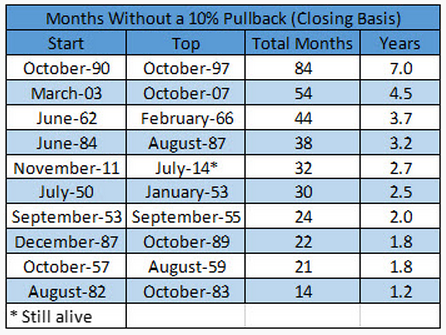
Every long stock market winning streak eventually meets the same awkward party guest: the correction. One minute, investors are high-fiving over fresh highs, analysts are raising price targets, and your neighbor suddenly has “a system.” The next minute, the S&P 500 slips, headlines turn dramatic, and everyone remembers that stocks do not move in a straight line unless the chart is printed by a motivational speaker.
A stock correction after a long winning streak can feel like the market suddenly changed personalities. But in many cases, it is less like a disaster and more like a pressure valve. Prices rise, optimism expands, valuations stretch, traders take profits, and the market pauses to ask, “Are we sure about all this?” That pause can be uncomfortable, but it is also one of the most normal parts of investing.
This article explains why corrections often follow long rallies, what history suggests about them, how investors can interpret them, and why a pullback after a strong run does not automatically mean the bull market has packed its bags and left town.
What Is a Stock Market Correction?
A stock market correction is generally understood as a decline of roughly 10% from a recent high. If the decline reaches 20% or more, it is usually called a bear market. A smaller dip, such as 5% to 10%, is often called a pullback. These labels are useful, but they can also make investing sound like weather forecasting with extra anxiety.
Corrections can happen in broad market indexes like the S&P 500, the Dow Jones Industrial Average, or the Nasdaq Composite. They can also happen in sectors, industries, exchange-traded funds, or individual stocks. A fast-growing technology stock, for example, may “correct” even while the broader market barely moves.
The key point is this: corrections are not rare. They are built into the market’s operating system. Stocks represent ownership in businesses, but prices also reflect expectations, interest rates, economic data, investor psychology, and plain old human overreaction. When prices run too far too fast, a correction can bring them closer to reality.
Why Long Winning Streaks Often Lead to Corrections
Long winning streaks are exciting because they create a sense of momentum. When stocks rise week after week, investors begin to believe the trend has a special kind of gravity. Money flows into index funds, traders chase breakouts, and financial media starts using phrases like “unstoppable rally,” which is usually when the market clears its throat ominously.
1. Profit-Taking Becomes Tempting
After a strong rally, many investors sit on sizable gains. Some decide to lock in profits, especially if the rally was fast. Large institutions may rebalance portfolios by selling stocks and buying bonds or cash-like assets to restore target allocations. This selling pressure can trigger a short-term decline.
2. Valuations Get Stretched
Winning streaks often push price-to-earnings ratios higher. If stock prices rise faster than corporate profits, the market becomes more expensive. That does not guarantee a correction, but it reduces the margin for disappointment. A slightly weaker earnings report, a hotter inflation number, or a cautious Federal Reserve comment can suddenly matter more.
3. Investor Sentiment Gets Too Comfortable
Markets are funny creatures. They often become riskiest when they feel safest. When volatility stays low and major indexes keep rising, investors may take on more risk than they realize. A correction can arrive when optimism becomes crowded and there are fewer new buyers left to push prices higher.
4. Interest Rates and Earnings Reset Expectations
Long winning streaks can be interrupted by changes in Treasury yields, inflation expectations, Federal Reserve policy, or corporate earnings guidance. Stocks are valued partly on future cash flows, and those cash flows look less attractive when discount rates rise. Translation: when bond yields climb, stocks sometimes get jealous and throw a tantrum.
Are Corrections After Winning Streaks Bad?
Not necessarily. A correction after a long winning streak can be healthy if it cools speculation, improves valuations, and gives long-term investors better entry points. The problem is not the correction itself. The problem is how investors react to it.
Historically, many strong rallies have included sharp pullbacks along the way. Bull markets are not smooth escalators. They are more like staircases designed by someone with a flair for drama. A market can rise over a full year and still suffer several uncomfortable declines inside that year.
One reason corrections feel worse than they are is that losses are emotionally louder than gains. A 10% decline after a 25% rally still leaves investors ahead, but it feels like something has gone wrong. The human brain tends to focus on recent pain rather than longer-term progress. This is useful if you touch a hot stove; it is less useful if you are managing a retirement portfolio.
Historical Examples of Rally Fatigue
Consider the S&P 500 after major winning streaks. Long runs have often happened during bull markets, especially when earnings are improving, inflation is cooling, or monetary policy is supportive. But even powerful bull markets usually experience pauses.
In late 2023 and early 2024, U.S. stocks rallied strongly as investors priced in lower inflation, resilient economic growth, and enthusiasm around artificial intelligence. The market reached new highs, but parts of the rally became concentrated in a small group of mega-cap technology companies. That concentration made the index more vulnerable to disappointment in a few big names.
In 2025 and 2026, investors continued to watch the same tug-of-war: strong earnings and AI optimism on one side, elevated valuations, interest-rate uncertainty, geopolitical risks, and market concentration on the other. When a rally becomes heavily dependent on a narrow set of companies, even a small wobble in those leaders can create a broader correction.
The February 2018 volatility shock offers another useful example. Stocks had enjoyed a calm, powerful advance, but concerns about inflation, rising bond yields, and volatility-linked trading strategies helped trigger a fast correction. The market recovered, but the episode reminded investors that low volatility can reverse quickly.
The 2020 pandemic crash was more severe than a correction; it became a bear market. Yet it also showed how quickly markets can recover when policy support and investor expectations shift. This does not mean every decline rebounds quickly, but it does show why trying to perfectly time exits and reentries is so difficult.
What Usually Triggers the Turn?
Corrections rarely have only one cause. They usually emerge from a combination of stretched pricing, crowded positioning, and a catalyst. The catalyst may be obvious, such as a weak jobs report or a sudden spike in oil prices. Other times, the market simply runs out of steam.
Common Triggers Include:
- Higher bond yields: Rising Treasury yields can pressure stock valuations, especially growth stocks.
- Earnings disappointment: After a big rally, “good” results may not be good enough.
- Inflation surprises: Sticky inflation can reduce hopes for interest-rate cuts.
- Geopolitical shocks: War, trade disputes, and energy disruptions can raise uncertainty.
- Overbought technical conditions: When prices rise too quickly, traders may sell on signs of exhaustion.
- Market concentration: If a few mega-cap stocks drive most gains, weakness in those names can pull indexes lower.
Notice that none of these triggers automatically means the economy is broken. Sometimes a correction is simply a valuation reset. The market was priced for perfection, then perfection forgot to show up.
How Investors Should Read a Correction
A correction after a long winning streak should be analyzed, not feared. The first question is whether the decline reflects a change in fundamentals or a change in mood. Mood-driven corrections can be sharp, but they may not last if earnings, employment, and consumer demand remain solid. Fundamental corrections deserve more caution because they may signal weaker profits, tighter credit, or recession risk.
Check the Breadth of the Decline
Market breadth refers to how many stocks are participating in the move. If only a few overextended leaders are falling while many stocks remain stable, the correction may be sector-specific. If most sectors are declining together, the market may be pricing in broader economic stress.
Watch Credit Markets
Credit spreads can reveal whether investors are worried about corporate defaults. A stock correction with calm credit markets may be less alarming than a correction accompanied by widening spreads and tighter lending conditions.
Look at Earnings Revisions
If analysts are cutting earnings estimates across many industries, the correction may be tied to weakening fundamentals. If earnings expectations remain stable, the market may simply be digesting prior gains.
What Not to Do During a Correction
The worst investing decisions are often made when red numbers are flashing and financial television is using emergency music. A correction can tempt investors to sell everything, wait for “clarity,” and then buy back later. Unfortunately, clarity usually arrives after prices have already moved.
Selling during a correction creates two hard decisions instead of one: when to get out and when to get back in. Many investors manage the first part with impressive panic and the second part with complete paralysis.
Avoid These Classic Mistakes:
- Panic selling: Selling after a decline can lock in losses and disrupt long-term plans.
- Chasing defensive trades too late: Moving into cash after the market has already corrected may reduce recovery potential.
- Confusing volatility with permanent loss: A temporary price decline is not the same as a broken investment thesis.
- Ignoring diversification: Concentrated portfolios can suffer more when former winners reverse.
- Reading every headline as prophecy: Headlines explain yesterday very confidently and tomorrow much less reliably.
What Smart Investors Often Do Instead
Corrections are a good time to review, rebalance, and refine. They are not always a time to overhaul everything. Long-term investors may use corrections to add to quality positions, harvest tax losses, or rebalance into assets that have become more attractively valued.
1. Revisit Asset Allocation
If a long winning streak pushed your stock allocation above your target, rebalancing before or during a correction can reduce risk. If the correction pushes your allocation below target, disciplined rebalancing may lead you to buy stocks at lower prices.
2. Separate Strong Businesses From Expensive Prices
A great company can still be a risky stock if expectations are extreme. During corrections, investors should ask whether the business remains strong and whether the valuation has become more reasonable.
3. Keep Cash for Known Needs
Money needed in the next year or two should not depend on the stock market behaving politely. Cash reserves can help investors avoid selling stocks during downturns to fund near-term expenses.
4. Use Dollar-Cost Averaging
Investing fixed amounts at regular intervals can reduce the pressure to guess the perfect entry point. It is not glamorous, but neither is brushing your teeth, and both habits tend to work better than dramatic alternatives.
Do Corrections Create Buying Opportunities?
Sometimes, yes. But the phrase “buy the dip” deserves respect, not blind enthusiasm. A correction can create opportunity when prices fall faster than fundamentals deteriorate. However, if earnings are rolling over, debt stress is rising, or the economy is entering recession, a cheap-looking stock can get cheaper.
The best buying opportunities often appear in companies with strong balance sheets, durable cash flows, competitive advantages, and reasonable valuations. In broad index investing, corrections can improve expected long-term returns by lowering the price paid for future earnings.
Still, investors should avoid trying to catch the exact bottom. Bottoms are usually obvious only in hindsight, much like the perfect comeback in an argument you lost three hours ago.
SEO-Friendly Investor Takeaways
For readers searching for practical guidance on stock corrections after long winning streaks, the main lesson is simple: a correction is not automatically a crisis. It is a recurring feature of equity markets. Long rallies can lead to stretched valuations, crowded trades, and emotional overconfidence. Corrections help reset those conditions.
Investors should focus on fundamentals, diversification, risk management, and time horizon. Short-term traders may treat corrections as technical events. Long-term investors should treat them as portfolio checkups. Either way, the smartest response is usually prepared before the correction begins.
Conclusion: The Market Can Trip Without Falling Apart
Stock corrections after long winning streaks are uncomfortable, but they are not unusual. They often happen because markets get ahead of earnings, investor sentiment becomes too optimistic, or macroeconomic conditions shift. A correction can be scary in the moment, but it can also restore balance and create better long-term opportunities.
The most important thing investors can do is avoid treating every pullback like the end of the financial universe. Some corrections become bear markets, but many do not. A disciplined plan, diversified portfolio, and realistic expectations can help investors stay calm when the market takes a breath.
After all, a winning streak that never pauses is not a market. It is a fairy tale with a ticker symbol.
Additional Experiences and Practical Lessons About Stock Corrections After Long Winning Streaks
Investors who have lived through multiple market cycles often describe the same experience: the correction rarely feels “normal” while it is happening. On paper, everyone agrees that a 10% decline is part of investing. In real life, that 10% decline arrives with breaking news alerts, nervous group chats, and at least one person saying, “This time is different.” Sometimes it is different in the details, but the emotional pattern is remarkably familiar.
One common experience after a long winning streak is regret. Investors who did not buy earlier regret missing the rally. Investors who did buy regret not selling at the top. Investors who sold too soon regret watching prices climb without them. Corrections squeeze all those regrets into one noisy mental blender. The best defense is having a plan that does not depend on perfect hindsight.
Another lesson is that long winning streaks can make risk invisible. When a portfolio rises month after month, investors may forget how much volatility they agreed to accept. A correction reveals the true risk tolerance of the person behind the spreadsheet. Someone may believe they are comfortable with an aggressive allocation until their account balance drops enough to make lunch taste like cardboard.
Experienced investors often use corrections as a stress test. They ask: Am I diversified? Do I own too much of one sector? Did I buy a stock because I understood the business, or because everyone online was yelling about it in capital letters? Do I have enough cash for emergencies? These questions are not exciting, but they are useful. Corrections punish sloppy assumptions and reward preparation.
A practical example is the investor who owns a broad S&P 500 index fund and sees the market fall after a strong rally. If that investor has a 10-year or 20-year horizon, steady income, and a proper emergency fund, the correction may not require any action. In fact, automatic contributions may buy more shares at lower prices. The same correction looks very different for someone who needs the money for a house down payment in six months. Time horizon changes everything.
Another real-world experience involves concentrated winners. Suppose an investor bought several large technology stocks during a rally and enjoyed huge gains. After a long streak, those stocks begin to correct as expectations become too high. The companies may still be excellent, but the portfolio may be overexposed. Rebalancing can feel painful because it means trimming winners, yet it can protect the investor from letting one theme dominate the entire financial future.
Corrections also teach patience. The market does not send a polite calendar invitation titled “Bottom Occurs Today at 2:30 p.m.” Prices can fall, bounce, fall again, and then recover when sentiment is still gloomy. Investors waiting for perfect confidence often miss the early stage of the rebound. That is why gradual investing, rebalancing, and written rules can be more effective than emotional guesswork.
The final experience is humility. Long winning streaks make many people feel brilliant. Corrections remind them that markets are bigger than anyone’s opinion. That reminder is not fun, but it is valuable. The goal is not to predict every dip. The goal is to build a portfolio and mindset strong enough to survive them.