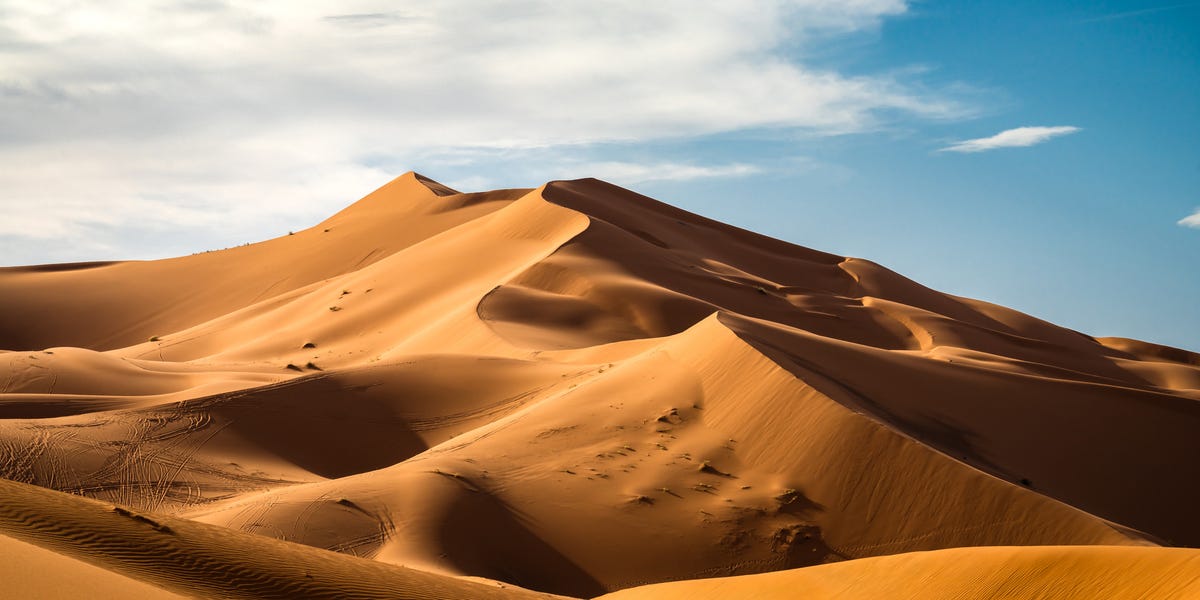
The Sahara Desert is famous for doing desert things: being hot, dry, enormous, dramatic, and extremely committed to sand. Today, it stretches across North Africa as the world’s largest hot desert, a place where rainfall is rare, water is precious, and the landscape can feel like another planet. But here is the plot twist worthy of a science documentary with suspiciously epic music: the Sahara has not always been a sea of dunes and stone. At repeated points in Earth’s past, it transformed into a greener world of lakes, rivers, wetlands, grasslands, shrubs, trees, hippos, crocodiles, fish, cattle herders, hunters, and artists.
Even stranger, this transformation appears to follow a natural rhythm. Roughly every 21,000 years, changes in Earth’s orbital precession help strengthen the African monsoon and push rainfall farther north. When the timing is right, the Sahara can shift from desert to savanna-like landscape. Scientists call these episodes North African Humid Periods, while everyone else prefers the more cinematic name: the Green Sahara.
This does not mean the Sahara suddenly wakes up one Tuesday wearing a rainforest costume. The process is regional, uneven, and controlled by a complex climate orchestra involving sunlight, monsoons, ocean temperatures, vegetation, dust, ice sheets, and feedback loops. Still, the basic idea is astonishingly simple: Earth wobbles, sunlight shifts, monsoons move, and the desert can bloom.
What Does “The Sahara Turns Green” Actually Mean?
When scientists say the Sahara “turned green,” they are not describing one giant lawn from the Atlantic Ocean to the Red Sea. Nobody was mowing the central Sahara in the Neolithic with a stone-age push mower. Instead, the phrase refers to a broad environmental transformation during humid periods, especially the most recent African Humid Period, when much of North Africa became wetter than it is today.
During these wet phases, the desert’s margins shifted. Seasonal rains reached deeper into North Africa. Lakes expanded. Rivers and wadis carried water. Wetlands appeared in basins that are now dry. Grasslands and shrublands spread across areas that today receive very little precipitation. In some regions, savanna-type vegetation supported large animals and human communities.
The most familiar recent Green Sahara period is usually placed between about 11,000 and 5,000 years ago, although some research describes the broader humid transformation beginning earlier, after the last glacial period. In that window, the Sahara was not the empty barrier we imagine today. It was a patchwork of habitable corridors, seasonal resources, and watery landscapes. Imagine replacing some dunes with grass, some dry lakebeds with actual lakes, and some lonely horizons with herds of animals. Nature had redecorated, and the theme was “surprisingly livable.”
The 21,000-Year Clock: Earth’s Wobble and the Green Sahara
The main driver behind the Sahara’s repeated greening is Earth’s orbital precession. Precession is the slow wobble in the orientation of Earth’s axis, a bit like a spinning top that does not spin perfectly upright forever. This wobble changes the timing of the seasons relative to Earth’s position around the Sun.
Why does that matter? Because monsoons are powered by seasonal heating. When Northern Hemisphere summers receive stronger sunlight, land surfaces in North Africa heat up more intensely. Hot land helps create pressure differences that pull moist air inland from the oceans. The West African Monsoon grows stronger and can travel farther north than it does today. More summer rain falls over the Sahara and Sahel. Vegetation spreads. Dust decreases. Darker vegetation absorbs more sunlight than pale desert sand, which can further warm the land and reinforce rainfall. In climate science, this is called a feedback. In everyday language, it is the planet saying, “Well, since we started greening, let’s keep going.”
The timing is often simplified as a 21,000-year cycle because that is the approximate rhythm linked to precession-driven changes in seasonality relevant to these humid periods. NASA describes the combined precession cycle as averaging closer to 23,000 years, and the exact climatic response can vary. The key takeaway is that the Sahara’s wet-dry rhythm is tied to predictable astronomical changes, not random climate mood swings.
Why the Sahara Does Not Turn Green Every Time Perfectly
If precession is the clock, why is the Sahara not perfectly green every 21,000 years like a punctual botanical alarm? Because Earth’s climate is not a simple kitchen timer. Other factors modify the signal.
Recent modeling work on North African Humid Periods over the past 800,000 years shows that precession strongly paces the timing of humid episodes, but ice ages can suppress them. During glacial periods, large Northern Hemisphere ice sheets cooled the atmosphere and weakened the northward reach of the African monsoon. In other words, even when the orbital setup favored greener conditions, giant ice sheets could act like a climate bouncer at the club door: “Sorry, monsoon expansion, not tonight.”
Eccentricity, the changing shape of Earth’s orbit, also matters because it affects how strongly precession influences seasonal sunlight. Vegetation, dust, sea surface temperatures, and atmospheric circulation all add extra layers. The Sahara’s greening is therefore not just about one wobble in space; it is about how that wobble interacts with the rest of the climate system.
Evidence: How Scientists Know the Sahara Was Once Green
The Green Sahara is not a romantic guess based on someone finding one suspiciously cheerful shrub. Scientists have assembled evidence from many sources, and together they tell a remarkably consistent story.
Lake Sediments and Ancient Shorelines
Across North Africa, researchers have found evidence of ancient lakes where today there are dry basins, salt flats, or desert plains. Sediment layers can preserve clues such as pollen, freshwater organisms, mineral deposits, and chemical signatures that reveal past water conditions. In some places, ancient shorelines show that lakes once stood far larger than their modern remnants.
One of the most dramatic examples is the Lake Chad basin. During wetter periods, Lake Chad expanded into a much larger body sometimes called Mega-Chad. This lake system was not just a puddle with confidence; it was a vast inland water body that influenced local environments and created habitats for fish, birds, and people.
Marine Dust Records
Dust is another major clue. Today, Saharan dust blows far across the Atlantic, fertilizing ecosystems and occasionally painting sunsets in other continents with desert fingerprints. But when the Sahara had more vegetation, less dust was available to be lifted by wind. Marine sediment cores taken off the African coast preserve changes in dust supply through time. More dust often points to drier, barer landscapes. Less dust suggests more vegetation and moisture.
These records help scientists track the end of humid periods. Around 5,000 years ago, evidence shows a major shift toward more dust and less vegetation as North Africa dried. The return of the desert was not just a slow change in scenery; in some areas, it may have happened surprisingly quickly on human timescales.
Rock Art and Archaeology
Perhaps the most vivid evidence comes from people who lived there. In places such as Tassili n’Ajjer in Algeria and the Tadrart Acacus region of Libya, ancient rock art depicts animals and lifestyles that would seem wildly out of place in the modern Sahara. Giraffes, cattle, antelopes, crocodiles, and scenes of pastoral life appear on stone surfaces now surrounded by arid landscapes.
Rock art does not function like a weather station, but it is a powerful cultural record. People painted and carved what mattered in their world. If their world included cattle, water-loving animals, and hunting scenes, then the environment was clearly different from the hyper-arid desert many travelers see today.
Fossils, Pollen, and Ancient DNA
Fossils and biological remains add more detail. Pollen grains can reveal what plants were growing. Animal remains can show which species lived nearby. Recent ancient DNA research from human remains in the central Sahara has also opened new windows into the people who lived during the Green Sahara period. These findings suggest that the region supported communities with complex histories, including herders and groups adapted to the changing landscape.
How the Green Sahara Changed Life for Animals and Humans
The Sahara’s wet phases were not just climate curiosities. They shaped migration, settlement, ecosystems, and perhaps even the broader story of human movement.
When the Sahara was dry, it acted as a formidable barrier between sub-Saharan Africa and North Africa. When it was greener, it may have opened corridors for animals and humans. Rivers, lakes, wetlands, and grasslands created stepping-stone habitats across areas that later became nearly impassable desert. This does not mean everyone simply walked across a giant green highway with snack breaks at every lake. The landscape was still varied and sometimes harsh. But compared with today’s Sahara, the Green Sahara offered far more routes, resources, and opportunities.
Human communities during the African Humid Period hunted, fished, gathered resources, made pottery, herded animals, and produced symbolic art. As the climate dried, people had to adapt. Some groups likely moved toward more reliable water sources, including the Nile Valley, the Sahel, mountain refuges, and remaining oases. Climate did not single-handedly “create civilization,” but environmental pressure influenced where people could live, how they moved, and what strategies helped them survive.
The End of the Green Sahara: When the Rains Moved Away
The most recent Green Sahara did not last forever. As orbital conditions shifted, Northern Hemisphere summer sunlight gradually weakened. The African monsoon retreated southward. Rainfall declined. Vegetation thinned. Dust increased. Lakes shrank. Rivers became seasonal or vanished. Human communities adjusted, migrated, or changed their livelihoods.
One of the big scientific debates concerns how fast this drying happened. Some evidence suggests a gradual transition over thousands of years in certain regions. Other records point to abrupt changes over a few centuries. The answer may be both. Different parts of North Africa likely dried at different rates, shaped by local geography, vegetation feedbacks, ocean patterns, and monsoon behavior.
What is clear is that the end of the African Humid Period transformed the region. The Sahara became increasingly arid, and the familiar desert landscape returned. The “green gate” connecting ecosystems and communities narrowed again.
Could the Sahara Become Green Again?
In a purely natural orbital sense, yes, the Sahara could become greener again in the future when precession once more favors stronger Northern Hemisphere summer heating and a more northward African monsoon. Some scientists have suggested that the next major natural window for a greener Sahara may occur many thousands of years from now.
However, modern climate change complicates the forecast. Human-driven greenhouse gas emissions are altering temperature, rainfall patterns, atmospheric circulation, ocean behavior, and land surface conditions. Some projections suggest parts of the Sahara and Sahel could receive more rainfall in a warmer world, but this does not mean the ancient Green Sahara will simply return on schedule. Climate change may produce more extreme rainfall, shifting drought zones, dangerous floods, or uneven regional effects rather than a smooth savanna revival.
It is also important not to confuse temporary greening after storms with a true African Humid Period. A rare flood can fill a dry lakebed for a while. Satellite images may show short-term vegetation growth after unusual rain. But a full Green Sahara event involves sustained changes in monsoon strength, rainfall patterns, vegetation cover, lakes, rivers, and ecosystems over long periods.
Why the Green Sahara Matters Today
The story of the Green Sahara matters because it reminds us that deserts are not timeless monuments. They are dynamic landscapes shaped by climate, water, wind, life, and time. The Sahara has been a barrier, a bridge, a grassland, a lake district, a dust source, a cultural canvas, and a climate archive.
It also teaches an important lesson about scale. Humans often think in years, decades, or maybe centuries if we are feeling especially responsible. The Sahara’s green cycles unfold over tens of thousands of years. Yet within those grand cycles, changes can still happen quickly enough to affect human communities. A climate shift of a few centuries may sound slow until you remember that it can transform where people farm, herd, travel, trade, and settle.
The Green Sahara also gives scientists a natural experiment. By studying how monsoons responded to orbital forcing in the past, researchers can improve models of future climate behavior. Past climate does not provide a perfect script for the future, especially in a world altered by greenhouse gases, but it does offer tested evidence of how powerful feedbacks can reshape entire regions.
Common Misunderstandings About the Green Sahara
Misunderstanding 1: The Sahara Became a Rainforest
The Green Sahara was not the Congo Basin with a sandier wardrobe. It was more likely a varied landscape of grasslands, shrubs, wetlands, rivers, lakes, and savanna-like ecosystems, with some wooded areas depending on region and time.
Misunderstanding 2: The Whole Desert Turned Green at Once
Climate change across the Sahara was uneven. Some areas became much wetter, while others remained relatively dry. Mountains, basins, wind patterns, and distance from moisture sources all shaped local conditions.
Misunderstanding 3: The Cycle Is Exactly 21,000 Years Every Time
The 21,000-year rhythm is a useful shorthand for precession-related climate pacing, but the real climate response depends on additional factors such as ice sheets, eccentricity, ocean temperatures, dust, and vegetation feedbacks.
Misunderstanding 4: Current Climate Change Will Automatically Recreate the Green Sahara
Modern warming may influence rainfall in North Africa, but it is not the same as the natural orbital setup that drove past humid periods. The future could include more rain in some areas, but also more heat, evaporation, extremes, and uncertainty.
Experience Section: What the Green Sahara Story Feels Like in Real Life
One of the most powerful experiences connected to the Green Sahara is not simply learning that it happened, but trying to imagine it while looking at the desert as it exists today. Picture standing beside a dry wadi, where the ground is cracked and the horizon shimmers with heat. At first, the place seems completely committed to dryness. Then someone tells you that water once moved through this landscape, that animals drank here, that people may have camped nearby, and suddenly the empty space becomes crowded with invisible history.
Travelers who visit Saharan rock art sites often describe a similar feeling. The desert is silent, but the stones are not. A carved giraffe or painted cow changes the entire mood of the place. It becomes harder to think of the Sahara as “empty.” It is more accurate to see it as a library where many pages have been weathered, buried, or blown away. The surviving images are like bookmarks left by people who knew a different Sahara.
There is also an emotional experience in realizing how deeply climate shapes human possibility. A modern map shows borders, roads, cities, and deserts. A paleoclimate map shows moving rain belts, vanished lakes, ancient rivers, and migration corridors. The two maps do not disagree; they simply speak different languages. One shows the world as it is organized now. The other shows the world as it has breathed over time.
For students, hikers, museum visitors, science readers, and anyone who loves “wait, what?” facts, the Green Sahara offers a perfect doorway into Earth systems thinking. It connects astronomy to rainfall, rainfall to plants, plants to animals, animals to humans, and humans to art. A wobble in Earth’s axis sounds abstract until it becomes a crocodile carved into stone in a place where crocodiles no longer belong.
The topic also changes how we experience deserts themselves. Deserts can seem permanent because their present conditions are so intense. But the Green Sahara reminds us that even the harshest landscapes have histories of abundance, retreat, adaptation, and return. Sand is not just sand. Dust is not just dust. A dry lakebed is not just a blank space. It may be the memory of monsoons, fish, birds, herders, and children who once lived beside water under the same sky.
That is the strange beauty of the Sahara’s 21,000-year rhythm. It makes the desert feel both ancient and alive. The Sahara is not merely a place where rain forgot to visit. It is a climate archive, a migration gate, a canvas of human memory, and a reminder that Earth’s slowest dances can still rearrange the stage completely.
Conclusion
The Sahara Desert grows green every 21,000 years because Earth’s orbital precession changes the seasonal distribution of sunlight, strengthening the African monsoon during favorable periods and allowing rain, vegetation, rivers, and lakes to spread northward. These Green Sahara episodes, known scientifically as North African Humid Periods, were not identical each time and were shaped by ice sheets, ocean temperatures, vegetation feedbacks, dust, and local geography.
The evidence is rich: lake sediments, marine dust records, pollen, fossils, rock art, ancient river channels, and archaeological discoveries all point to a Sahara that was once wetter, greener, and full of life. The story is not just about climate; it is about movement, adaptation, survival, and memory. The desert we see today is only one chapter in a much longer book. Every 21,000 years or so, the page begins to turn.
Note: This publication-ready article synthesizes established paleoclimate research and contains no embedded source-link clutter, citation placeholders, or content-reference artifacts.