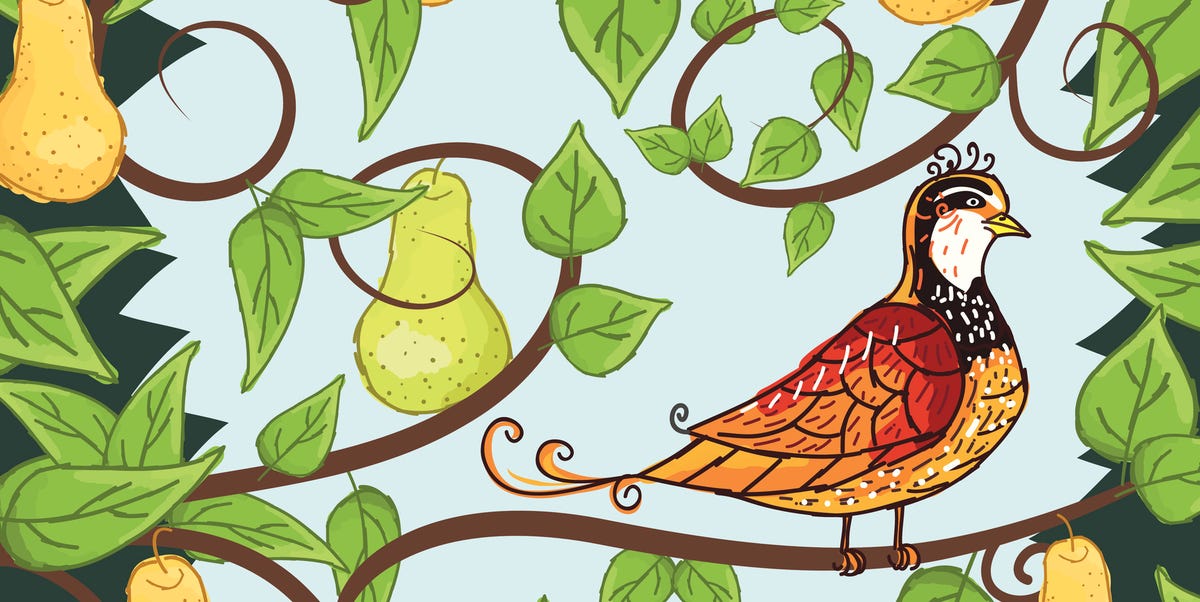
Sapo: The "12 Days of Christmas" song sounds like a festive shopping list written by someone with a poultry problem, but its real story is much richer. Behind the partridge, the pear tree, the drummers, and the suspiciously athletic lords is a centuries-old mix of Christmas tradition, party games, folk memory, religious speculation, lyrical evolution, and modern pop-culture comedy.
Why This Christmas Song Still Confuses Everyone
Every December, "The 12 Days of Christmas" returns like an overly enthusiastic guest who brought 23 birds and refuses to leave. It is catchy, repetitive, oddly specific, and just strange enough to make people wonder: What is this song actually about?
At first glance, it seems simple. A singer receives a growing pile of gifts from a "true love" over twelve days. By the end, the gift list includes birds, musicians, dancers, milkmaids, and noblemen who apparently came with no return receipt. But once you look closer, the song becomes a small holiday mystery. Are the gifts symbolic? Is the song religious code? Are the five golden rings actually jewelry? Why so many birds? And why would anyone give another person seven swans unless the relationship was already in legal trouble?
The truth is more interesting than the myth. "The 12 Days of Christmas" is not simply a random Christmas carol, nor is it proven to be a secret religious message. It is best understood as a cumulative folk song with roots in old European holiday games, later shaped into the familiar version Americans sing today. Like many Christmas traditions, it survived because it is memorable, adaptable, and just ridiculous enough to make families laugh while someone inevitably forgets what comes after the geese.
What Are the Actual Twelve Days of Christmas?
One of the biggest misunderstandings about the song is the timing. Many people assume the twelve days are a countdown before Christmas, like a musical Advent calendar with more feathers. In Christian tradition, however, the twelve days begin on Christmas Day and lead toward Epiphany, observed on January 6 in many traditions. Twelfth Night, often associated with January 5, historically marked the close of Christmas merrymaking.
That means the song is not about shopping for Christmas. It is about the Christmas season after December 25. In older European customs, this was a period of feasting, visiting, storytelling, singing, and games. People did not rip down the decorations the morning after Christmas and start thinking about tax forms. They stretched the celebration across nearly two weeks, because if winter was going to be dark and cold, at least there could be cake, music, and possibly a goose.
This context matters because the gifts in the song make more sense as part of a festive season than as a modern gift guide. Birds could suggest feasting. Dancers and musicians could suggest entertainment. Milkmaids, lords, pipers, and drummers could belong to a lively household celebration. The song feels less like an Amazon order and more like a noisy Christmas party that got completely out of hand.
The Song Began as a Memory Game, Not a Modern Carol
The earliest known printed version of the words appeared in the late eighteenth century in a British children’s book titled Mirth Without Mischief. That version was not presented as a grand sacred hymn. It was closer to a game: a test of memory in which players repeated an expanding sequence. Each new verse added another gift, and each player had to remember the full chain in the correct order.
This type of song is called a cumulative song. The structure is simple but sneaky. It starts small, then builds and builds until the singer is juggling birds, people, numbers, and rhythm all at once. Other children’s songs and folk songs use a similar pattern because repetition is fun, easy to learn, and mildly dangerous at family gatherings when Uncle Mark insists he can sing the whole thing from memory.
The game was sometimes called a "memory and forfeits" game. If a player forgot a line or made a mistake, they had to pay a forfeit. That forfeit might have been a small penalty, a playful task, a candy, a favor, or some other harmless social consequence. In other words, the original entertainment value was not just the song itself. It was watching someone confidently make it to the tenth day and then collapse under the pressure of remembering whether pipers came before drummers.
Why Repetition Made It Last
The repetitive structure is the reason the song is both beloved and lightly feared. It is easy to join, hard to finish, and almost impossible to forget once it enters your head. That makes it perfect oral tradition material. Long before recordings, playlists, and holiday commercials, songs survived when ordinary people could remember them, teach them, and modify them. "The 12 Days of Christmas" passed that test with bells on.
Did "The 12 Days of Christmas" Come from France?
The exact origin of the song remains uncertain, but many historians and folklorists have noted possible French influence. One reason is the presence of the partridge, a bird more closely associated with France in older discussions of the song’s background. There are also French cumulative songs and folk traditions with similar patterns.
Still, it would be too neat to say, "Case closed, it is French." Folk songs rarely carry passports. They travel, change names, swap lyrics, and pick up local flavor like a Christmas cookie rolling through powdered sugar. The song likely developed through oral tradition before it was printed, which means earlier versions may have existed without leaving a clean paper trail.
What we can say with confidence is that the song belongs to a broader European tradition of counting songs, cumulative songs, and festive games. By the time it became familiar in English-speaking Christmas culture, it had already absorbed layers of play, performance, and seasonal celebration.
How the Modern Version Took Shape
The version most Americans recognize today did not appear fully formed like a Christmas miracle in sheet music. It developed over time. A key step came in the nineteenth century, when the song appeared in collections of carols. William Henry Husk included it in Songs of the Nativity in 1868, describing its connection to a game of forfeits.
Another major turning point came in 1909, when English composer Frederic Austin published an arrangement that helped standardize the version widely sung today. Austin’s arrangement is especially associated with the familiar musical treatment of the "five golden rings" line, the part where singers suddenly become opera stars for three seconds before returning to bird inventory management.
Austin also helped popularize wording that differs from some older versions. One famous example is "four calling birds." Earlier versions sometimes used "colly birds," with "colly" meaning black, as in blackbirds. Over time, many singers no longer recognized the old word, and "calling birds" became the familiar phrase. That change is a perfect example of how folk songs evolve: people sing what they understand, or at least what they think they heard.
Why Lyrics Changed Over Time
Older versions of the song included different gifts, different wording, and even different gift-givers. Some versions featured a mother instead of a true love. Others included items that sound strange to modern listeners, such as ships, hares, or other animals. That variety does not weaken the song’s history; it proves the song was alive. Folk songs are not museum pieces sealed behind glass. They are more like family recipes: everyone insists their version is correct, and somehow all of them involve too much butter.
The Famous Hidden Religious Code Theory
No discussion of "The 12 Days of Christmas" is complete without the famous claim that the song was written as a secret Catholic catechism. According to this theory, each gift represents a Christian teaching. The partridge represents Christ, the turtle doves represent the Old and New Testaments, the French hens represent theological virtues, the calling birds represent the Gospels, and so on.
It is an attractive theory because it makes the song feel like a secret treasure map. Suddenly, what looked like a chaotic bird parade becomes a coded religious lesson. That is a very satisfying holiday twist. Unfortunately, satisfying does not always mean historically solid.
The catechism-code theory became popular in the late twentieth century, especially through articles, church newsletters, chain emails, and later the internet. However, historians and fact-checkers have found little evidence that the song originated this way. The theory appears to be a later interpretation rather than the original purpose of the song.
Why the Code Theory Is Doubtful
There are several problems with the hidden-code claim. First, many of the supposed meanings were not unique to Catholic teaching. Ideas such as the Ten Commandments, the Gospels, and the books of the Bible were also recognized by other Christian groups. If the purpose was to hide Catholic doctrine from Protestant authorities, the code was not very secret or very specific.
Second, the gifts do not naturally point to their alleged meanings. There is no obvious reason why geese should represent creation, or why dancers should represent spiritual fruit, unless someone has already handed you the answer key. A good memory device usually makes things easier to remember. This one requires memorizing both the song and a separate decoding chart, which is a bit like using a locked suitcase to store your house key.
Third, the known history of the song points strongly toward play, performance, and folk tradition. The earliest printed evidence presents it as a children’s rhyme or game, not as underground religious instruction. That does not mean people cannot use the song devotionally today. They can. Songs often gain new meanings over time. But a later spiritual interpretation should not be confused with proven origin.
So What Do the Gifts Really Mean?
The most honest answer is: we do not know for certain. But several practical interpretations make more sense than the secret-code theory.
One possibility is that the gifts represent elements of a grand Christmas feast. The early gifts are heavily bird-focused: partridge, doves, hens, calling birds, geese, and swans. In earlier centuries, birds were not just decorative creatures for holiday cards. They were food, status symbols, and signs of abundance. A table filled with game birds would suggest wealth and celebration.
Another possibility is that the song describes a romantic courtship. The repeated phrase "my true love" invites that reading. The gifts may be exaggerated tokens of affection, moving from food and animals to performers and servants who could help stage a major celebration, perhaps even a wedding. In this interpretation, the true love is not just generous; the true love is aggressively committed to logistics.
A third interpretation is that the gifts are simply playful nonsense. Folk humor often delights in exaggeration. The escalating absurdity is the point. One bird is charming. Three hens are manageable. Seven swans are a municipal issue. By the time drummers arrive, the joke has become the size of a parade.
The Bird Problem
The birds are one of the funniest parts of the song because there are so many of them. Depending on how you count the repeated gifts, the recipient ends up with dozens upon dozens of birds. That makes the song festive in theory and a zoning violation in practice. Modern listeners imagine romance; practical listeners imagine feed bills, feathers, noise complaints, and a very nervous pear tree.
How Many Gifts Are There in Total?
If each day’s gifts are counted cumulatively, the total number of gifts is 364. That number comes from the structure of the song. On the first day, the recipient gets one gift. On the second day, the second gift plus another first gift. This continues until the twelfth day, when the entire list is repeated again.
The result is not twelve gifts, but a mountain of gifts. The final tally includes twelve partridges, twenty-two turtle doves, thirty French hens, thirty-six calling birds, forty golden rings, forty-two geese, forty-two swans, forty milkmaids, thirty-six dancing ladies, thirty leaping lords, twenty-two pipers, and twelve drummers. That is less a Christmas present and more a supply-chain event.
The number 364 has inspired plenty of modern jokes because it is only one short of the number of days in a non-leap year. If your true love gave you one gift-related headache per day, you could almost make it to next Christmas.
What Would the Gifts Cost Today?
Modern culture has added a funny economic twist to the song. Each year, PNC calculates a Christmas Price Index based on the cost of the gifts named in the carol. It is partly educational, partly humorous, and partly a reminder that romance becomes expensive when it involves professional dancers and live swans.
According to PNC’s 2025 Christmas Price Index, buying one set of the twelve gifts would cost $51,476.12, up 4.5 percent from the previous year. Counting every repeated gift in the cumulative song brings the so-called true cost to $218,542.98. That figure is funny, but it also shows why the song remains culturally useful. It can become a playful way to talk about inflation, wages, gold prices, and the cost of services.
The most expensive items tend to involve performers, rare birds, or gold. Meanwhile, the milkmaids are often priced according to the federal minimum wage, which creates an unintentionally sharp joke about labor economics hiding inside a Christmas carol. Who knew holiday music could come with a side of wage policy?
Why the Song Became So Easy to Parody
One reason "The 12 Days of Christmas" has lasted is that it is incredibly easy to parody. The structure is flexible. Replace the gifts with office problems, family traditions, tech gadgets, regional foods, sports references, or holiday disasters, and the song still works.
This has made it a favorite for comedians, schools, TV shows, radio programs, and families who like turning mild annoyance into performance art. The song’s built-in repetition gives audiences a pattern they already know, while the replacement gifts provide the surprise. It is the same reason people love rewriting familiar holiday recipes: the structure is comforting, but the twist keeps it fresh.
In American pop culture, the song has been performed straight, mocked, remixed, and lovingly abused. The Muppets, comedy groups, a cappella singers, and countless local choirs have all taken turns with it. Even people who claim to dislike the song usually know enough of it to complain accurately, which is its own kind of success.
The Real Truth Behind the Song
The truth behind "The 12 Days of Christmas" is not one single secret. It is a layered story. The twelve days refer to the traditional Christmas season after December 25. The song likely grew from European folk and memory-game traditions. Its lyrics shifted across generations. The modern version was shaped by nineteenth-century carol collections and Frederic Austin’s influential 1909 arrangement. The famous religious-code theory is popular but not historically proven. And the gifts themselves may suggest feasting, courtship, celebration, comic exaggeration, or all of the above.
That layered history is more satisfying than a neat myth because it shows how culture actually works. Songs survive not because they remain frozen, but because each generation finds a new use for them. Children used it as a game. Families used it as a carol. Churches sometimes used it devotionally. Economists use it as a holiday price index. Comedians use it because "lords a-leaping" will never not sound funny.
In the end, the song is less about decoding a hidden message and more about understanding how Christmas traditions travel through time. They pick up meanings, lose old words, gain new jokes, and somehow remain familiar. That is the real magic hiding in the pear tree.
Experience Section: What This Song Teaches Us About Christmas, Memory, and Family Chaos
There is a particular kind of holiday experience that only "The 12 Days of Christmas" can create. Someone starts singing it with confidence. Everyone smiles for the first two days. By the fifth day, the room is divided between enthusiastic singers and people quietly calculating how long this is going to take. By the ninth day, one person is definitely wrong, another person is loudly correcting them, and a child has discovered that shouting "five golden rings" is the best part of the entire season.
That shared confusion is part of the song’s charm. It turns a room into a temporary team. You may not know every line, but you know when the big ring moment arrives. You may not remember whether the pipers or drummers come first, but someone else does. The song works like a holiday relay race: each person carries the memory until they drop it, and then everyone laughs because dropping it was half the fun.
In real family settings, the song also reveals how traditions become personal. Some families sing it while decorating the tree. Others only hear it in stores, where it follows shoppers down the cereal aisle like a festive goose. Teachers use it for classroom activities because the counting structure is easy for children to follow. Choirs use it because audiences recognize it instantly. Parents use it because it keeps kids busy for several minutes, which in December is basically a miracle.
The song also invites creativity. A family can rewrite the gifts to match their own holiday. Instead of turtle doves and French hens, there might be two missing batteries, three tangled light strings, four burnt cookies, and five relatives texting. The pattern makes room for local jokes, private memories, and seasonal truth. Every household has its own version of Christmas chaos, and the song gives that chaos a rhythm.
There is also something surprisingly meaningful about the repetition. In a fast season full of shopping, deadlines, travel, and social pressure, repetition slows things down. The song refuses to rush. It circles back again and again, making the singer revisit what came before. That can feel annoying, yes, but it also mirrors the way holiday memories work. We repeat stories. We repeat recipes. We repeat decorations. We repeat jokes that were only funny in 2009 but somehow still make Grandma laugh. Repetition is how tradition survives.
And maybe that is why "The 12 Days of Christmas" keeps coming back. It is not the most elegant Christmas song. It is not the shortest. It may not even be the one people claim to love. But it is participatory. It asks listeners to remember, respond, laugh, and endure. In a season built around gathering, that matters.
The truth is that most of us do not need a secret code to enjoy the song. We need a song that lets the confident singer stumble, the quiet cousin join in, the kids shout the loud part, and the whole room become a little less polished and a little more alive. That is the real gift: not the swans, not the rings, and definitely not the drummers practicing indoors, but the shared moment. The song gives people permission to be silly together. For Christmas, that is a pretty good bargain, even if the PNC index says the birds are overpriced.
Conclusion
"The 12 Days of Christmas" is much more than a repetitive holiday tune about extravagant gifting. It is a window into old Christmas celebrations, folk games, oral tradition, lyrical evolution, and the human talent for turning almost anything into a group activity. Its history is playful rather than perfectly tidy, and that is exactly what makes it interesting.
The song was probably not created as a secret religious code, though many people have found spiritual meaning in it. It was likely shaped by memory games, festive customs, and centuries of adaptation. Its gifts may point to feasting, courtship, celebration, or comic exaggeration. Its modern form owes much to later collectors and arrangers who helped turn a playful rhyme into one of the most recognizable Christmas songs in the English-speaking world.
So the next time you hear that first partridge arrive, do not panic. Behind the repetition is a real cultural story: a song that survived because it is memorable, flexible, funny, and just strange enough to keep people asking questions. That is the true charm of "The 12 Days of Christmas." It is not merely a carol. It is a holiday endurance test with historical footnotes.
SEO Tags
Note: This article is a fully rewritten synthesis based on widely documented historical, folkloric, cultural, religious, and holiday finance references. Source links are intentionally omitted for clean web publication.