Imagine your skin as the most dramatic group chat you belong to. One day, everything is calm. The next, your neck, eyelids, hands, or scalp are suddenly sending angry red alerts because of a shampoo, necklace, moisturizer, work glove, fragrance, hair dye, sunscreen, or “gentle” product that apparently took the word gentle as a personal challenge. That is where a patch test steps in.
A patch test is a medical allergy test used to help identify substances that may be causing allergic contact dermatitis. In plain English, it helps answer the question: “What exactly is touching my skin and making it throw a tiny protest parade?” Unlike a quick skin prick test, which is often used for immediate allergies such as pollen, pet dander, or some foods, patch testing looks for delayed skin reactions. These reactions may take one to several days to show up, which is why finding the trigger can feel like solving a mystery with a very itchy detective hat.
If you have recurring rashes, eczema-like flare-ups, irritated eyelids, hand dermatitis, reactions after hair coloring, or skin that seems to dislike half the items in your bathroom cabinet, a patch test may help you and your dermatologist connect the dots. It is not glamorous, but neither is scratching your wrist in the cereal aisle because your bracelet secretly contains nickel.
What Is a Patch Test?
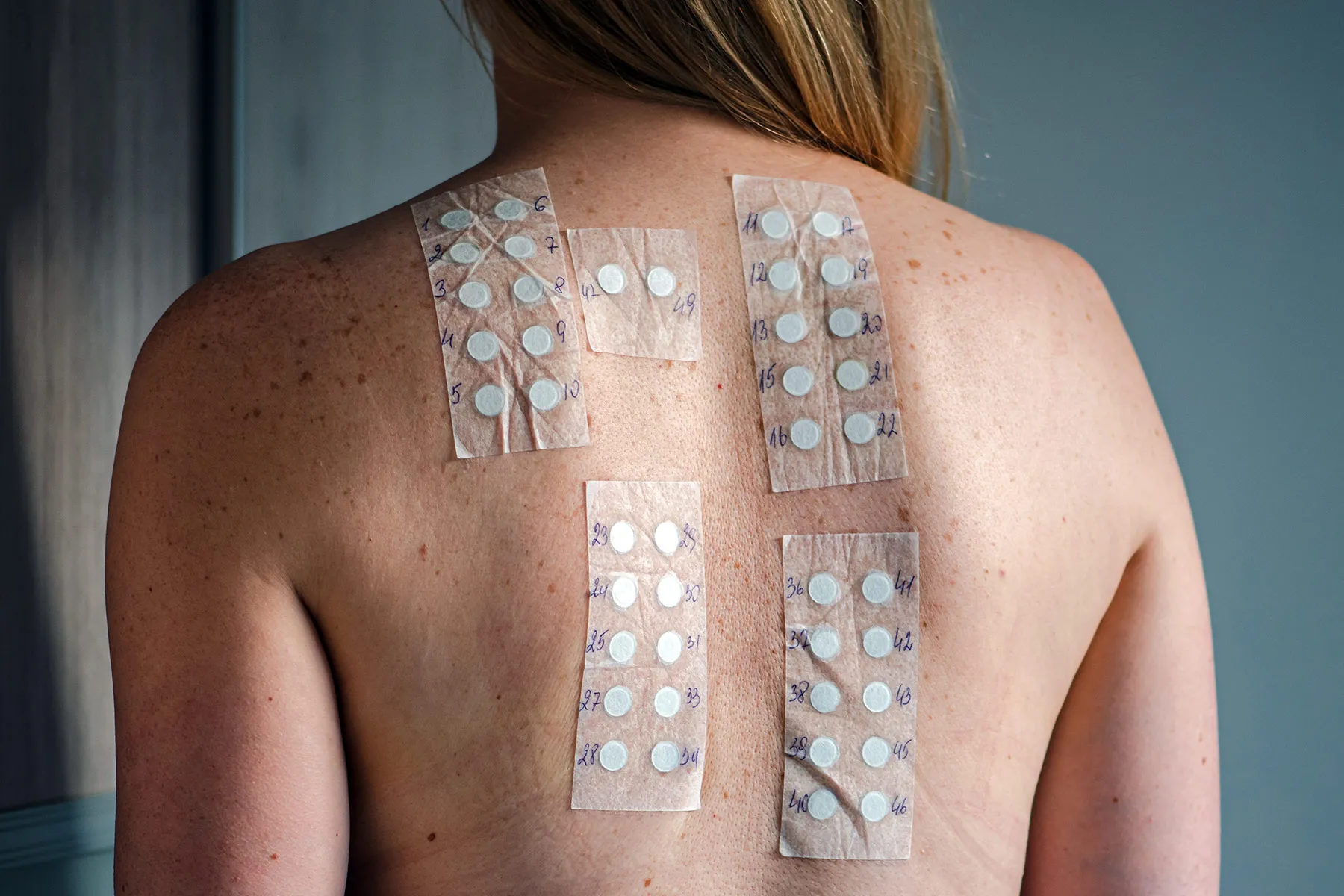
A patch test is a diagnostic procedure that checks whether your skin reacts to specific substances that commonly cause allergic contact dermatitis. Small amounts of potential allergens are placed on your skin, usually on your back, under adhesive patches. These patches stay in place for a set period, often around 48 hours, and your provider checks the skin afterward for delayed reactions.
The goal is not to test whether your skin is “sensitive” in a vague way. The goal is to identify specific ingredients, chemicals, metals, preservatives, fragrances, dyes, or materials that may be causing a true allergic skin reaction. That matters because once you know the trigger, you can avoid it more accurately instead of tossing out every lotion you own like you are hosting a dramatic bathroom cabinet eviction ceremony.
Patch Test vs. Skin Prick Test
A patch test is different from a skin prick test. A skin prick test usually checks for immediate allergy reactions and is often associated with hay fever, dust mites, pets, pollen, or certain foods. A patch test is designed for delayed contact allergies that appear after something touches the skin.
This difference is important. If your rash appears a day or two after wearing earrings, using a new cleanser, applying hair dye, handling rubber gloves, or using a medicated cream, a patch test may be more relevant than a standard immediate allergy test. Your skin is not always punctual. Sometimes it reacts late, sends no calendar invite, and leaves you guessing.
Why Should You Have a Patch Test?
You should consider a patch test if you keep getting rashes and cannot figure out the cause. Many everyday items can trigger allergic contact dermatitis, including cosmetics, fragrances, metals, adhesives, topical medications, hair dyes, cleaning products, nail products, rubber, and workplace materials.
Without testing, people often guess. They blame “stress,” “weather,” “bad skin,” or “that one suspicious face cream with a name longer than a tax form.” Sometimes they are right, but often the real trigger is less obvious. A fragrance ingredient may be hiding in a “natural” product. A preservative may appear in shampoo, hand soap, laundry products, and wipes. Nickel may show up in jewelry, belt buckles, keys, phone cases, tools, or clothing snaps.
A patch test can help narrow the list. Instead of avoiding everything, you learn what to avoid. That is a much better plan than living like a skincare monk with only water, hope, and one unscented soap.
Common Reasons People Get Patch Testing
People often seek patch testing for chronic or repeated dermatitis. This may include itchy rashes on the face, eyelids, neck, hands, underarms, scalp, lips, ears, or feet. It may also be useful when eczema does not improve as expected, when a rash appears after using personal-care products, or when symptoms are linked to occupational exposure.
Patch testing can also be helpful for people who react to hair dye, especially products containing ingredients such as p-phenylenediamine, often called PPD. Hair dye reactions may not always stay neatly on the scalp. They can involve the face, eyelids, neck, or ears. Skin, unfortunately, does not read product labels or follow neat boundaries.
What Conditions Can Patch Testing Help Diagnose?
The main condition patch testing helps diagnose is allergic contact dermatitis. This happens when your immune system reacts to a substance after it touches your skin. The reaction is delayed, meaning symptoms may appear 24 to 72 hours after exposure, sometimes even later.
Allergic contact dermatitis can look like eczema. It may cause itching, redness, swelling, dryness, cracking, bumps, scaling, or sometimes small blisters. On darker skin tones, the rash may look purple, gray, brown, or darker than surrounding skin instead of bright red. Because it can resemble other skin problems, patch testing can be a practical way to identify whether an allergy is part of the story.
Allergic Contact Dermatitis vs. Irritant Contact Dermatitis
Not all contact dermatitis is allergic. Irritant contact dermatitis happens when something directly damages or irritates the skin barrier. Harsh soaps, repeated handwashing, cleaning chemicals, solvents, friction, and wet work can all irritate the skin without involving a true allergy.
Patch testing is mainly used to detect allergic contact dermatitis, not simple irritation. That means a negative patch test does not always mean your skin is imagining things. It may mean your rash is irritant-based, caused by a non-tested substance, or related to another skin condition. Your dermatologist may combine test results with your medical history, work habits, product use, and rash pattern.
What Substances Are Tested?
Patch test panels vary. Some clinics use a standard series of common allergens, while others customize testing based on your symptoms, occupation, hobbies, products, and suspected triggers. A person with hand dermatitis who works in healthcare may need different allergens tested than someone with eyelid dermatitis who loves makeup, nail polish, and scented candles that smell like a bakery opened inside a pine forest.
Common patch test allergens may include nickel, cobalt, fragrance mixes, preservatives, formaldehyde-releasing agents, rubber chemicals, hair dye chemicals, topical antibiotic ingredients, lanolin, adhesives, acrylates used in nail products, and ingredients found in personal-care products. Some patients may also be asked to bring their own products, such as moisturizers, cosmetics, shampoos, work gloves, or topical medications, so the provider can decide whether any should be tested safely.
Why Fragrance Is a Frequent Suspect
Fragrance is a common issue because it can appear almost anywhere: perfume, lotion, shampoo, detergent, deodorant, shaving cream, makeup, household sprays, and products labeled with words like “fresh,” “botanical,” or “spa-inspired.” Your skin may not care whether a scent is synthetic, natural, expensive, or packaged in a bottle that looks like it belongs in an art museum. If your immune system recognizes it as a trigger, the price tag will not save you.
What Happens During a Patch Test?
Patch testing usually takes multiple visits. At the first visit, your provider applies small chambers or patches containing allergens to your back. The patches are secured with tape, and the test areas may be marked so the provider can identify which allergen was placed where.
During the testing period, you generally need to keep your back dry and avoid activities that make you sweat heavily. That means no swimming, no intense workouts, and no dramatic sauna session where you try to “detox” your soul. Sweating or getting the patches wet can loosen them and affect the results.
After about 48 hours, the patches are removed and your skin is checked. A later reading may happen after another day or two because some allergic reactions take longer to appear. Your provider looks for signs such as redness, swelling, bumps, or other localized reactions at specific test sites.
Does a Patch Test Hurt?
Patch testing is usually not painful because it does not involve needles. Some people feel itching, irritation, or discomfort under the patches, especially if they react to an allergen. The tape may also feel annoying. Think of it as wearing a very clingy sticker collection on your back for a couple of days.
If a strong reaction develops, your provider can guide you on what to do. You should not remove the patches early unless your medical team tells you to, because doing so may interfere with the test.
How to Prepare for a Patch Test
Preparation instructions vary, so follow your provider’s directions. In general, you may be asked to avoid applying lotions, oils, or topical medications to your back before testing. Some medications can affect results, so your provider may ask about corticosteroids, immunosuppressants, or other treatments.
It is also smart to make a list of products you use regularly. Include skincare, makeup, sunscreen, shampoo, conditioner, hair dye, deodorant, laundry products, hand soaps, occupational materials, gloves, hobbies, and anything that touches the affected skin. The more clues you bring, the easier it is for your provider to play allergy detective without needing a trench coat and dramatic background music.
Helpful Questions to Ask Your Dermatologist
Before testing, ask what allergens will be included, how many visits are needed, what activities to avoid, whether you should bring personal products, and how results will be explained. You can also ask how to find safe alternatives if you test positive. The result is only useful if you understand where the allergen appears in real life.
What Do Patch Test Results Mean?
A positive patch test means your skin reacted to a specific substance in the test panel. Your provider will decide whether the reaction is relevant to your current rash. For example, if you react to nickel and your rash appears under a watch, belt buckle, or earrings, the connection may be fairly clear. If you react to a preservative, your provider may help you identify which products contain it.
A negative patch test means no tested allergen caused a visible reaction during the test period. That can be reassuring, but it does not always end the investigation. The trigger may not have been included in the test series, the rash may be irritant rather than allergic, or another condition may be involved.
Why “Relevance” Matters
Not every positive result explains your rash. You may react to an allergen but not currently be exposed to it. Or you may have a weak reaction that is difficult to interpret. Dermatologists evaluate both the skin reaction and your real-world exposure. The best results come from matching the test finding with your habits, products, job, hobbies, and rash location.
What Happens After You Find an Allergen?
Once an allergen is identified, avoidance becomes the main strategy. This may sound simple until you realize that ingredients have aliases, product formulas change, and labels sometimes require the patience of a contract lawyer. Your dermatologist may give you a list of safe products or tools to help identify items that do not contain your allergens.
For example, if you are allergic to a fragrance component, switching to “unscented” may not always be enough because some products use masking fragrances. If you are allergic to nickel, you may need to watch for jewelry, metal snaps, keys, tools, and electronics. If you react to acrylates, certain nail products or adhesives may be relevant.
Improvement can take time. Even after avoiding the trigger, inflamed skin may need weeks to calm down. Your provider may recommend treatments such as topical corticosteroids, non-steroid anti-inflammatory creams, moisturizers, or barrier repair strategies depending on your condition.
At-Home Product Patch Tests: Useful, but Not the Same Thing
People often use the phrase “patch test” when trying a new skincare product at home. This usually means applying a small amount of the product to a limited area, such as the inner arm or behind the ear, and watching for a reaction before using it more widely.
That kind of cautious product trial can be useful, especially for strong skincare actives, hair dye, or products you have never used before. However, it is not the same as medical patch testing. A home test uses one finished product, while medical patch testing uses controlled allergen panels and professional interpretation.
For hair dye, it is especially important to follow the manufacturer’s safety instructions every time. Some reactions can develop after previous uneventful use. In other words, your skin can suddenly change its mind like a cat deciding the expensive bed is unacceptable and the cardboard box is now royalty.
Who Should Consider a Patch Test?
You may want to ask a dermatologist or allergist about patch testing if you have a rash that keeps coming back, dermatitis that does not improve with standard care, reactions linked to personal-care products, eyelid or facial dermatitis, hand eczema, suspected jewelry allergy, work-related skin problems, or symptoms after hair dye, adhesives, gloves, cosmetics, or topical medications.
Patch testing may also be worth discussing if your eczema suddenly changes pattern or becomes harder to control. Sometimes allergic contact dermatitis can sit on top of another skin condition, making everything more confusing. Skin problems love plot twists.
When to Seek Prompt Medical Help
Patch testing is for delayed skin reactions, not emergencies. Seek urgent medical care if you develop trouble breathing, swelling of the lips or tongue, widespread hives, dizziness, severe facial swelling, signs of infection, or a rapidly worsening reaction. Those symptoms need prompt medical attention, not a wait-and-see experiment.
Benefits of Patch Testing
The biggest benefit of patch testing is clarity. Instead of guessing, you get evidence. Knowing your allergens can help reduce flare-ups, guide product choices, protect your skin barrier, and prevent unnecessary treatments. It may also save money by stopping the endless cycle of buying “sensitive skin” products that still cause problems.
Patch testing can also be empowering. Many people feel frustrated when their rash is dismissed as random or stress-related. A clear result can turn a vague problem into a practical plan. Avoiding the right ingredient is much easier than avoiding every product with a nice label and suspiciously calming font.
Limits of Patch Testing
Patch testing is helpful, but it is not magic. It may not detect every possible allergen. Some reactions are hard to interpret. Some people have irritant dermatitis rather than allergic dermatitis. Some exposures happen through work, hobbies, clothing, tools, or personal habits that are not obvious at first.
Also, avoiding allergens takes effort. You may need to read labels, update your product list, contact manufacturers, and re-check formulas over time. A product that is safe today may be reformulated later. Your skin did not ask for homework, but sometimes homework is the price of fewer flare-ups.
Real-Life Experience: What Patch Testing Feels Like and Why It Matters
Here is a realistic experience many people can relate to. Someone develops an itchy rash around the eyes. They blame sleep, stress, dust, pollen, mascara, and maybe the universe. They switch moisturizers, buy a “clean beauty” cream, stop wearing eye makeup, restart wearing eye makeup, change detergent, and spend three weeks staring suspiciously at every bottle in the bathroom. Nothing fully works.
Then they see a dermatologist. The provider notices that eyelid skin is thin and easily affected by allergens transferred from hands, hair products, nail products, or airborne fragrance. Patch testing is recommended. At the first appointment, patches are placed on the back. The patient is told not to sweat heavily, shower the area, or peel the patches off. This is when they discover how often they twist, bend, and scratch their back like a bear against a tree.
For two days, the patches feel awkward. Sleeping may be a little annoying. Exercise plans get paused. The person becomes highly aware of their back, which suddenly feels like it has become the main character. At the first reading, some areas may look normal while others show mild redness or bumps. At the final reading, a delayed reaction may appear more clearly.
Suppose the test shows an allergy to a fragrance mix and a preservative found in several personal-care products. Suddenly, the mystery becomes less mysterious. The problem was not “bad skin.” It was repeated exposure to ingredients hiding in shampoo, face wash, hand soap, and a favorite lotion. The patient begins using a safer product list, switches to truly fragrance-free options, and stops applying the problematic lotion. The rash does not vanish overnight, but over several weeks, the skin becomes calmer and flare-ups become less frequent.
Another common story involves hand dermatitis. A person washes hands often, uses sanitizer, wears gloves, cleans surfaces, and applies thick hand cream. The hands crack, sting, and itch. At first, it looks like simple irritation from overwashing. Patch testing may reveal an allergy to a rubber accelerator in gloves or a preservative in hand cream. In that case, treatment is not just “use more moisturizer.” The smarter plan is to change glove materials, avoid the allergen, repair the skin barrier, and use medication when needed.
There are also cases where patch testing is negative. That can feel disappointing, but it is still useful. A negative result may point the provider toward irritant dermatitis, atopic dermatitis, seborrheic dermatitis, psoriasis, infection, or another diagnosis. It can also help prevent unnecessary avoidance. Not finding an allergy is not failure; it is information.
The experience teaches an important lesson: skin reactions are not always immediate, obvious, or located exactly where the trigger touched. Hair products can affect the neck or eyelids. Nail products can affect the face when fingers touch the skin. Fragrance can travel. Metal can hide in clothing hardware. Preservatives can appear in “gentle” products. Patch testing helps translate that chaos into a list of suspects, and sometimes, into a confession.
For anyone dealing with recurring dermatitis, the emotional relief can be just as meaningful as the medical result. Constant itching is exhausting. Rashes can affect confidence, sleep, school, work, and social life. A patch test does not promise instant perfection, but it can offer direction. And when your skin has been acting like a locked-room mystery, direction is a beautiful thing.
Conclusion: A Patch Test Can Turn Skin Confusion Into a Plan
A patch test is one of the most useful tools for identifying allergic contact dermatitis. It helps reveal whether everyday substances touching your skin are causing delayed reactions. For people with stubborn rashes, eyelid irritation, hand eczema, product reactions, jewelry sensitivity, or hair dye concerns, patch testing can provide answers that guessing simply cannot.
The process requires patience, multiple visits, and a few days of keeping your back dry and your workout ambitions humble. But the payoff can be significant: fewer flare-ups, smarter product choices, and a better understanding of what your skin is trying to tell you. Your skin may be dramatic, but with the right testing, at least it can become dramatically more understandable.
Note: This article is for educational purposes only. It should not replace personalized medical advice from a dermatologist, allergist, or qualified healthcare professional.