Some animals sprint, camouflage, bite, sting, fly, flee, or vanish into the bushes like tiny wilderness ninjas. Others appear to have read the survival manual, highlighted the wrong chapters, and then used the book as a pillow. Welcome to the strange, funny, and surprisingly educational world of animals with “zero survival instincts.”
Of course, no animal literally has no survival instinct. Every species on this list has survived because its behavior made sense somewhere, sometime, under certain conditions. The problem is that nature changes, humans arrive, predators appear, boats get faster, and suddenly a perfectly reasonable strategy starts looking like a group project nobody prepared for.
From flightless birds that trusted the wrong mammals to sleepy marsupials powered by low-calorie leaves, these creatures prove that evolution is not a motivational poster. It is more like a long-running experiment with no customer support line. Here are 10 animals whose real behaviors look hilariously risky, tragically unlucky, or just plain baffling.
What Does “Zero Survival Instincts” Really Mean?
In this article, “zero survival instincts” is a playful way to describe animals that seem dangerously relaxed, oddly specialized, or poorly prepared for modern threats. Many of these animals evolved on islands with few predators, in forests with stable food sources, or in oceans where speed was not always necessary. Their “bad decisions” are often only bad after humans, invasive species, habitat loss, hunting, or climate pressure enter the scene.
That is what makes the topic so fascinating. These animals are not stupid. They are specialized. Sometimes specialization is genius. Sometimes it is wearing a tuxedo to a mudslide.
1. Kākāpō: The Flightless Parrot That Forgot Predators Exist
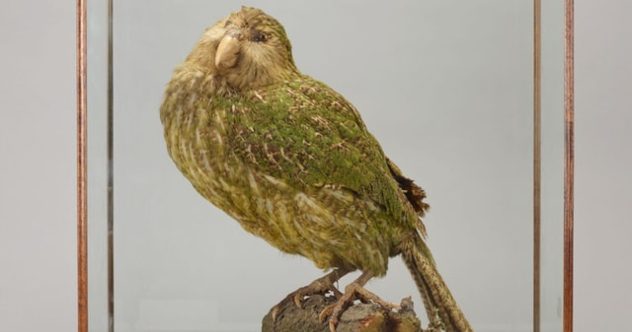
The kākāpō is a large, nocturnal, flightless parrot from New Zealand. It is green, round, charming, and built like a plush toy with opinions. In its original environment, where mammal predators were absent, being flightless was not the worst career move. The kākāpō could climb trees, wander at night, and eat plants without needing to panic every eight seconds.
Then introduced predators such as cats, rats, and stoats arrived. That is when the kākāpō’s survival strategy began to look less like confidence and more like leaving your front door open during a raccoon convention.
Male kākāpō also perform one of the strangest mating rituals in the bird world. They dig shallow bowls in the ground and make deep booming calls to attract females. Romantic? Yes. Subtle? Absolutely not. It is basically the bird version of standing in a parking lot with a subwoofer and hoping destiny walks by.
Why It Seems So Bad at Survival
The kākāpō cannot fly, moves slowly, breeds infrequently, and historically had little reason to fear mammal predators. Conservationists have worked intensely to protect the remaining birds on predator-free islands, proving that even the world’s most awkward parrot can get a second act with enough human help.
2. Dodo: The Poster Bird for Trust Issues
The dodo lived on Mauritius, an island where it evolved without major land predators. It was flightless, ground-nesting, and not especially frightened of humans when sailors arrived in the late 1500s. That combination turned out to be a disaster.
The dodo is often mocked as dumb, but that reputation is unfair. It was adapted to island life. The problem was not stupidity; it was innocence. When humans and introduced animals such as pigs, rats, dogs, and monkeys entered the ecosystem, the dodo had no evolutionary experience with that kind of threat. Its eggs and chicks were vulnerable, and its population collapsed within about a century of European contact.
Why It Seems So Bad at Survival
The dodo did not flee effectively from humans because, for most of its history, it did not need to. The result was one of the most famous extinctions in history and a permanent reminder that island animals can be especially vulnerable when new predators arrive.
3. Quokka: Too Friendly for Its Own Good
The quokka is a small marsupial from Western Australia, best known for its round face and “smile.” It looks like it just heard good news about brunch. Tourists on Rottnest Island love taking selfies with quokkas because the animals often appear curious and approachable.
That friendliness is adorable, but it can create problems. Human food can make quokkas sick, and close contact can lead to stress or accidental bites. On the mainland, quokkas face more serious threats from habitat loss, fire, and introduced predators such as cats and foxes.
Quokkas are not helpless. They are nocturnal herbivores, use dense vegetation for shelter, and can create little runways through cover. Still, an animal that smiles at tourists while living in a world full of traffic, snacks, cameras, and invasive predators earns a place on this list.
Why It Seems So Bad at Survival
Quokkas can be unusually tolerant of people in tourist areas, and their mainland populations are vulnerable to predators they did not originally evolve to handle well. Their face says “new friend,” while conservation signs say “please back away slowly.”
4. Great Auk: Brilliant in Water, Terrible on Land
The great auk was a large, flightless seabird of the North Atlantic. In the water, it was powerful and skilled, using its wings like underwater paddles. On land, however, it was clumsy, slow, and unfortunately very easy for humans to catch.
Great auks once numbered in large populations, but they were hunted for meat, oil, feathers, eggs, and specimens. As they became rarer, collectors wanted them even more, which is the conservation equivalent of seeing a fire and deciding it needs more gasoline.
The last confirmed breeding pair was killed in Iceland in 1844. The species became extinct soon after, leaving behind museum specimens, scientific regret, and a lesson in how a creature can be perfectly adapted to one environment and doomed in another.
Why It Seems So Bad at Survival
The great auk was excellent at surviving in the ocean but almost defenseless on land. Since it had to come ashore to breed, hunters could exploit its most vulnerable moment with devastating efficiency.
5. Steller’s Sea Cow: A Gentle Giant with No Escape Plan
Steller’s sea cow was a massive marine mammal that lived in cold waters near the Commander Islands in the Bering Sea. It could grow to enormous size and fed mainly on kelp. Unfortunately, it was slow, coastal, and apparently gentle around humans. That is a dangerous personality profile when hunters are nearby.
Discovered by Europeans in 1741, Steller’s sea cow was hunted to extinction by 1768. Less than three decades. That is not a decline; that is nature being deleted with horrifying speed.
Its huge body, thick blubber, and calm behavior made it attractive to sailors and fur traders looking for meat and fat. Like many island and coastal giants, it had few tools for dealing with determined human exploitation.
Why It Seems So Bad at Survival
Steller’s sea cow was large but slow, lived near the surface and shore, reproduced slowly, and did not respond aggressively enough to human hunters. It was the marine equivalent of leaving valuables on the porch with a sign that says “probably fine.”
6. Kiwi: A Bird That Points Predators to Its Own Burrow
The kiwi is one of New Zealand’s most beloved birds. It is flightless, nocturnal, round-bodied, long-beaked, and wonderfully strange. Kiwis evolved in a land without native land mammals, so they filled a niche more like a small mammal than a typical bird.
That worked beautifully until introduced predators entered the picture. Stoats, cats, dogs, ferrets, rats, and other mammals made kiwi eggs and chicks dangerously vulnerable. Some kiwi chicks suffer extremely high mortality where predators are not controlled.
Adding insult to injury, kiwis dig burrows and may leave visible dirt trails near the entrance. In a predator-free world, that is housekeeping. In a predator-filled world, it is basically a neon arrow that says, “Tiny bird this way.”
Why It Seems So Bad at Survival
Kiwis did not evolve strong anti-mammal predator responses. Their survival now depends heavily on predator control, protected areas, and conservation programs. They are not foolish; they are ancient birds ambushed by a modern problem.
7. Koala: Built Around the Worst Salad Bar in the Forest
Koalas are famous for sleeping in trees and looking like they are recovering from a long weekend. Their diet explains a lot. Koalas eat eucalyptus leaves, which are tough, fibrous, low in energy, and toxic to many animals. Koalas evolved special digestive adaptations to handle them, but the meal plan is still not exactly rocket fuel.
Because their food provides limited energy, koalas sleep or rest for much of the day, often 18 to 22 hours. That sounds relaxing until you remember they live in a world with heat waves, habitat fragmentation, disease, cars, dogs, and shrinking forests.
To be fair, eucalyptus specialization reduces competition. Not many animals are lining up to eat leaves that taste like a cough drop’s angry cousin. But when your entire lifestyle depends on a narrow food source and long naps, survival gets complicated fast.
Why It Seems So Bad at Survival
Koalas are extremely specialized. Their low-energy diet makes them slow and sleepy, and habitat loss can force them to travel on the ground, where modern threats multiply. They are not lazy; they are running on nature’s weakest battery.
8. Sloth: The Animal That Risks Everything to Use the Bathroom
Sloths are masters of slow living. Their low-energy diet, slow metabolism, and algae-tinted fur help them survive in the rainforest canopy. Moving slowly can even be a defense because visual predators may overlook them.
Then comes the bathroom situation.
Some sloths climb down from the safety of the trees about once a week to defecate on the ground. This journey costs energy and exposes them to predators. Scientists have suggested several possible reasons, including nutrient cycling, communication, and a relationship with moths that live in sloth fur. Whatever the explanation, it still looks like a terrible idea from a distance.
Imagine living in a penthouse with free camouflage and deciding that the safest bathroom is in a dark alley seven floors below. That is sloth logic, and somehow it has worked for a very long time.
Why It Seems So Bad at Survival
Sloths are slow, vulnerable on the ground, and unusually committed to a risky bathroom ritual. Yet their strange lifestyle is part of a complex ecological system, proving that nature can be both brilliant and deeply weird.
9. Giant Panda: A Bear That Chose Bamboo and Never Looked Back
The giant panda is technically a bear, but its daily routine is less “apex predator” and more “professional bamboo intern.” Pandas have powerful jaws, strong teeth, and a pseudo-thumb that helps them grip bamboo. They are highly adapted to their diet, but the diet itself is a nutritional challenge.
Bamboo is low in energy, so pandas spend many hours a day eating large quantities of it. Their digestive system is still more similar to a carnivore’s than a true grazing herbivore’s, which makes the whole arrangement feel like watching a sports car run on soup.
Pandas also have narrow breeding windows, and wild populations depend on suitable bamboo forest habitat. Their survival is not hopeless; conservation has helped them significantly. Still, the panda’s life strategy has strong “I made one decision and built my entire identity around it” energy.
Why It Seems So Bad at Survival
Pandas are powerful animals, but their dependence on bamboo and specialized habitat makes them vulnerable. They are not bad at surviving; they are just very committed to a food source that requires constant chewing and tremendous patience.
10. Manatee: The Floating Sweet Potato That Cannot Dodge Boats
Manatees are gentle, slow-moving marine mammals often found in warm coastal waters, rivers, springs, and estuaries. They graze on aquatic vegetation and spend much of their time near the surface to breathe. Unfortunately, that puts them directly in the path of boats.
Manatees have no natural reason to expect a speeding propeller. They are large, slow, and hard for boaters to see in murky water. Boat strikes remain one of the most serious human-caused threats to manatees, which is why speed zones and “slow down” campaigns are so important in areas where they live.
The manatee’s vibe is peaceful. Its body plan says “floating couch.” Its survival challenge says “modern water traffic is a nightmare.”
Why It Seems So Bad at Survival
Manatees are slow and often surface in places where boats travel. They are not designed to detect or dodge fast-moving vessels. Their survival depends heavily on humans behaving responsibly in shared waterways.
Why These Animals Are Not Actually Dumb
Calling these animals “dumb” misses the bigger point. Most of their behaviors made sense in the environments where they evolved. Flightlessness is common on islands because flying is expensive and unnecessary when predators are few. Slow movement can save energy. A specialized diet can reduce competition. Calm behavior can work beautifully in a peaceful ecosystem.
The trouble begins when conditions change faster than evolution can respond. Humans move animals across oceans. Forests are cleared. Boats speed through habitats. Collectors take eggs. Predators invade islands. A strategy that once worked for thousands or millions of years can collapse in a few decades.
That is the real lesson behind these funny animal stories. The comedy is obvious, but the conservation message is serious. Many species do not need to be perfect survival machines. They just need stable habitats, fewer invasive predators, and a world that does not keep changing the rules without warning.
Experience Section: What These Animals Teach Us About Watching Wildlife
Spending time around wildlife, even as a casual observer, quickly changes how you think about “survival instincts.” At first, it is easy to laugh. A sloth crawling down a tree to poop looks absurd. A quokka approaching a tourist looks like a tiny animal auditioning for a travel brochure. A koala sleeping through most of the day seems like it has discovered the secret to life and refused to share it.
But the longer you watch animals, the more you realize that their behavior is rarely random. What looks foolish from a human point of view often has a hidden logic. A sloth’s slow movement is not laziness; it is energy management. A koala’s endless napping is not a personality flaw; it is the price of digesting eucalyptus. A panda’s bamboo obsession looks ridiculous until you see how completely its body is adapted to gripping, stripping, and chewing bamboo for hours.
The real experience is humbling. Humans love to judge animals by human standards. We see a flightless bird and think, “Why not fly?” We see a slow manatee and think, “Why not move?” We see an island bird with no fear of humans and think, “Bad plan.” But animals do not evolve for imaginary future problems. They evolve for the world they actually live in.
That is why wildlife encounters should come with patience and respect. The quokka selfie may look cute, but getting too close can stress the animal or encourage unhealthy interactions. Feeding wildlife may feel kind, but it often causes harm. Boating too fast through manatee habitat may save five minutes, but it can injure an animal that has no way to understand what is coming. Even walking a dog off-leash in sensitive habitat can create danger for birds or small mammals that evolved without that kind of predator pressure.
One of the best ways to experience wildlife is to slow down and let animals be animals. Watch from a distance. Notice patterns. Look for the small decisions: where an animal hides, how it moves, when it feeds, how it reacts to noise. The funny moments become even better when you understand them. A sloth is not just slow; it is a tiny ecosystem carrying algae and moths. A kiwi is not just a strange bird; it is a living piece of New Zealand’s evolutionary history. A kākāpō is not just a chubby parrot; it is a survivor of one of the most intense conservation efforts on Earth.
These animals also teach us that survival is not about being the fastest, strongest, or most dramatic creature in the room. Sometimes survival means eating leaves nobody else wants. Sometimes it means hiding in dense shrubs. Sometimes it means needing help because the world changed too quickly. And sometimes, unfortunately, it means becoming a cautionary tale like the dodo, great auk, or Steller’s sea cow.
The next time an animal looks like it has zero survival instincts, pause before laughing too hard. It may be doing something ancient, specialized, and perfectly reasonable in the right context. Or it may genuinely be making a questionable choice. Nature contains both wisdom and chaos, often in the same furry body.
Conclusion: Nature Is Weird, and That Is the Point
The animals on this list are funny because they seem to violate every rule of common sense. The kākāpō forgot about flying. The dodo trusted too easily. The sloth risks a weekly bathroom commute. The panda built an empire around bamboo. The manatee drifts through boat lanes like a peaceful sofa with lungs.
But behind the humor is a clear truth: survival depends on context. What looks like a terrible instinct today may have been a brilliant adaptation yesterday. When habitats change, predators arrive, or humans interfere, even successful species can suddenly become vulnerable.
So yes, these are 10 animals with “zero survival instincts” in the funniest possible sense. But they are also reminders that evolution is complicated, ecosystems are delicate, and wildlife does not exist for our convenience. If we want future generations to enjoy the planet’s strangest creatures, we have to protect the conditions that allow their weirdness to keep working.
Note: The phrase “zero survival instincts” is used humorously. These animals are not stupid; their behaviors are real adaptations that may become risky when environments change, especially because of human activity, invasive species, habitat loss, and modern technology.